Sideline to Sideline: CFP Ohio State
For this special edition series of Sideline to Sideline revolving around the 2019 College Football Playoff, SEC Statcat is tweaking it's normal structure. Instead of doing one, big long article chocked full of the advanced analytics, playcall trends, and stat nuggets you know and love, we will be presenting a number of articles geared around all three playoff games. The Sideline to Sideline pieces will consist of deep dives on each playoff offense as well as breakout articles examining certain aspects of all four teams like their quarterbacks, schedule, and offensive weapons to mention a few.
Instead of evaluating each team by their entire body of work, SEC Statcat charted each of the title contender's four best defenses faced per ESPN's SP+ metric. To be concise, this is the Worldwide Leader's blanket stat that measures potency, explosiveness, scoring, and down-to-down success relative to their opponent, field position, and a few other factors. But, I will bring this metric up from time-to-time, so keep in mind what it is.
Sure, each of these schools have varying degrees of difficulty in terms of the teams they have faced. But by looking at their "four hardest games", we're able to get a better depiction of what to expect from these guys in the playoff.
Another buzz term I will be using in great volume is "Success Rate". All yards aren't created equal, and Success Rate applies situational conditions that need to be met in order for a play to be "successful". In case you are unaware, a successful play must gain 50% of yards to gain on 1st Downs, 70% of yards to gain on 2nd Downs, and 100% of yards to gain on 3rd/4th Down.
I talk about X's and O's in terms of concepts quite often. To help educate the less savvy fan, the majority of the ones mentioned in these pieces have hyperlinks to "Gridiron 101" tutorials that explain them in further detail in a quick video.
In this piece, SEC Statcat will be analyzing the Ohio State Buckeyes. Their four toughest defenses they've faced per ESPN's SP+ are Michigan State, Penn State, Michigan, and Wisconsin. The Big10 Championship meeting with the Badgers was chosen over their regular season contest.
The Ohio State Offense at a glance:
For many people, the Buckeyes are the most "complete" team in the country. Their offense puts up plenty of points and yards in one of the top conference's in college football. Their defense is the top-ranked unit per ESPN's SP+ metric. Nationally, they allow the lowest yards per play clip and the second least yards per game. They had a Heisman candidate on each side of the ball. There's no denying Ohio State is a worthy playoff contender.
Ohio State has looked the part of a title contender blowing the doors off many of the teams that stood in their way. It bears mentioning their schedule was the most difficult of any of the playoff teams per ESPN's SP+. But remember for our analysis, we'll be examining what this offense has done against the four best units it has faced thus far. While their strength of opponent is the strongest overall, their top4 trails the collective rating of the defenses faced by LSU.
But the degree of difficulty hasn't curbed this unit's ability to score. The first nitty gritty number I'll throw out at you is their high "Relative Scoring Offense" -- or how much better an offense scores on average compared to what it's competition allows. For example: Team A scored 28 points against Team B who usually allows 14. Team A's RSO would then be 200% (28/14 x 100).
Ohio State's RSO on the year is the best among the playoff teams at 204.9% despite the hard slate. Even the great defenses they have faced have not been able to prevent the Buckeyes from lighting up jumbotrons. Their RSO actually increases against their top opponents to 209.9%. Only LSU has been better in this regard against its top competition.
Evaluating Ohio State's offense against the top4 defenses faced per ESPN's SP+, the Buckeyes have not minded playing old school. They have been the most run-heavy playoff team across the games I've charted, and it isn't even close. Versus the meat of their schedule, Ohio State's script has been 57% run. Oklahoma's 51% Run Rate is the next closest. This doesn't take into account scrambles or sacks either. I mean, you probably could have surmised the Buckeyes love to run it by glancing at the splits of their lead back, J.K. Dobbins.
Despite the old-school mentality of preferring to pave paths on the ground, Ohio State is rooted in a zone read scheme rather than one set in hard-nosed gap or power looks. Their top4 most called plays are all of the zone variety and compose over 45% of their script. While they might have an athletic passer and a scheme that calls for loads of reads in the run game, Ohio State has the lowest RPO (Run-Pass Option) Rate of the four squads left standing. Only 17.6% of their plays have been RPOs despite nearly 80% of their run game consisting of read looks against its premier competition.
While this style of play has helped them coast through their schedule, it hasn't been overly efficient against their top4 opponents. While still sturdier than most, this offense tends to break down quite a bit. This is often the case with an inexperienced quarterback who's not completely comfortable. Ohio State suffers from the third-worst Negative Play Rate and HAVOC Rate Allowed among the playoff teams. Over a quarter of their of snaps against their hardest opponents have resulted in a turnover, TFL, sack, pressure, deflected pass, or other "Havoc" by the defense.
Versus premier competition, the Buckeyes will come into the playoff with the lowest Overall Success Rate, Passing Success Rate, Rushing Success Rate, and Explosive Play Rate (Explosive plays are runs that gain 10+ and passes that gain 20+) despite having the top total offense against the meat of their schedule among the title contenders.
Ohio State also has the lowest Early Down Conversion Rate of any playoff team. This translates to them playing more 3rd Downs than the others. The answer as to why is rather obvious from where I am sitting. Ohio State has been flat out bad on 1st Downs versus top defenses. Ohio State's 1st Down Success Rate is nearly 10 percentage points lower than the next closest playoff offense.
To give you an idea how this mighty offense has been humbled to start a set of downs, their 37.9% clip would be the worse clip in the SEC if it was averaged over the course of the season. OSU's 40.4% Passing Success Rate against its top4 foes is akin to what Arkansas' passers did versus their schedule. Their Rushing Success Rate of 37.6% would only top SECers Missouri and Florida. That's not the company you'd like to keep all else considered.
No other playoff team uses more presnap motion than the Scarlett and Gray. Used to manipulate fronts and tip the hand of the defenses before the ball is snapped, motions -- predominately pulling in the tight end to the edge of the line -- have been utilized on 28.6% of their plays. No other team with title aspirations has a rate over 16%. Shifting from normal to empty sets is also an aspect this offense does more than the others. While far less likely than motions, shifting still is something for which teams have to prepare.
Outside of predicting their versatile zone scheme, getting OSU off the field has been extremely challenging for opposing defenses. The ground-laden assault has allowed Ryan Day's offense to average the least amount of yards to gain on 3rd Downs among the four playoff teams when facing top-level opponents.
That has helped Ohio State be money on the money down. Despite the fact they have had to play more of them than the rest, the Buckeyes share the top Success Rate on thirds with Clemson with a 54.6%. But unlike the Tigers, Ohio State is the only playoff team to average over 9 yards per run AND pass in these spots. Their yards per play on thirds is almost two full yards better than the next closest playoff team.
Like on other downs, they are the most run-heavy unit in terms of play calling on thirds. While Clemson and Oklahoma have moved the chains at a more efficient rate on the ground, no offense has been better in this regard than Ohio State when passing. They are the only playoff team with a 3rd Down Passing Success Rate over 46% -- theirs is 51.6%.
Naturally, winning on thirds have allowed Ohio State to grind and sustain long drives. They have the lowest Three-and Out Rate and average the most plays/drive among the playoff offenses. This plays into what they want to do offensively: make the game smaller, stress their opponents, and keep their star-studded defense fresh.
Being great on the money down and limiting Havoc has enabled this conservative yet effective approach.
|
Playoff Offense at a Glance *vs Mich St, Penn St, Mich, Wisc |
Overall Success Rate | Explosive Play Rate | TD Rate | TO Rate | HAVOC Rate Allowed | Negative Play Rate | Yards/Play | Pass Rate | RPO Rate |
| Ohio State | 45.5% (4th) | 14.9% (4th) | 6.64% (3rd) | 1.99% (4th) | 25.6% (3rd) | 8.97% (3rd) | 6.70 (4th) | 43.2% (4th) | 17.6% (4th) |
Their Favorite Plays
Like the majority of modern offenses, Inside Zone Slam Reads make up the most of this offense's reps. Aimed to slash defenses between the tackles and potentially break over-aggressive fronts, Slam Reads are the foundational look for this zone-heavy attack. If this look meets its goal early, the Buckeyes are happy to keep pounding it with little deviation. For instance in their game against Penn State, exactly half of their total run looks were Slam Reads. Slam Reads were called 27 times with no other play of any kind getting more than 9 reps.
Overall against their top4 opponents, Slam Reads have composed 20.9% of their script, which is nearly double the amount of the next look. I'm sure you can guess that these have accumulated the most yards of any other concept for the Buckeyes due to the number of reps they get. Slam Reads gained 408 yards against their top4 foes - 235 more than the next closest concept.
But with the volume, this look's efficiency has taken a hit. Slam Reads have delivered average returns by SEC offense standards. Versus Michigan State, Penn State, Michigan, and Wisconsin in the Big10 Championship, Slam Reads have only posted a 42.9% Success Rate despite a good 6.48 yards per attempt (Across the SEC this season Slam Reads been successful 42.7% of the time and average 5.02 y/a).
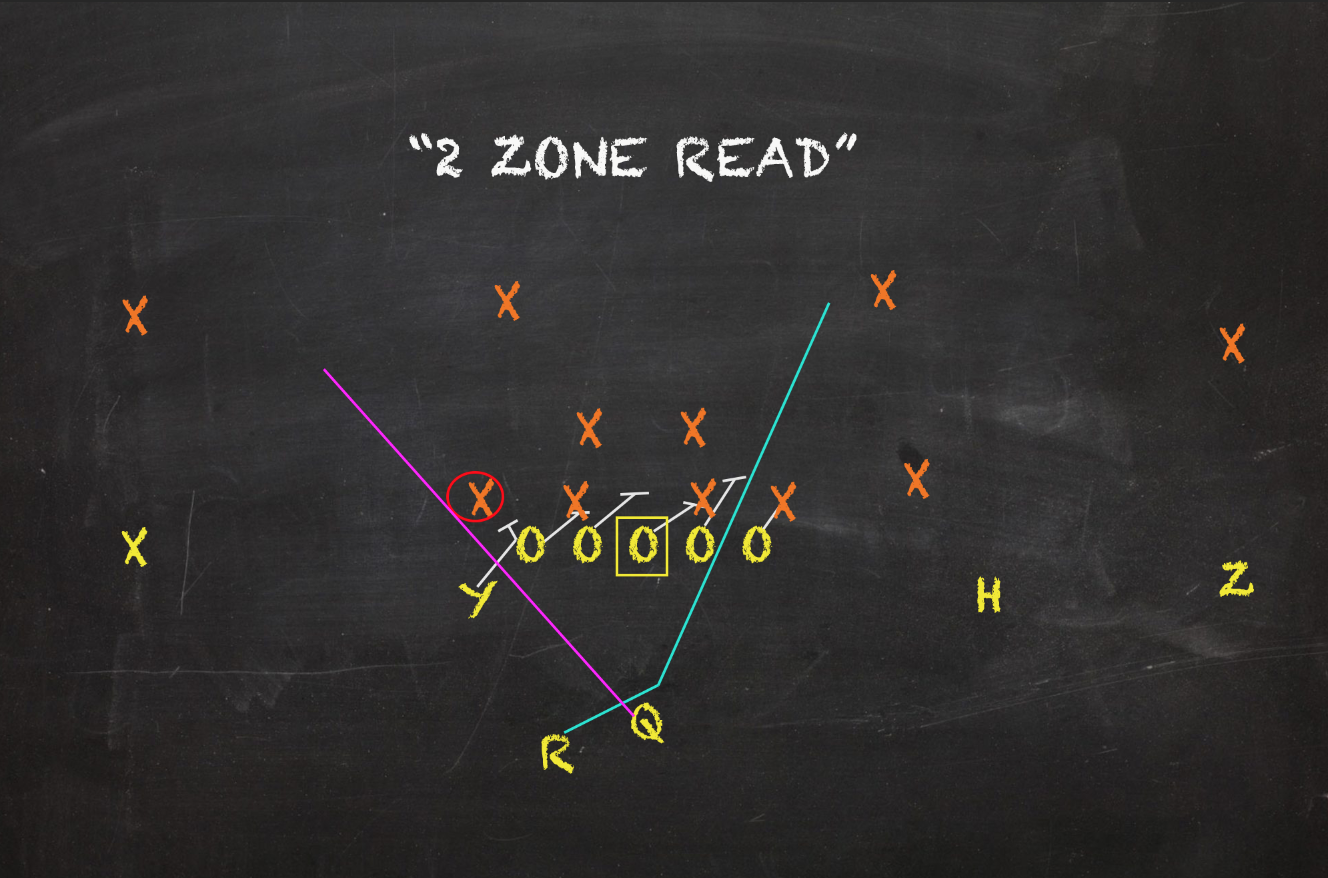
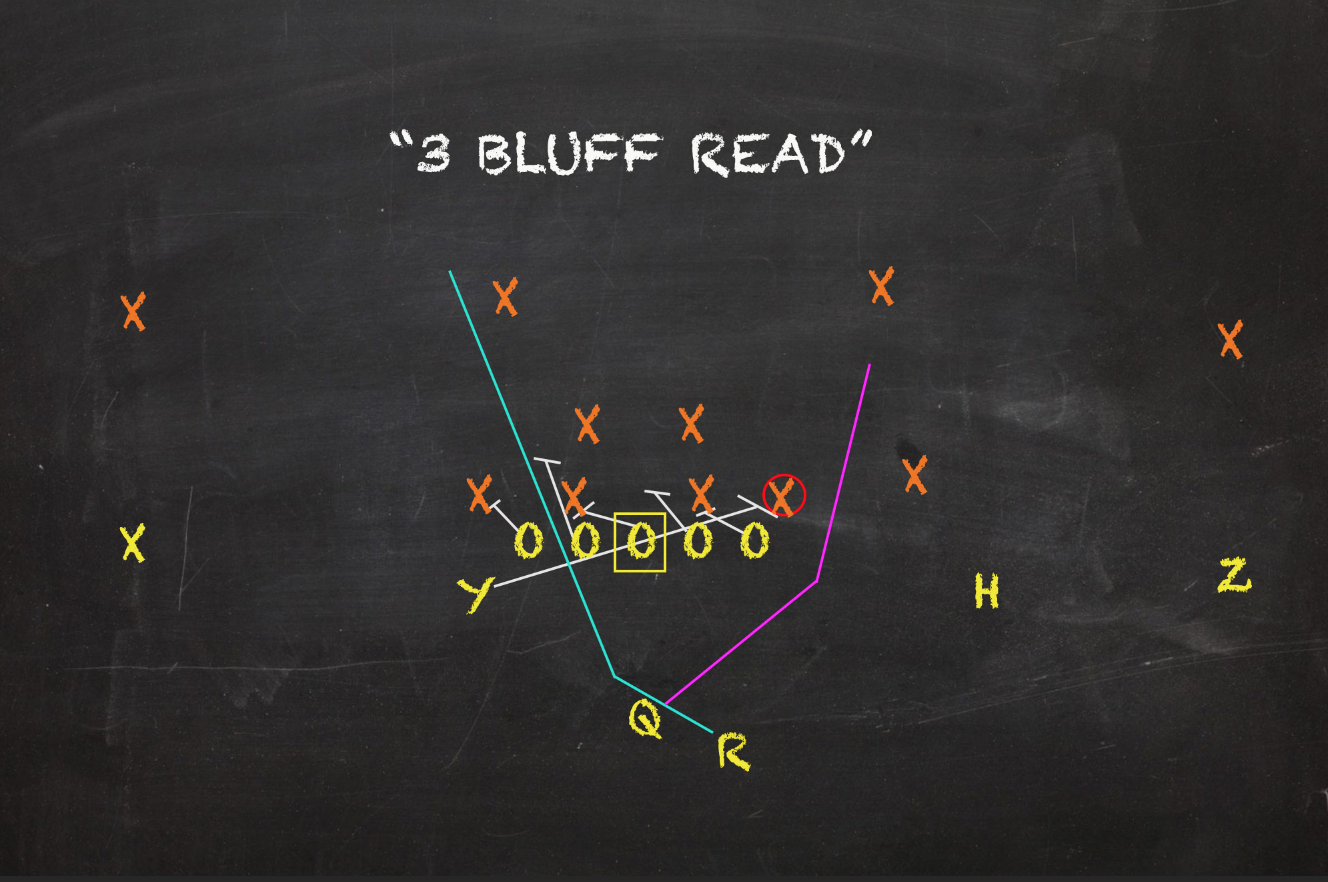
After Slam Reads, another inside zone run play is next in line in order of calls for Ryan Day's offense. Bluff -- or split-zone -- Reads have gotten over 10% of Ohio State's calls against the meat of their schedule. These are just like Slams but with one key difference: the offset TE/FB will shoot against the grain of the normal zone flow and look to set an edge on the opposite side of the formation. In the read game, this blocker often morphs into a personal protector for the QB should they choose to keep the ball after they make their read.
For the amount of calls they get, Bluff Reads are Ohio State's best look in per Success Rate. Versus their top4 foes, Bluff Reads average a respectable 5.41 yards/attempt and own a 59.4% Success Rate. With the "personal protector" creating more leverage on both sides of the center for the defense to worry about, these have met their goals more times than not for the Buckeyes. Though less featured than Slam Reads, there have been instances where Bluff Reads are the focal point for this offense. Against Michigan, roughly 29% of Ohio State's calls were composed of this look and that is not including instances when the "bluff action" was used in the play action game.
The best play action schemes are made to look like real run plays. With the offset TE/FB sealing the edge post QB/RB mesh in the backfield, it can create an extra beat or so needed for linebackers and safeties to diagnose the play. Much like pulling a lineman or two with a play fake, the bluff action can bait an easy completion with defenders barreling towards the line of scrimmage. In the four games against premier competition, a quarter of Justin Fields' attempts have used play action.
While Inside Zones are clearly this offense's favorite way to move the ball, three of their next five most called plays all are Outside Zones concepts. When combined, Off-Tackle Zones make up 9.31% of Ohio State's calls versus the meat of their schedule. But for our purposes, let's examine these plays broken out. When a read element is attached to this design, Off-Tackles posted a 37.5% Success Rate averaging 4.5 yards/attempt. But despite average a whole yard less per attempt, non-reads were successful on exactly half of their reps. These join Bluff Reads as the only run plays with a Success Rate north of 50% that receive significant reps. For what it is worth, non-read Off-Tackles have mostly either been from undercenter or the pistol.
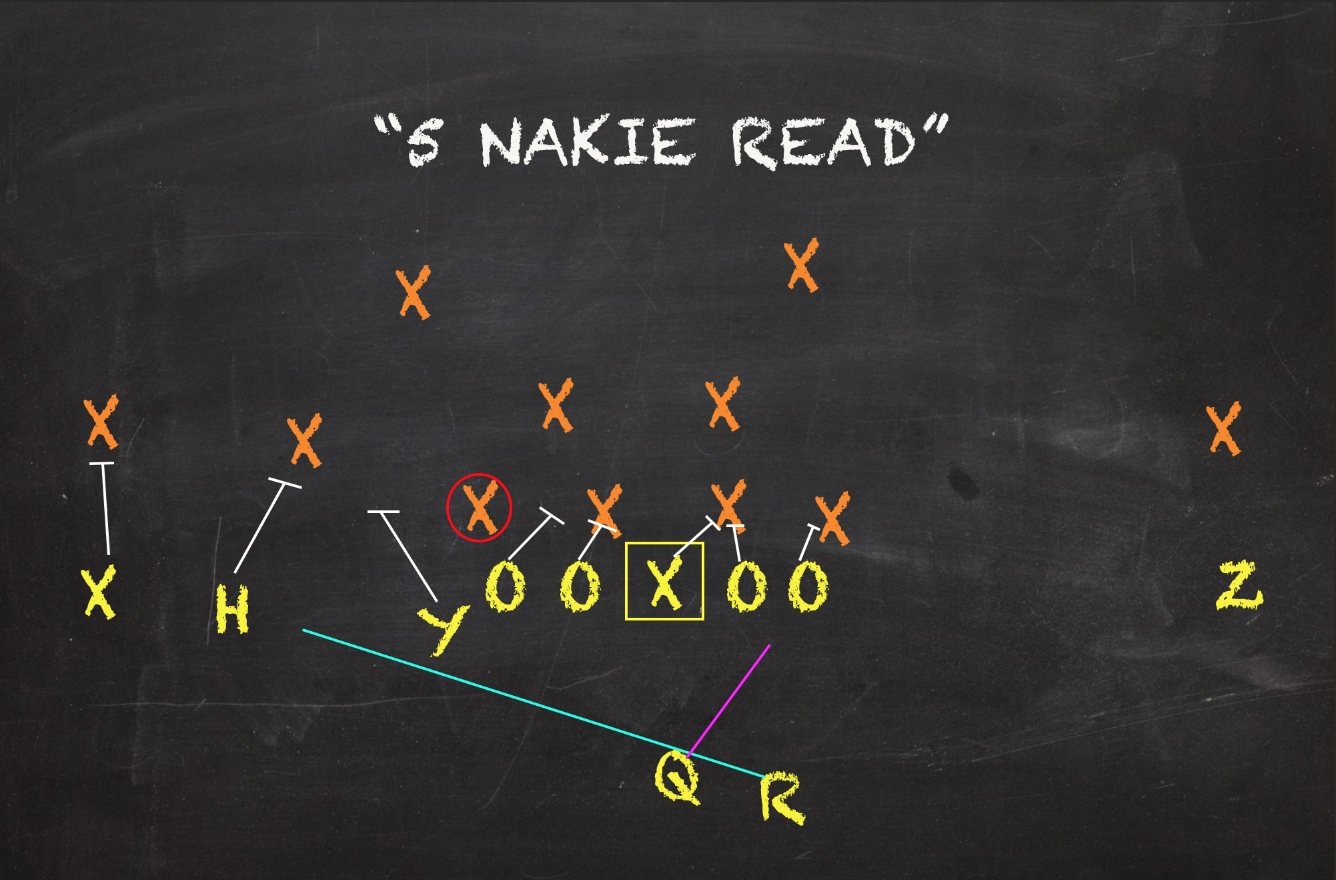
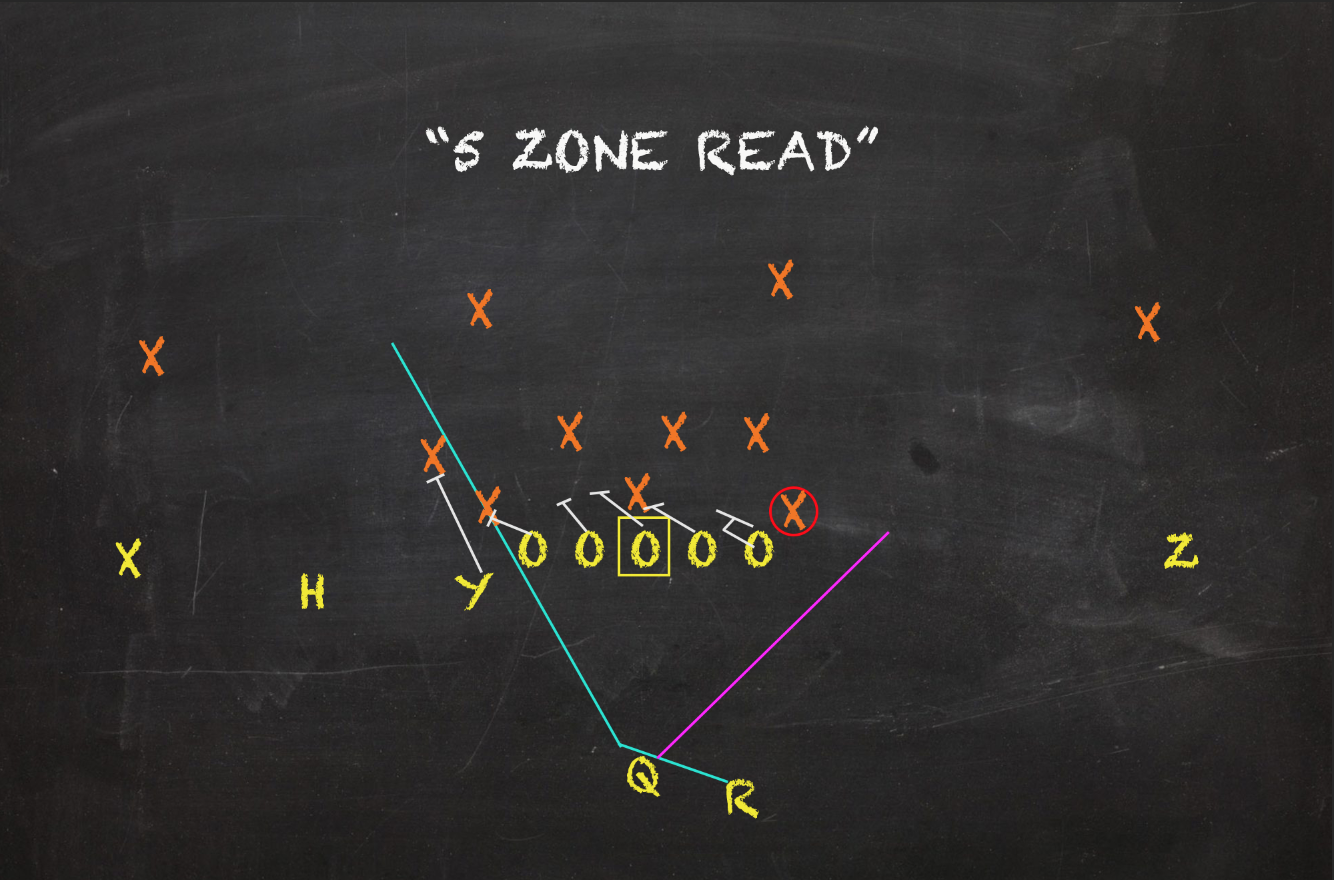
The other Outside Zone look is a newly minted wrinkle run by only a handful of offenses. While the blocking scheme is the exact same as an Outside Zone Read, there is one major difference in the backfield. As you might tell from our illustrations of the X's and O's, the running back attacks towards the zone flow with the QB performing a "naked" bootleg away from it. On these plays, that is swapped. So the QB heads towards the zone flow post mesh with the back attacking the edge naked. Because of that, we call these "Nakie" Reads. These allow the more speedy back to attack the flat footed key defender.
But because these are designed for receivers and tight ends to be the sole blockers, backs are often exposed to early contact. Nakie Reads have delivered middling returns on a 4.5 yard/attempt average and 42.9% Success Rate for the Buckeyes against their toughest foes.
Like I mentioned above, 80% of Ohio State's run plays incorporate read elements in their design with 87% of them being rooted in zone schemes. While gap and power schemes are clearly favored less, a pair of these concepts make a case for increased reps.
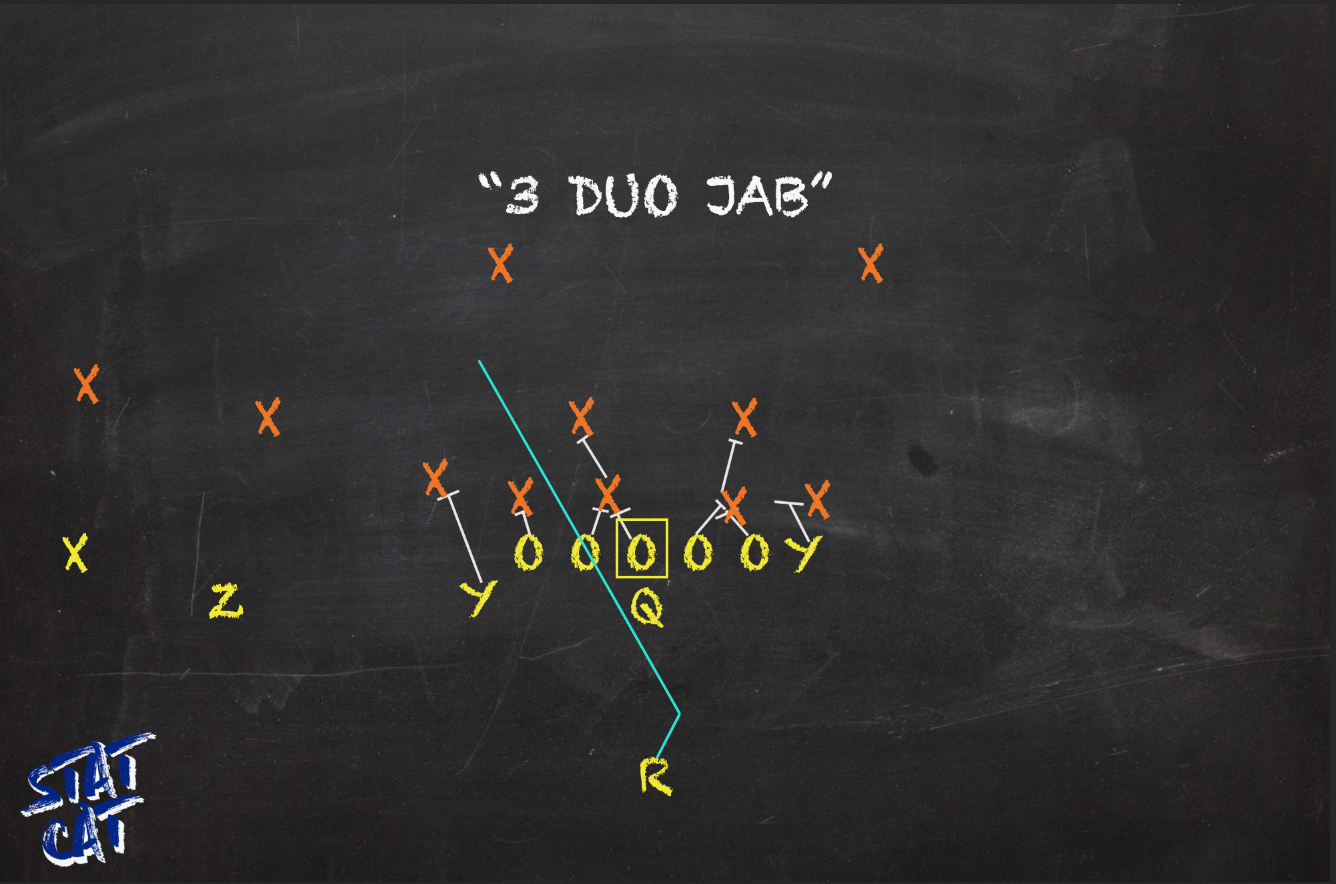
Duo Jabs, a favorite from undercenter, have racked up the 5th most yards of any play against top-level competition for Ohio State. While they are as successful on average as much Slam Reads and Nakie Reads, Duo Jabs average just under 12 yards per pop thanks to two carries over 30 yards. All seven of these reps came in their two most recent games against Michigan and Wisconsin.
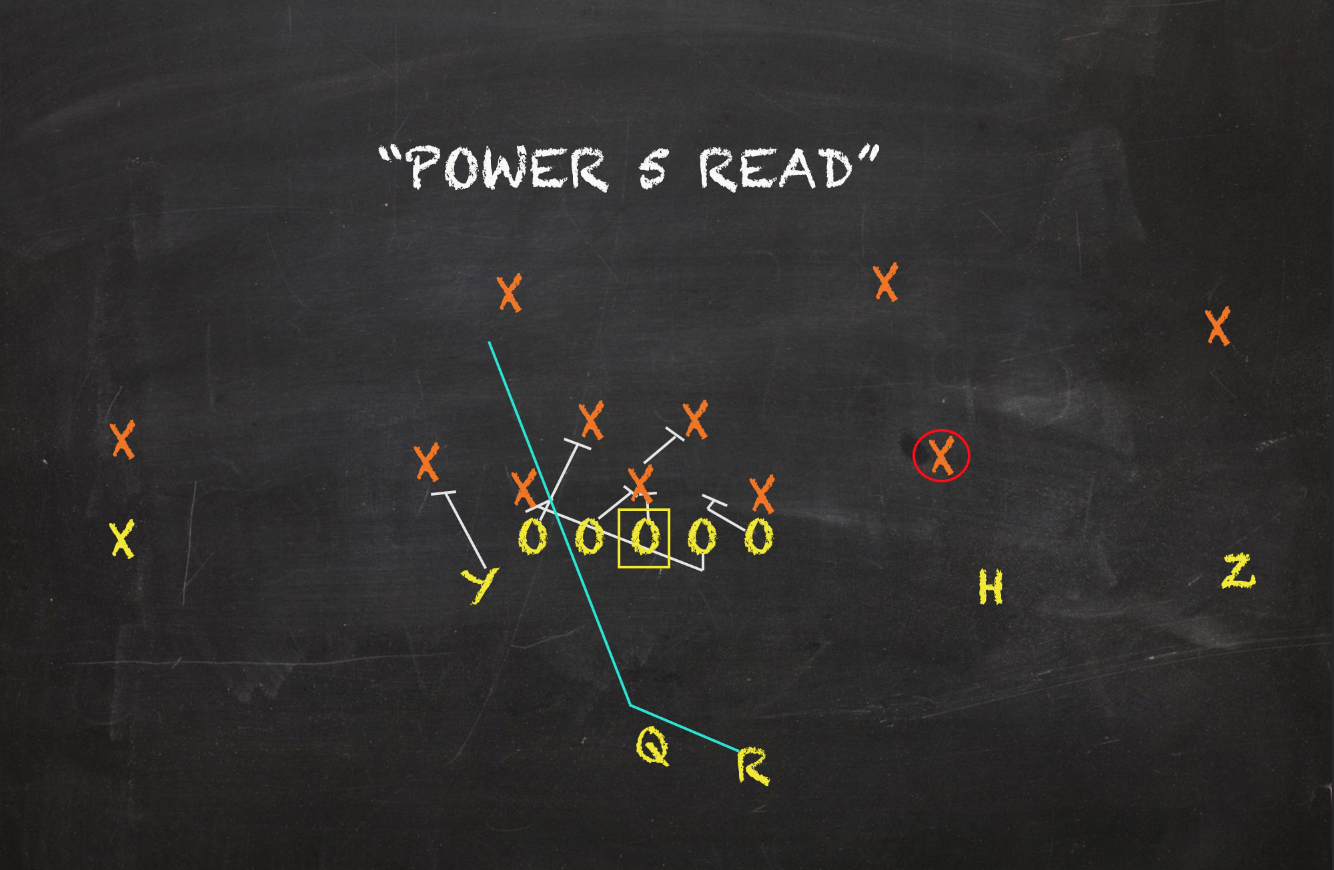
Another seldom-used gap play of theirs is a normal, run-of-the-mill Inside Power Read. With a single backside guard puller giving the Buckeyes more braun to bruise fronts, this basic power run has met its goals on five of its six tries while averaging 6 yards per play. With so few run concepts posting desirable efficiency clips, it remains to be seen if these will sneak more into their script or if Day and Co. are happy with their zone production.
When it comes to throwing the football, two concepts stand above the rest for the Buckeyes in terms of volume: All Curls and Shallow. Shallows are named for the primary route that runs a shallow cross or "basic" route with a dig -- or square-in -- coming overtop from the opposite side of the formation. While All Curls and Shallows have each received the same number of reps against premier competition, targeting curls remain to be a go-to for Justin Fields. Even if the main concept on the play is a Shallow, the Buckeyes often look towards the outside for a easy one:one completion via a curl route.
Regardless of concept, curls have been targeted almost double the amount of times as the next closest route. Nearly a fifth of Fields attempts have gone their direction versus their hardest defenses faced. Looking at All Curl targets specifically, they have delivered lackluster results. Either out of max pro off play fakes or out of empty sets, All Curls have only been successful on 46.2% of targets with a 4.8 y/a. For what it's worth, Shallows posted a 53.9% Success Rate on a 11.2 y/a on targeted reps and only trail their core Inside Zone looks in accumulating yardage. Since I know you are dying to find out what his second most targeted route it, I will tell you. It's a go or "9" route going deep.
Rudimentary combos like Hoss/Comebacks, Vert+Curls, and Curl+Flat combos also pop up from time to time in the Buckeye's script. Giving Fields a low-difficulty throw away from pesky underneath defenders outside the numbers is a big aspect on how Ohio State plans to steal yards through the air against soft coverage.
While a vanilla plan of attack, Ohio State has shown some aggressiveness down the field against its toughest opponents. Excluding Vert+Curl designs, eight other Shot Variations and seven All Vert patterns have been targeted with a few Fake Screens ("Fox"), couple of Leak/Flow/Throwback designs, and a nifty "juke" wrinkle to the classic Spot concept. While you will see an occasional cross or mesh variation from the Buckeyes, they mostly aim to keep it simple with basic combos on the outside.
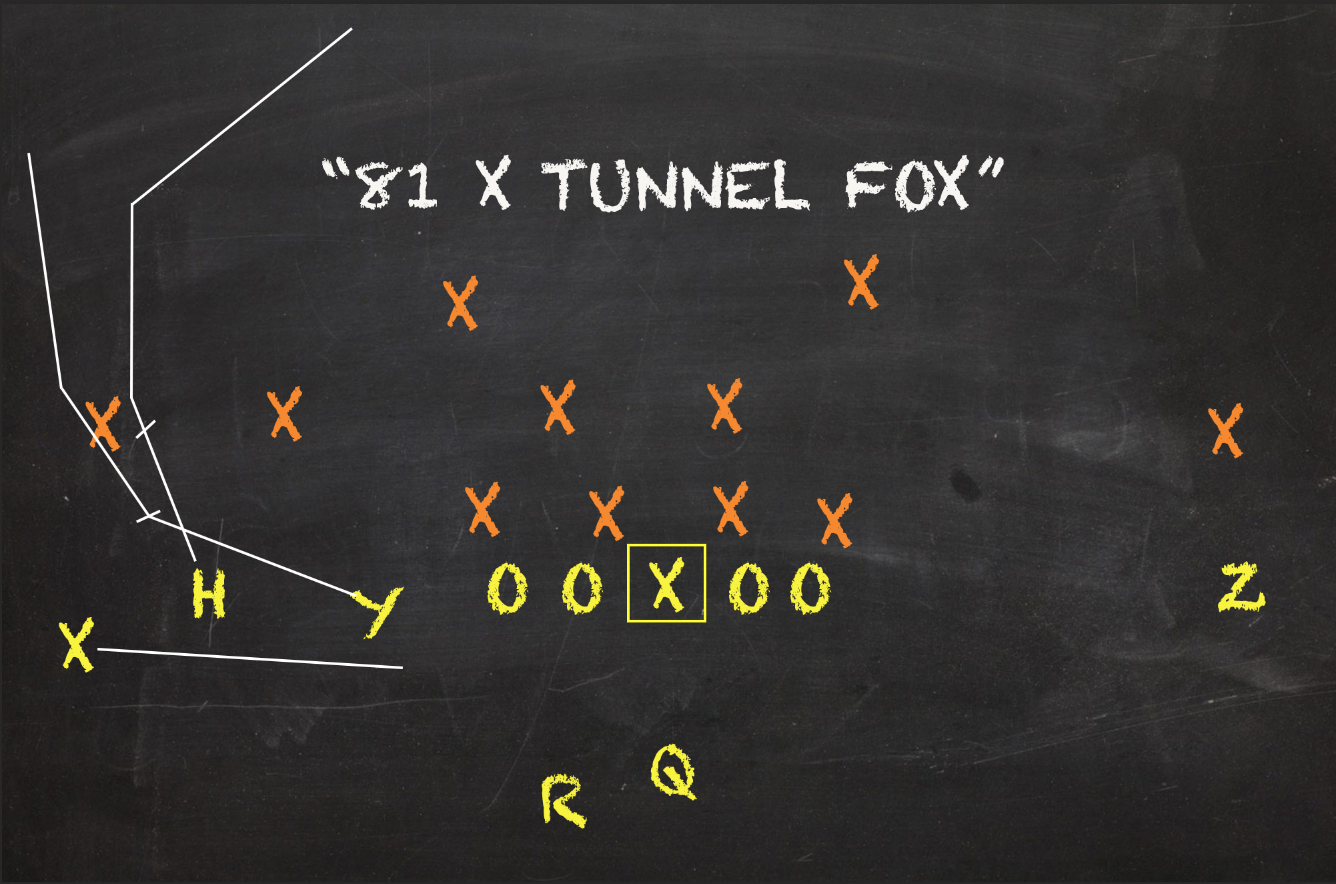
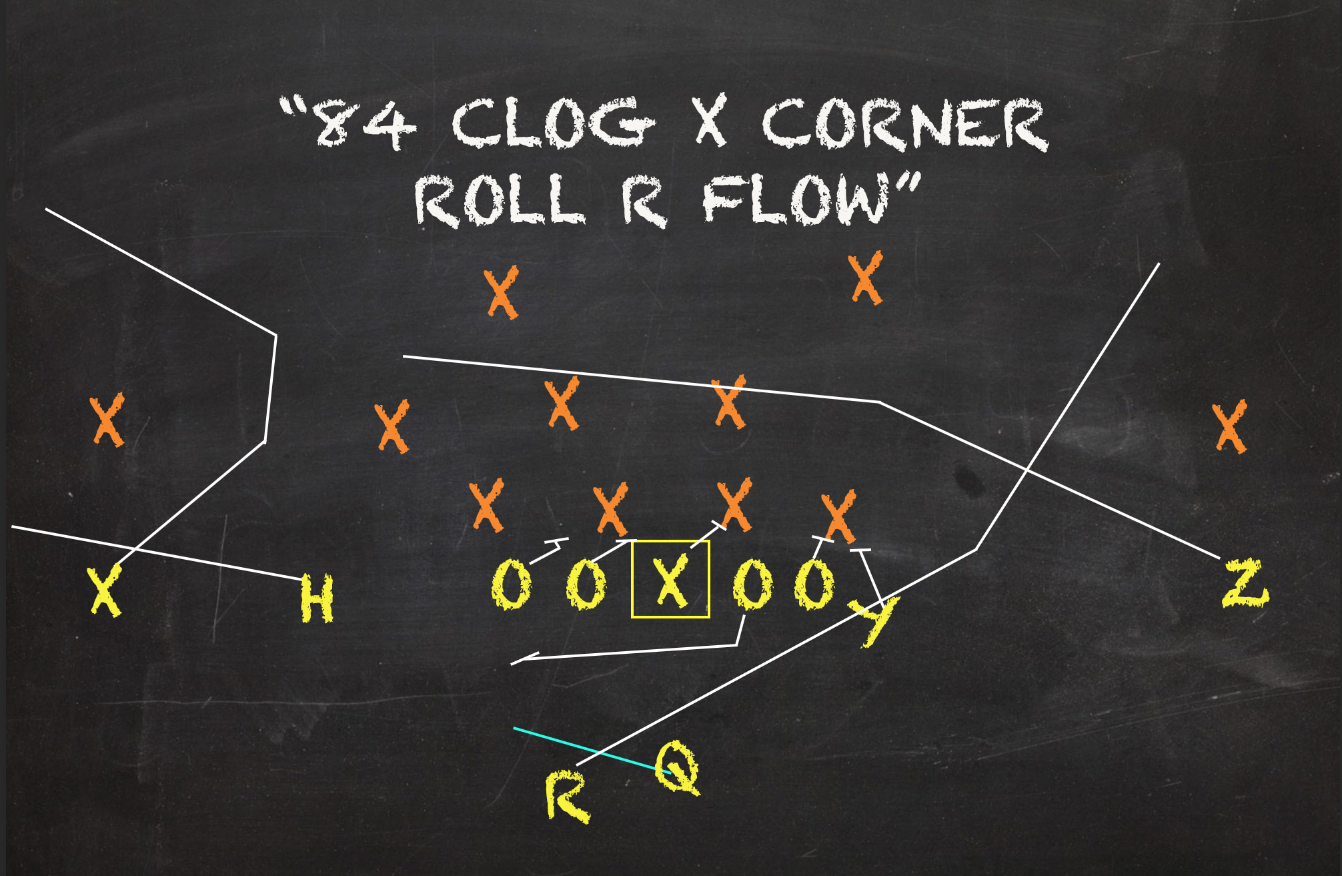
Still, the run game is what gives this offense its identity. While it's easy to be wowed with Justin Fields operating outside the structure of pass plays and nail a big time throw playing backyard football, the Buckeyes win consistently due to their defense and rush attack. When examining the ball carriers on other playoff teams, it's abundantly clear no one else gets as many ground touches as J.K. Dobbins. His number of carries doubles the next closest player on this four game sample size. Furthermore with a running style perfect for Big10 football, Dobbins has accumulated more yards after contact versus those four foes than any other playoff back has total against theirs.
Ample Zone Reads inside and out keep fronts on their toes and also help lull secondaries into a malaise. This is when Ohio State will dial up a Shot or aim to pick on sagging corners with a crisp curl. But, Ohio State has shown it is more than happy to grind away and let the run game dictate its offensive production.
| Ohio State's Top 6 Most Called Concepts | Play Share | Yards/Attempt | Success Rate |
| Inside Zone Slam Read | 20.9% | 6.48 | 42.9% |
| Inside Zone Bluff Read | 10.6% | 5.41 | 59.4% |
| Outside Zone Off-Tackle Read | 5.32% | 4.50 | 37.5% |
| Outside Zone Nakie Read | 4.65% | 4.50 | 42.9% |
| All Curls | 4.32% | 4.77 | 46.2% |
| Shallow | 4.32% | 11.2 | 53.9% |
| Ohio State's Top 6 Yard-Gaining Concepts | Total Yards | Yards/Attempt | Success Rate |
| Inside Zone Slam Read | 408 | 6.48 | 42.9% |
| Inside Zone Bluff Read | 173 | 5.41 | 59.4% |
| Shallow | 145 | 11.2 | 53.9% |
| Cross | 93 | 18.6 | 40.0% |
| Duo Jab | 82 | 11.7 | 42.9% |
| Outside Zone Off-Tackle Read | 72 | 4.50 | 37.5% |
1st Down Offense
Let's now zero-in on Ohio State's offense to start series. Since first downs are the most common and receive more chances than any other down, you often can get a good sense of how offenses like to operate overall by examining their tendencies in these spots. Odds are if a team is bad at managing down and distance on firsts, their degree of difficulty on subsequent downs will be higher which generally leads to a lower rate of success.
As I mentioned while glancing over this offense, no other playoff team has been as poor as the Buckeyes on firsts in terms of Success Rate and no other has matched their affinity for starting a set of downs on the ground. Sure, Ohio State has gone against a tough slate of opponents - far tougher than Clemson and Oklahoma per ESPN's SP+. But failing to stay ahead of the chains consistently has put more pressure on this unit to succeed on the money down. Go ask Georgia if that style of play is sustainable. (Note: After Week 7, UGA's offense fell off a cliff mostly due to predictability and failing to win battles consistently in the run game on firsts).
Inside Zone Slam Reads, Bluff Reads, Outside Zone Reads, Nakie Reads, and Off-Tackles are their five most called plays to start series. All but one of Ohio State's most called run plays has a lower Success Rate on first downs than their overall clip. While some have serviceable overall clips, that is simply not the case on firsts for most of their runs.
Bluff Reads remain this offense's best look even with the dip in potency. They are the only run play with a Success Rate north of 50% with at least 4 reps against their top-level foes. This should be concerning news considering how much the Buckeyes want ground and pound. This offense isn't Mike Leach's Washington State team who is happy with any run play so long it doesn't finish as a loss. This is a team than chooses to run the ball on 66.4% of first down snaps and whose offensive identity hinges on winning in the trenches.
Overall, Ohio State has called 32 Inside Zone Slam Reads and 19 Bluff Reads on first down against their toughest opponents. While Slam Reads lead in number of reps, the gap between them and Bluff Reads is much smaller on firsts in the first half. But while six of the ten Bluff Reads in these spots have met situational goals, only four of the 15 Slam Reads have been successful in those instances. It makes sense this offense has struggled to win to start a set of downs if their most called look fails more often than not.
After those two core concepts, the Buckeyes have displayed a good amount of variety. Eight other concepts have been called between four and ten times. Four of them are runs; the other four are passes. I mentioned three of the runs and they are all of the outside zone variety. The Nakie Read -- outside zones that swap the run orientation of the QB and RB -- is the only run concept whose 1st Down Rushing Success Rate exceeds its overall clip. Read and non-read Off-Tackles probably should be faded from the playsheet. These have posted a 20% and 29% Success Rate, respectively.
Ohio State rarely deviates from its zone scheme, but the gap scheme Duo Jab has accounted for the fifth most yards of any look against their four hardest opponents. These share the sixth-most reps to start series for the Scarlett and Gray with two pass plays.
Content with the returns normal zone reads produce, Ohio State use RPOs at the lowest rate of any playoff team. But, 1st downs is where they're the most likely to call them. Targeting Bubble Screens joins Duo Jabs as the sixth-most repped look in these spots. It is easy to see why they aren't utilized more, however, when peeking at their lowly 20% Success Rate.
Overall, All Curl patterns are one of their most targeted concepts through the air. And while that is also the case on firsts, they average merely 1 yard per target on a 20% Success Rate. Talk about lowering your expectations.
All Verts and Shallows, the other one of Ohio State's most called pass plays, round out the down's most called concepts. Both average over 13.5 yards per pop and both hold 50% Success Rates.
Normally, I would recommend for the Buckeyes to go towards the air more with such unsatisfactory results running the rock. But again, Justin Fields has done little to instill faith in his ability to win with 10 yards to gain. His 40.4% Passing Success Rate isn't too much better off than the team's 37.6% Rushing Success Rate on first downs. Ohio State when up against the meat of their schedule seem content to just set up the most manageable 3rd Down chances possible even if its rather inefficient to start series.
| Ohio States Top 5 Most Called First Down Plays | No. of Reps | Yards/Attempt | Success Rate |
| Inside Zone Slam Read | 32 | 5.59 | 34.4% |
| Inside Zone Bluff Read | 19 | 4.32 | 52.6% |
| Outside Zone Off-Tackle Read | 10 | 2.90 | 20% |
| Outside Zone Nakie Read | 9 | 5.56 | 44.4% |
| Outside Zone Off-Tackle | 7 | 3.57 | 28.6% |
3rd Down Offense
Offense on the money down is often more unpredictable, variable and correlated to victory than any other down. While 1st downs do a damn good job illustrating what an offense is, 3rd Downs show us its true colors.
It's safe to say, Ohio State has executed below its standards on firsts against quality defenses. But one reason we are talking about them being title contenders is the fact they are one of the best at moving the chains on the do or die down. There is something to be said about an offense that makes plays when it needs them the most. Ohio State seems to fall into this category.
Truth be told, Ohio State and Clemson have the exact same 3rd Down Success Rate. Both boast a 54.6% clip which is tops among the four playoff teams. But there is no denying Ohio State has posted their clip against a harder slate.
Unlike its struggles on early downs, the Buckeye's bread and butter Inside Zone Slam Read has performed quite well versus the likes of Michigan State, Penn State, Michigan, and Wisconsin on thirds. Slam Reads once again lead the way in terms of number of reps but average 8.69 yards/attempt on a 53.9% Success Rate on the money down -- a substantial uptick compared to its production on other downs.
While the Buckeyes remain the most run-heavy offense in this playoff on thirds, their next three most called concepts in these spots are pass patterns. Their top two passes in terms of overall reps, All Curls and Shallows, have delivered fairly consistent returns to their overall numbers. But, both have posted worse Success Rates in these spots.
It can get dodgy evaluating concepts on such small sample sizes. But the two looks that round out their five most called concepts on the money down, Vert+Curl Shots and Outside Zone Reads, sport 67% Success Rates. Five other concepts have multiple reps on thirds when against premier competition: Bluff Read, Bench, Curl+Flat combos, QB Stretch, and Nakie Read.
Plays with one rep that have come through include, a Mesh, Kelly Mesh, A Dagger, a Cross, and a Fade. It remains to be seen which will become a go-to come the playoff. But Ohio State's 3rd Down offenses is as tested and accomplished as any when a play needs to be made to extend a drive.
| Ohio State's Top 5 Most Called Third Down Plays | No. of Reps | Yards/Attempt | Success Rate |
| Inside Zone Slam Read | 13 | 8.69 | 53.9% |
| All Curls | 5 | 4.60 | 40% |
| Shallow | 4 | 13.8 | 50% |
| Vert+Curl | 3 | 9.33 | 66.7% |
| Outside Zone Read | 3 | 7.67 | 66.7% |