Pass Looks I suspect to see from Alabama’s Passing Game
Pass Looks I suspect to see from Alabama’s Passing Game
Alabama’s offense is full of razzmatazz and fireworks. No SEC offense has paired the run with the pass quite like the Tide this past season. No one matched its affinity for motion. No one dons a more “balanced” call sheet. While the scheme is enough to get opponents off-kilt, the Tide’s playmakers make the offense even more dangerous. After all, speed kills. And no offense in America can challenge the Tide on that front.
To limit their big play potential, most opponents have opted to live in two-high defenses. The extra man deep is supposed to help backends be more prepared for when an offense wants to test them vertically. But I’m sure you guessed looking at Alabama’s offense’s output, that hasn’t worked too well.
Ohio State presumably will not play the Tide that way. According to Pro Football Focus, roughly 90% of its defensive script has been from single-high coverages that bank on corners winning one-on-one and for the middle-of-the-field safety to act as an eraser. Moreover, Ohio State will run base personnel. In case the rise of nickel backs and three-headed safety looks made you forget what that means, it’s essentially an old-school 4-3 where the strong side linebacker remains on the field in lieu of a quicker coverageman. No frills, no fuss — just man up and play ball. (Forgive the crudeness, but the graphics below have both drawn up below).
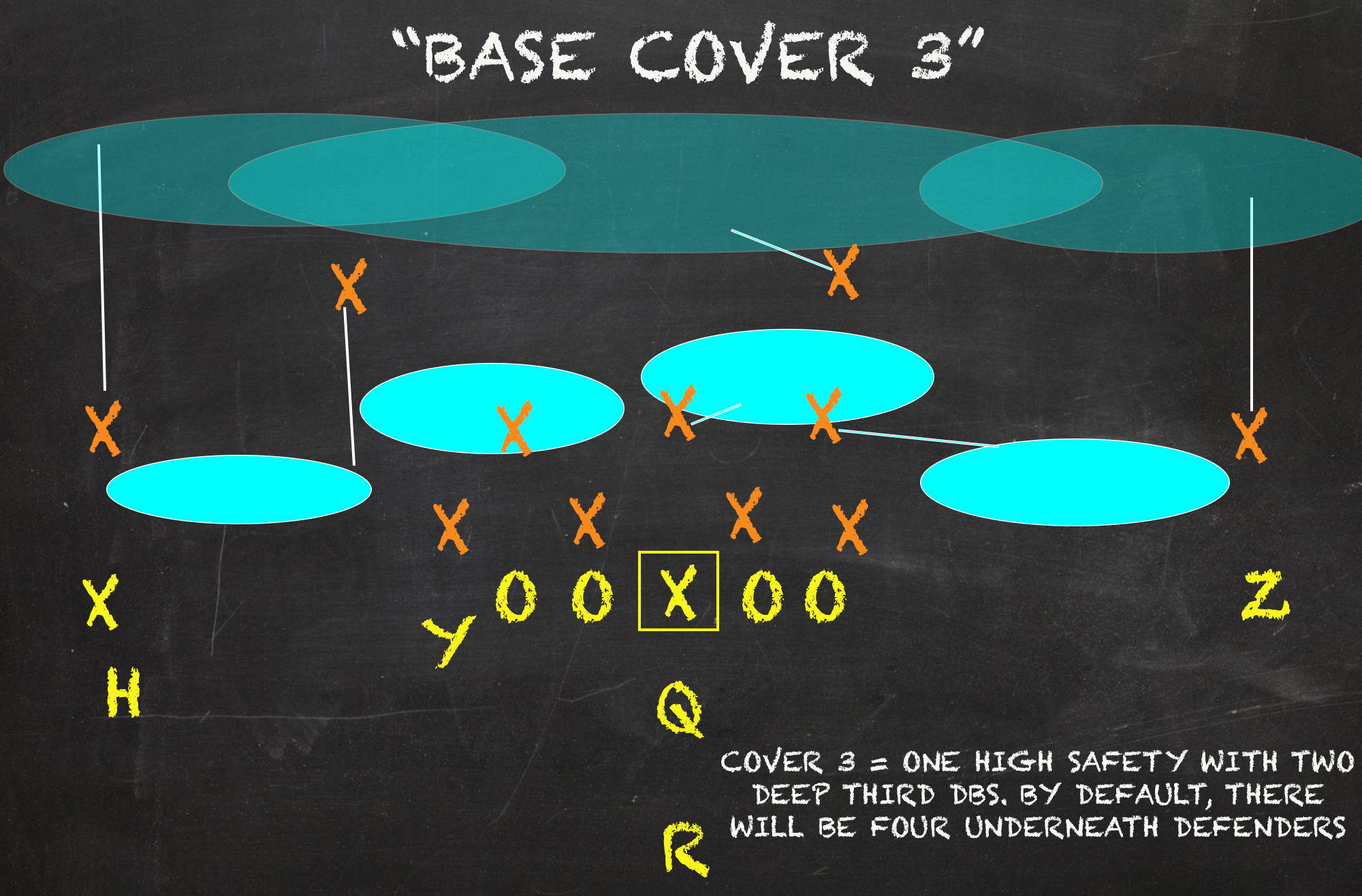
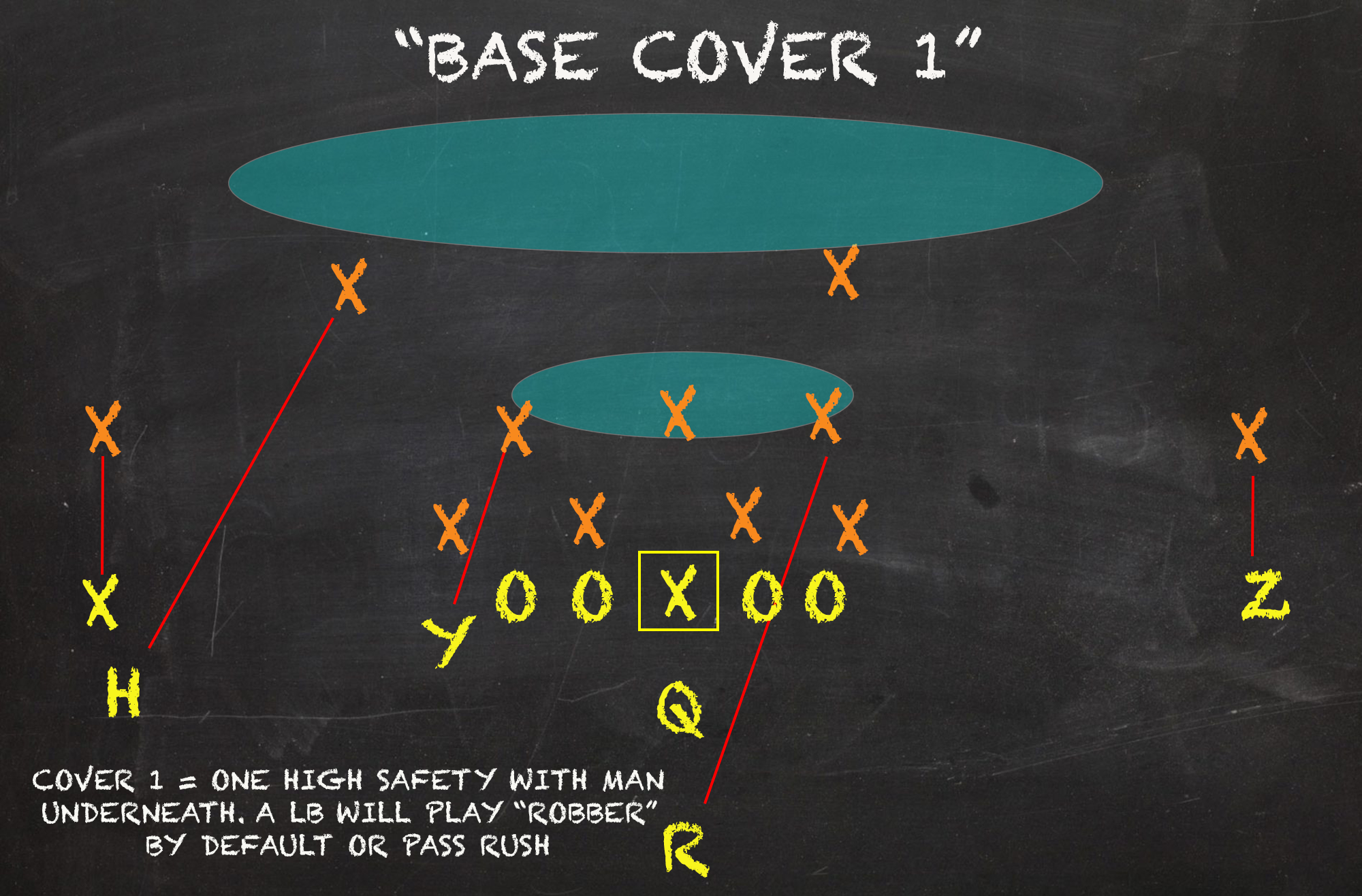
Now considering how electric Alabama is on the perimeter, that’s not exactly the kind of matchup you dream for as a defensive coach with a national championship on the line. Yet, lining up in base is part fo the fabric of Ryan Day’s defense and his philosophy as a head coach. He’d rather run something simple with his best guys and try his chances. Well, they certainly are about to be tried Monday night.
Again, Alabama hasn’t faced too much single-high coverages in the pass game this year. The Rose Bowl vs. Notre Dame (where the Irish were in Cover 1 or Cover 3 on all but just a few snaps) was absolutely an atypical to stop this offense. While it won’t be exactly the same, Alabama had little trouble finding success when it was interested in doing so through the air.
So with Ohio State set to play a similar style, I combed through Alabama’s script for plays with which I suspect the Tide to test the Buckeye’s single-high, base defense. While I focused on how these patterns work versus those coverages, the stats reflect their season-long output when the margin on the scoreboard is 17 points or less.
Cross: 13 attempts, 84.3% Success Rate, 18.5 Y/A
Cross as its heart is a weak slide flood pattern and is named for its primary route usually undertaken by an inside receiver. As a flood, it tries to overload a section of the defense coverage by sending multiple routes through those areas. Like other Air Raid staples, Cross has been tweaked and manipulated to fit into most collegiate schemes. Even the Tide has a few separate renditions. While the under/over cross pattern was designed to obliterate 2-deep shells, it’s no easy task for underneath defenders to bottle up the route from the far numbers to the near sideline when defenses come out in Cover 1 or Cover 3.
Again, the Buckeyes will likely test their mettle all night by deploying single-high coverages like that. Like mom’s calling at inopportune times to chat, it’s what they do. Notre Dame followed a similar gameplan in the Rose Bowl and did a pretty decent job stopping Cross. On its three reps against the Fighting Irish, the weak slide flood saw an outside comeback targeted twice with a scramble. It’s fairly common for the complimentary routes to win versus Cover 1 or Cover 3. The primary cross can win, but sometimes it’s better to hit the trailing dig with the defender sticking with outside leverage or to eye the one:one vertical if the safety refuses to leave the middle of the field.
Cross is frequently aided by play action by this offense. Taking a cue from the New England Patriots who made a killing with power play fakes and sending Rob Gronkowski over the middle, that tactic is occasionally needed to move linebackers off their mark and help the cross come open…no matter how much of a mismatch maker you have running route routes. Cross has a very good chance to see the most reps among Alabama’s dropback concepts thanks to how magnificent this offense has been executing it. But, a couple of wrinkles off this look could be in the cards.
While Cross is a weak side flood, the Sail concept is a strong side flood. Commonly consisting of a flat, deep out/corner, and vertical, it’s a three man high-lo meant to win against the two-man stack outside the numbers you’ll see from Cover 3 Zone. Alabama has targeted nine Sails in our chose parameter but have only produced ho-hum results. Four of them have been what I label as “Skipper”, which is Sail that window dresses itself initially as a Cross. Over half have worked and its Y/A is well into the double digits. Granted, this is deep into the weeds — but this is the exact kinda of pattern meant to toy with single-high safeties.
While Yankee Shots have mostly been reserved for defenses that sport 2-deep coverages, no dropback pass concept has fielded as many as its 17 targets in our parameter. These can go by many names and have various forms. These looks incorporate a deep cross off play action as a “sucker” route; meaning the offense is hoping a backend defender jumps out of position to take it away. The two most-common Alabama feature are two deep intersecting crosses (“Crosser” in my vernacular and I believe “Pylon” in theirs) and a standard Cross combo or solo intermediate route over the middle with an overtop post. The former has been seen a number of times in the red zone this season by the Tide. Designs with the over top post(s) have been relatively bottled up by defenses, which has led to plenty of targets for the deep cross pattern. Regardless of concept, Alabama’s passers have targeted a cross route 23 times (tied for second most) with 78.3% of them being caught.
Kelly Mesh: 12 attempts, 83.3% Success Rate, 10.0 Y/A
Mesh is a go-to manbeater for plenty of offenses. And like Cross, Mesh has evolved over the years. While the base form of Mesh calls for two intersecting drags by the inside receivers and a corner and post from the outside ones, modern offenses display much more variety and creativity when trying this pattern. You can see Mesh paired with Dagger, Drives, or Mills with play callers swapping responsibilities on which two receivers will run the titular concept.
No particular rendition has seen its popularity rise the last half decade than Chip Kelly’s version. Though he was no longer the head coach in Philadelphia when the Eagles captured its first Super Bowl, that pattern was instrumental in upsetting Bill Belichick and his New England Patriots. With that, the rest of the coaching world took notice and aggressively started adopting the design.
The common form of the Kelly Mesh can also be called a “Spot Mesh”. With the inside mesh, you will also see a playside wheel by the running back and an overtop sit hook by an outside receiver. These are almost always to the same side of the formation. The other route can vary from a dig, corner, fade, or post. Most offenses wait until later downs to unleash this look, and Alabama is no exception to that. Only a handful of Kelly Meshes have been called on 1st Down. Despite that, all five of them have resulted in success while putting up a 13.4 Y/A.
Kelly Mesh is Alabama’s preferred pattern to call on 3rd Down. Even though Rubs haven’t logged a rep since the before the SEC Championship Game, 66.7% of them have moved the chains. Only one of the five Kelly Meshes has failed in those spots this year in our parameter; no pass pattern has more targets.
Like setting a pick in basketball, Rubs aim to create cushion. Since Kelly Mesh is frequently donned from tight formations, that element can be accentuated against man coverage with defenders in close vicinity to one another. If defenders start anticipating inside, Alabama has showed it can beat single-high coverages vertically with a “Pickaxe” Rub combo (slant+Fade/Wheel). All three that have been targeted have resulted in a completion averaging 30 yards per pop.
Switch Variations: 10 attempts, 70% Success Rate, 33.8 Y/A
Before I get too ahead of myself, Switches — vertical patterns where the inside man goes outside and the outside one goes inside — are usually leaned on to beat 2-deep coverages or confuse match-pattern assignments. Most of Alabama’s splash plays off of these looks have been versus those defenses. However, there have been instances where the Tide has won versus single-high looks with Switches primarily versus man.
While not designed to necessarily “win” on the blackboard, tracking down the Tide’s thoroughbreds over long distances is quite the challenge for any secondary. Ohio State is supposed to have better backends than Florida and LSU, but these plays are Kevin Malone style warnings to anyone who wishes to man-up Alabama’s receivers.
While potentially dangerous, Alabama has only called nine all season when up or down by 17 points. As much as I’d like to see Sark test Ohio State’s single-high philosophy with Switches, he’s shown he’s much more willing to do so versus 2-deep coverages. Still, these patterns cannot be ruled completely out.
Deep Hooks/Comebacks: 7 attempts, 71.4% Success Rate, 13.0 Y/A
As much as I enjoy the theory behind scheming someone open, sometimes you just have to rely on your best winning one-on-one. Either on an island versus man or versus a soft cushion deep third defender, Alabama’s incendiary pass catchers have been able to work outside the numbers executing deep comeback patterns off heavy set play action. There’s literally nothing special about this design but stopping it has been a chore for defenses.
Plenty of offenses run outside curls to feast on sagging single-high looks. This is the same idea but compliments Alabama’s expanded vertical pass toolbox. With backends frequently on their heels or concerned about giving up the homerun, these well-timed comebacks are suited for seizing gains 13-20 yards downfield so long the max protection does its job.
With only seven tries, it’s not a major part of Alabama’s attack. But since it offers an obvious way to win versus single-high coverages as a counterpunch, I would expect the Tide to give this a rep or two Monday Night.
The Other Stuff
Of course, there’s the other stuff Alabama does in the non-dropback game that’s bound to get Ohio State’s base defense out of sorts. Slants, Bubble Screens, and wrinkles off of them are bound to test the Buckeyes in space on the perimeter.
Slants, either as RPO outlets or as complementary routes on dropback designs, have been very fruitful for this offense the last few seasons. All in all, Slant Variations have been targeted 13 times in our parameter for a 76.9% Success Rate and 14.7 Y/A. Only two of the ten RPO tries failed to be successful. Like deep comebacks, Slants are meant to win one-on-one either versus man or sagging zone. There’s nothing complicated about it. If your linebackers are worried about curbing Najee Harris, Mac Jones will gladly target his YAC monsters overtop. When opponents oversell, that's when the deep double moves get called. While most of Alabama's deep double moves like Dig+Gos, Cross-n-Go, Sluggo, and Post-Corners have been versus 2-deep coverages, Alabama hit on an out-and-up versus a single-high look against Mississippi State.
While throwing a Bubble Screen won’t wow scouts, they remain staples for this offense in its RPO game. Rather than asking their speedsters to run stationary tunnel screens to space, Bubbles allow targets to generate positive inertia before catching the ball, which helps Smith and Co. accelerate more efficiently and generate more potency per chance. The Tide has targeted RPO Bubble Screens 14 times for a 78.6% Success Rate and 13.1 Y/A in our parameter. Against Notre Dame’s predominantly single-high defense in the Rose Bowl, RPO Bubbles were seen seven times and targeted five. Three went for first downs, two went for 20+ yards, and only one failed. I believe it’s a safe bet the Tide believes its talent can win thusly against Ohio State’s base personnel on the edge in space.
As is, those looks appear threatening enough despite their conservative nature. That’s the magic Alabama’s Jimmies and Joes add to its X’s and O’s. But clearly Sark is always craving for more like the “sicko” he is. Twice this year Alabama has embarrassed single-high looks with “stalk” RPO looks off its bread-and-butter Bubble Screens. I mean, 76 yards and 2 TDs on only two tries is pretty, pretty, pretty…pretty good if you ask me. But for a better idea, check out the vids below.
These looks probably won’t be the only things we will see from Alabama’s pass game tonight, but there’s a very good chance they will help anchor its script and dictate the outcome of the game. Not too many teams have challenged Alabama for extended stints from single-high structures. But with ESPN’s SP+ 8th-best defense, this will be the hardest opponent Alabama’s offense has faced since way back in Week 4. Sometime base wins. It remains to be seen if it can upend one of the most electric offenses in the modern era.