2020 Offensive Play Calling: Missouri
2020 Offensive Play Calling: Missouri
Eli Drinkwitz was brought in to reinvigorate a program that had become stagnant. While Barry Odom helped shore up the Tigers defensively, his offenses were undoubtedly trending the wrong way much like Missouri as a whole. A wunderkind offensive mind, Drinkwitz is a young coach that has impressed not only with his zeal but his ingenuity. Despite entering 2020 viewed as one of the worst 25 offenses in college football per ESPN’s SP+, the Tigers finished above their expectation in that regard and hurdled their 2.5 win total set by Vegas oddsmakers.
Under Derek Dooley, the Tigers’ offense was bland, stale, and overly ineffective. Last year in SEC play, that unit finished with a bottom5 Explosive Play Rate, a bottom3 Success Rate, and the worst Broken Play Rate. Only Vanderbilt sported a worst TD Rate. Though presnap and Orbit motion usage was about average, no team used Jet motion less than the Tigers.
The funny thing is, a lot of the base concepts remained the same when Drinkwitz came to town. Of course, he put his own personal spin on some and obviously gave more love to his favorite looks; but this wasn’t a total offensive reinvention. That said, the finger prints he left behind on this product are pretty noticeable. Outside of Alabama’s razzmatazz of a scheme, no SEC offense used more total motion than the Tigers. Across the types I chart, Missouri used the 3rd-most presnap motion (22.7%), 4th-most Jet motion (14.8%), 2nd-most Orbit motion (5.65%) and 5th-most presnap shifts in conference play. With more eye candy and functionality off of those looks, Missouri’s rush yards before contact average increased by over a yard versus SEC foes, which helped its Rushing Success Rate climb from off the conference floor and improve ten points year-over-year.
Granted, this offense was still from perfect and largely middling overall. But clearly improvement took place, and now there’s a healthy bit of optimism in Columbia. So, let’s take a look under the hood and see what worked and what didn’t. In order to get a better idea of how this offense liked to operate, I only looked a snaps that occurred when the Tigers were either up or down 18 points. That way, less garbage time snaps would skew our sample and create a more crystal depiction of Drinkwitz’ scheme. I examined the Tigers’ most featured runs and passes, the looks that gained them the most yards, and their “most successful” concepts.
MOST FEATURED RUNS
Outside Zone Off-Tackle: 15.2% Play Share, 6.06 Y/A, 44.3% Success Rate
You don’t need me to tell you that the foundation of this offense was rooted with the Outside Zone Off-Tackle. Missouri’s affinity for this look was unmatched within the SEC. No one else in the conference dedicated more than 8% of its calls towards the Off-Tackle in meaningful minutes. In fact, Eli Drinkwitz’s bunch only allowed one other concept to compile that much love on the script in our parameter. As you can see, the Tigers’ Off-Tackle usage almost doubled those clips. While most runs aim to take care of business between the tackles, this Outside Zone prefers to pursue avenues towards green grass. The basis of the play design is to make defensive fronts move laterally and test their athleticism while aiming to get a speedy back on the edge of the formation.
I wouldn’t categorize Mizzou as a member of Team “Establish It”, but there’s no question this run play was the focal point and had plenty of complimentary concepts off of it. With the Outside Zone sitting atop their script, no other play logged as many tries to start a set of downs. The Off-Tackle saw over half of its tries take place on first where it exceeded its season-long Y/A (6.39) while matching its Success Rate. Moreover, this play was pretty much an early down play only. Of its 78 reps in our sample, a mere three occurred on 3rd or 4th down.
2. Inside Zone Slam Read: 8.06% Play Share, 4.57 Y/A, 52.4% Success Rate
Once the Off-Tackle widened Missouri’s opponent’s front had them eying the outside, the Tigers turned to a pair of inside read options to bully between the bookends. The Inside Zone Slam Read was the favorite of the two secondary concepts in our sample and was one of this offense’s most succesful looks. Mostly a low-ceiling/high-floor look, only one other of Missouri’s favorite runs bested its 52.4% Success Rate. But the spot where it saw its highest usage was also when it posted its worst returns. Almost two-thirds of Slam Read’s reps occurred on first downs where the concept’s Y/A and Success Rate dipped to 4.48 and 44.4%, respectively. Its play share and output figures had inverse relationships. Though Slam Read’s tries dwindled with each passing down, its Success Rate increased.
While Drinkwitz was crafty with his motion usage in how it complimented his ground game, he wasn’t a big believer in Run-Pass options. Only Mississippi State’s Air Raid turned to those designs less often than the Tigers in the SEC. About 11% of their plays constituted as such and the Slam Read made up half of their RPO carries and just under 30% of its total RPO yards. Though a go-to in this sense, its returns were ho-hum per a 4.0 Y/A and 44.4% Success Rate. And RPOs noticeably plummeted once Connor Bazelak started taking snaps.
3. Tackle Counter Read: 7.68% Play Share, 4.70 Y/A, 40.0 Success Rate
The Off-Tackle was the alpha in this offense. No qualms there. But there’s a debate on whether the Slam Read or the Tackle Counter was the beta. Since betas rarely speak up, let’s consider them both Robins to Off-Tackle’s Batman. While the Inside Zone Read aimed to take advantage of fronts geared towards stopping an exterior run with semi-natural run lanes, the Tackle Counter Read aimed to create them. Pulling our backside guard and tackle along with a series of downblocks is a nice “How do ya do?” to unsuspecting box defenders used to being contain players opposite an Outside Zone. With that nice added element compared to a tight end acting as one of the pullers, Missouri loved to feature it in the Red Zone. Nearly a quarter of their Tackle Counters were logged there regardless of the score margin.
In our parameter, there was some interesting math with Missouri’s top3 run looks on first downs. Of course, Off-Tackles led the way in reps. But its 45 in volume practically double both Slam Read’s (27) and Tackle Counter Read’s tries (27). That’s some very nice play calling symmetry among complimenting concepts. Moreover, each one sported a 44.4% Success Rate in those spots. If you have any questions as to why Missouri’s run game was predominantly modest to start a set of downs, look no further. That said, six of the seven 10+ yard carries from the Tackle Counter Read occurred on first down including both of its attempts that went for more than 20.
4. Inside Zone Bluff Read: 3.26% Play Share, 4.06 Y/A, 47.1% Success Rate
If the Off-Tackle was the focal point for this offense with IZ Slam and Tackle Counter Read being its primary compliments, then these next three run looks on Missouri’s script are meant to do such for those secondary concepts. First up, the Inside Zone Bluff Read helps offenses still run a coordinated flow towards the playside B-gap but offers some functional eye candy to create a different look. The off-set tight end will fire backside and set a hard edge. Kinda sorta like someone would on a traditional Counter play. Either way, the movement can cause an extra beat for backers to diagnose the play, which can be the difference between a failed and successful look with this one-cut run design.
Missouri was simply better running Slam Read’s than its brother concept. Not that these returns totally suck, but in comparison, they are unquestionably the lesser of the two. Like most of the Tigers’ ground game, the large majority of its reps took place on early downs. Of its 17 tires in our parameter, only 3 were seen on the money down. Though its best Y/A was on firsts, that’s where the Bluff Read put up its worst Success Rate. The opposite of that was true on seconds. Overall, this concept only generated three explosive gains. They all occurred in consecutive games thanks to the likes of South Carolina’s and Vanderbilt’s effort defending the run.
5. Inside Zone Triple Option: 2.11% Play Share, 1.91 Y/A, 18.2% Success Rate
With its copious use of motions from all across its formations, Drinkwitz incorporated a decent amount to serve his triple option designs. With Jet, Orbit, and Return motion, the Missouri Madman showed anyone could be a threat to run regardless of where they lined up. Quite a few triples had Tyler Badie lined up as the motioner.
The despite the creativity, the Inside Zone Read variety was dreadful. I mean, it averaged less than two damn yards per try for heaven’s sake! Less than a fifth of its tries found success. Outside of one nine-yard gain, this look was overly fruitless. Missouri showed pretty good balance distributing “Slam” and “Bluff” action Triples evenly. But again, neither particularly worked? The highest usage this concept experienced was the two-game stint versus LSU and UK. Of our 11 tries in our sample, seven took place in those spots. Only the first attempt of that lot found success, a six-yard 2nd and 5 run slightly passed midfield against the Tigers. While Missouri’s other triple option look was exclusively and early down concept, two IZ Triples were seen on the money down. I’m sure you can guess that both failed.
6. Tackle Counter Triple Option: 2.11% Play Share, 6.27 Y/A, 54.7% Success Rate
While the IZ version of the triple option stunk, the Tackle Counter one finished among this offense’s best plays. Though the plurality of its reps took place in Week 1 when Shawn Robinson was the QB, three of its four tries worked against the eventual national champs. Like its root concept Tackle Counter Read, a healthy portion of its reps took place in the Red Zone. But only three of the seven such tries resulted in success. At least those tries all gained at least ten yards or scored a touchdown. Overall, about a quarter of Tackle Counter Triples tries went for at least ten yards when disregarding our applied parameter.
In our sample specifically, seven of its 11 attempts took place on first down where the concept delivered its worst Y/A (5.43) and Success Rate (42.9%). But on seconds, the play averaged nearly eight yards per pop with three of its four such tries working situationally. As aforementioned, no Tackle Counter Triples were repped on any later downs in our applied parameter.
MOST FEATURED PASSES
Spacing/Curl Flat: 4.22% Play Share, 7.41 Y/A, 68.2% Success Rate
These patterns can go by a variety of names: Spacing, Hank, Poker. But they are all horizontal stretch combos that generally pair various curl and flat routes to pick on underneath defenders in zone coverages. While the QB’s key changes based on which one the defense calls, the extra stress presnap motion Missouri used on these patterns further solidified its effectiveness as manufacturing a quick completion. No SEC offense matched the number of calls Missouri granted Curl+Flat combos. Regardless of margin, they targeted 33. The next closest team, LSU, only targeted half of that figure. Across their entire season, I caught the Tigers feature a Curl+Flat combo on seven separate wrinkles. Most swapped around the assignments on mirrored looks but a few renditions were opposite Stick, Fade, or Triangle concepts.
Though effective, these plays can be thought of as rather conservative. No route travels beyond ten yards downfield and quarterbacks who are a mere six years old can execute this concept to perfection since its naturally designed to beat several zones. When Missouri sensed an opponent in those defenses on latter downs, they honed in on attacking them with Curl+Flat combos. In our sample, just under half of the look’s tries took place on the money down where 70% of them moved the chains. Thanks to overly taking care of business when it needed a completion, this concept finished as one of this offense’s most successful looks.
2. Slant Variations: 3.65% Play Share, 5.32 Y/A, 63.2% Success Rate
Missouri used Slant patterns similarly to its Curl+Flat combos to manufacture underneath completions. And like is spacing designs, their combined play share was about a quarter to what Missouri’s lead look totaled in meaningful minutes. In our parameter, the Tigers distributed its reps across three subconcepts rather evenly: Slant+Flat (7), Solo Slant (7), and Tosser (5). The former was the only wrinkle in the concept group to see less than half of its chances fail. Targeted or not, Slants were Missouri’s go-to route tag on RPOs just edging out Bubble screens. In our parameter, just about a third of their tries occurred on RPO designs. Other than that, these manbeaters predominately operated as backside compliments to the Spot Concept or Hitches.
As a natural winner when the defense sags, Slants saw their highest usage on second downs when defenses had their guards down some. Of the 19 variations targeted in our parameter, eight occurred in those spots, but only have worked. Still in comparison with other concepts, seeing a 50% Success Rate as a low-point is a first-class problem to have. All in all when combined together, Slants finished among this offenses most successful looks.
3. Play Action Bootleg: 2.11% Play Share, 5.45 Y/A, 36.4% Success Rate
Since the Outside Zone Off-Tackle is a deliberate, coordinated blocking scheme, it’s easily diagnosable. But once defenses get too anxious keying that look, they become all the more susceptible to being suckered by play actions. While the X’s and O’s were there, the execution of these patterns mostly were a let down. In meaningful minutes, only about a third of them worked situationally while delivering a modest Y/A. With their effectiveness being iffy, Play Action Bootlegs only averaged about a rep per game. Waggles — patterns where a hot receiver with flash a slide route opposite the play fake — were overly the most common variation this offense featured. But, some true Boots and Sprints were see too.
The Bootleg is a weak side Flood Variation at its heart. Once the play fake is made, all the major route will work towards the same side of the defense formation and aim to overload it with a series of hi-low reads for the QB. The original Run-Pass option, the passer even has the freedom to tuck it and run if the secondary runs off or if the edge is disrespected as an extra stressor for the defense. Thanks to this look’s natural pairing with the run game, the plurality of its reps took place on first downs. But that’s where the look delivered its worst returns as only one of its five tries in our sample worked. Half of the them worked on seconds, and the lone money down target moved the chains even if it was a paltry gain of three yards.
4. Wheelie Switch: 2.11% Play Share, 15.5 Y/A, 54.7% Success Rate
If you havent heard, the Wheelie Switch was all the rage in SEC play this season. In 2019, the look composed about 1% of the conference’s cumulative offense. It crept up a tenth of a percent in 2020. Now in the grand scheme of things that sounds minuscule. But this is over the grand mass of 11,000 plays or so. By volume, about 30 more were targeted year-over-year, which again doesn’t sound like a lot. But the conference collectively ran almost 2,000 less plays than last season. As far as Missouri goes, they targeted about one per game; but on average, featured two. Their bottomline on the wheel+dig/post combo was one of the better ones in the SEC. As you can see, none of their other most repped passes come close to challenging this Vertical Switch’s 15.5 Y/A.
Though the various subconcepts of Rub Variations failed to individually finish among Missouri’s most called pass looks, they were the 2nd-most targeted concept group behind Floods. A running back rub wheel was one of the Tigers favorite of that group. But despite the golden route, it begat trash return. Despite that, Drinkwitz was undeterred from asking his running backs from running wheels on pass concepts. A third of Missouri’s Wheelie Switches were of the R-variety and produced three explosive gains regardless of our applied parameter. Other varieties of this concept only generated two. But considering basically a fifth of the called Wheelies resulted in a gain of at least 20-yards, this was certainly one of the Tigers’ most potent looks.
5. Sail: 1.92% Play Share, 1.20 Y/A, 20.0% Success Rate
Along with Play Action Bootlegs, Sail helped Flood Variations finish as Missouri’s favorite concept group through the air. But like its brother concept, Sail struggled to provide much value for this offense. With a low, low 1.20 Y/A, you don’t need me to tell you that this look overly sucked. Outside of its two completions that brought success, Missouri’s passers went o’fer with a pair of sacks. Including all snaps, this looked proved to be much better; but it still was relatively mediocre at the end of the day. So in hindsight, it’s a good thing more weren’t on the call sheet.
This strongside Flood really didn’t flash on any particular down. With its bottom line, that should be rather obvious. Of the ten targeted in our parameter, four occurred on first with another coming on third. Each down mustered a single successful try. Second down failed to see either of its two Sails work. Despite the futility, Drinkwitz showed off some ingenuity. He dialed up “dash” designs (delayed rollouts), patterns that swapped his receivers orientations, and a two-man version opposite a Cross concept to mention a few.
6. Shallow: 1.92% Play Share, 6.30 Y/A, 30.0% Success Rate
This middle-of-the-field hi-low was featured on 23 snaps across Missouri’s schedule. But during our sample, the Shallow concept was only targeted ten times. A mere three of those tries worked. Outside of Week 1 against Alabama where the play was seen eight times (with seven targets and five successful attempts), this concept’s usage and effectiveness never sustained itself. Missouri had a couple patterns with the Shallow concept it favored. Playing off the “Doubles” philosophy that asks both outside receivers to run mirrored up-and-down routes like verts, curls, or outs, a good chunk of the designs went that route. The other one it fancied paired the Shallow with Wheelie Switch to act as an underneath outlet to the vertical combo downfield.
The majority of the targeted Shallows in our sample occurred on third down. Thanks to accounting for two of the look’s three successful tries including the concept’s lone explosive play in our parameter, that’s where Shallow appeared to be at its best. On the four early down chances, the play averaged a pathetic 1.5 Y/A.
TOP YARDAGE GAINERS
Outside Zone Off-Tackle: 479 yards, 6.06 Y/A, 44.3% Success Rate
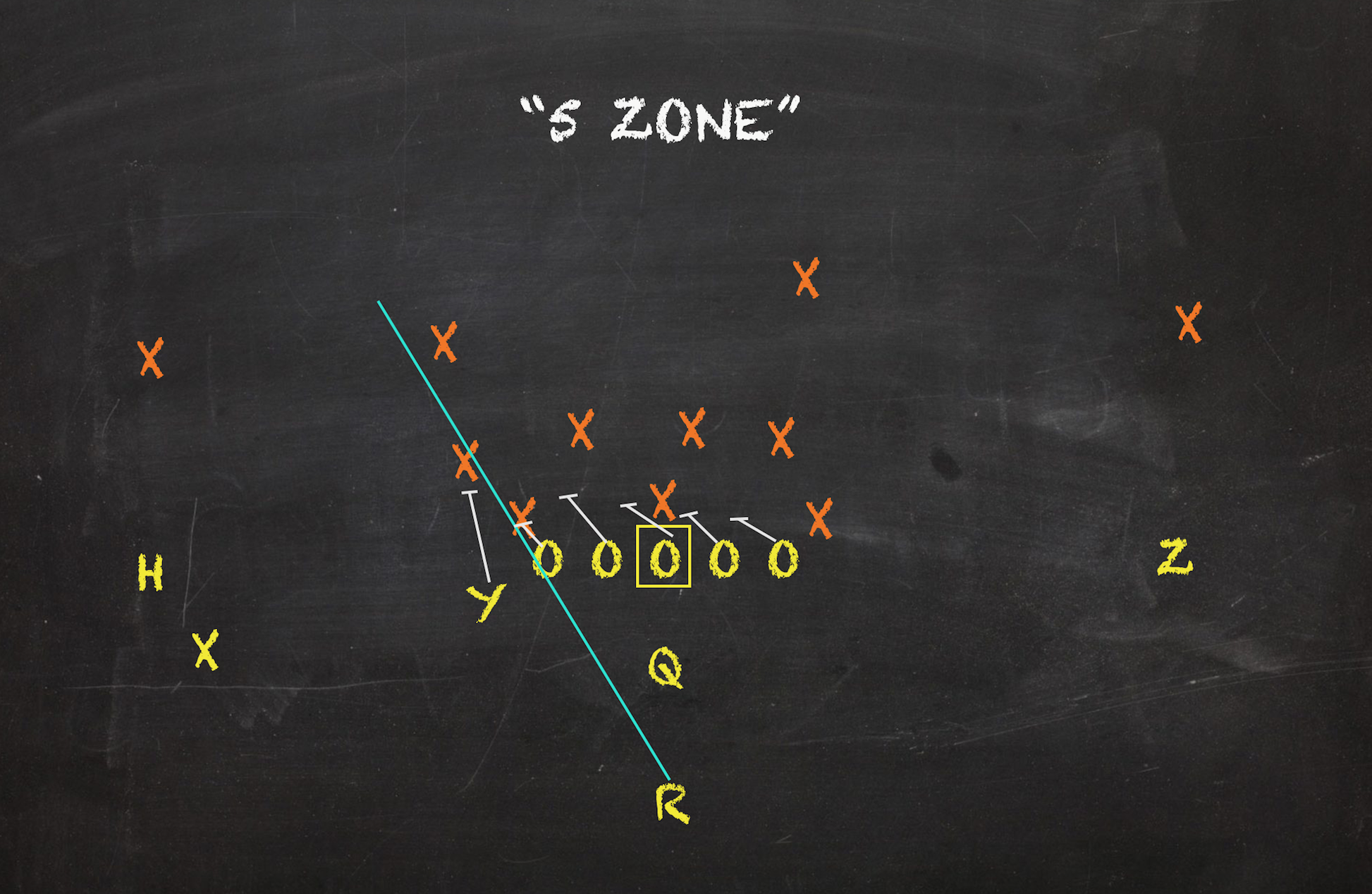
With it doubling Missouri’s next closest look, the Off-Tackle easily racked up the most yards for this offense. Besides gaining 300 more yards than the No. 2 concept, the Tigers’ top play was responsible for about a fifth of their yards in our sample.Though the concept had a pretty good Y/A, it delivered plenty of muted carries. Sure about 10% of all Outside Zones went for a gain of more than ten yards. But nearly 56% of them failed to go for more than three. Strangely enough, the Tigers averaged exactly the same amount of yards before and after contact (2.70) when disregarding our parameter. The large majority of these runs’ production were predominately directed towards the right of center. Regardless of point margin, 75% of Off-Tackles went that way with 60% hitting the Promised Land outside. Talk about a tendency setter. Despite that, Missouri was far more potent hitting the edge leftward. Over a fifth of the sinister attempts went for an explosive gain compared to under 7% for rightward Off-Tackles.
2. Inside Zone Slam Read: 192 yards, 4.57 Y/A, 52.4% Success Rate
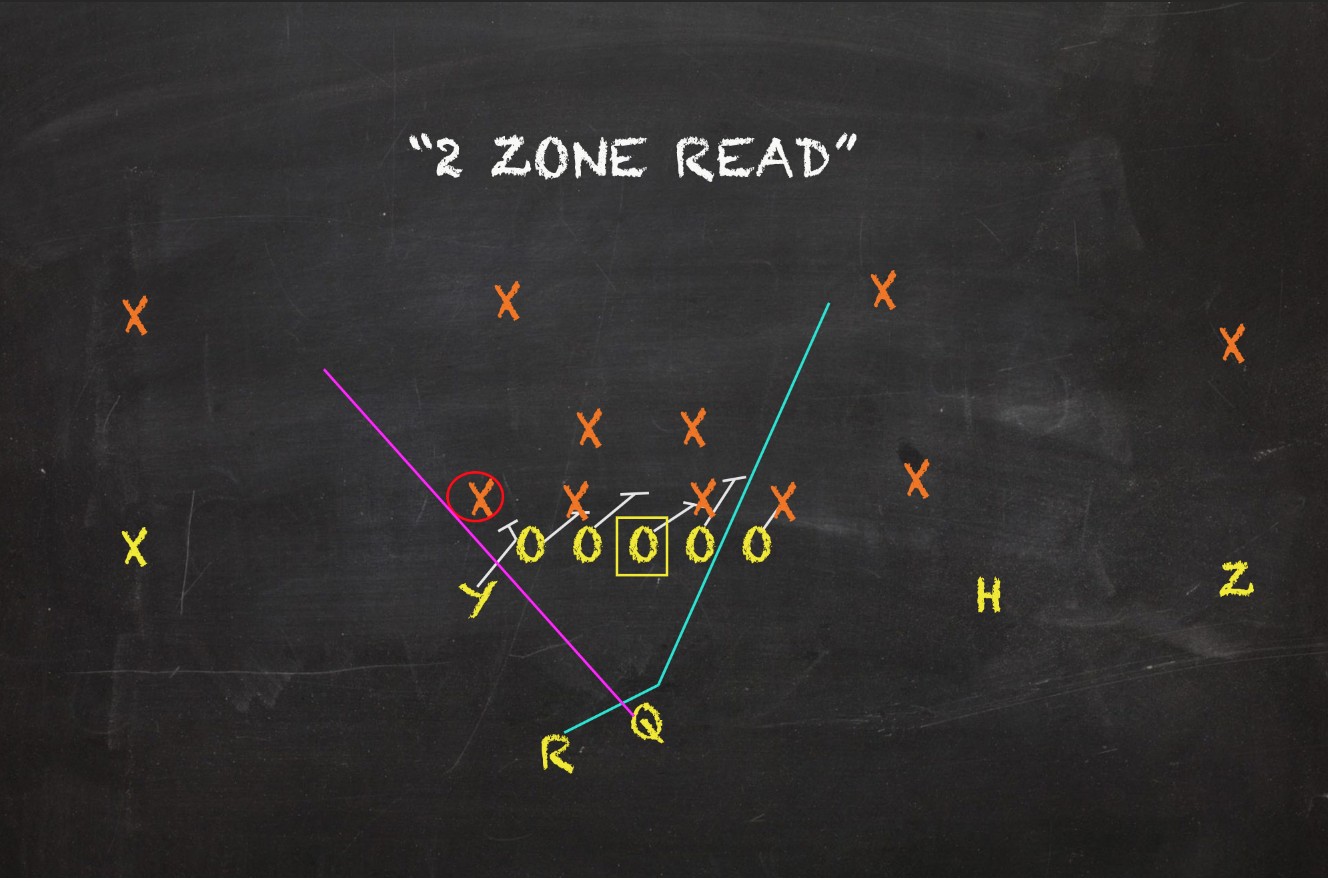
As a reliable concept overall, the Slam Read plugged away and compiled the second-most yards of any concept. Yes, the Off-Tackle tripled its output but its displayed far more variance in between attempts. Disregarding our parameter, Inside Zones went for three yards or less on nearly 55% of their tries. So even if some beat situational goals, it was overly a well-capped concept. But it’s not like this look didn’t birth some big gainers. This read option delivered a 13.3% Explosive Run Rate, which tops the team’s overall clip. The caveat was, however, only one carry went for more than 20 yards and the Tigers only logged a single explosive run over its last three games the Slam Read.
3. Tackle Counter Read: 188 yards, 4.70 Y/A, 40.0% Success Rate
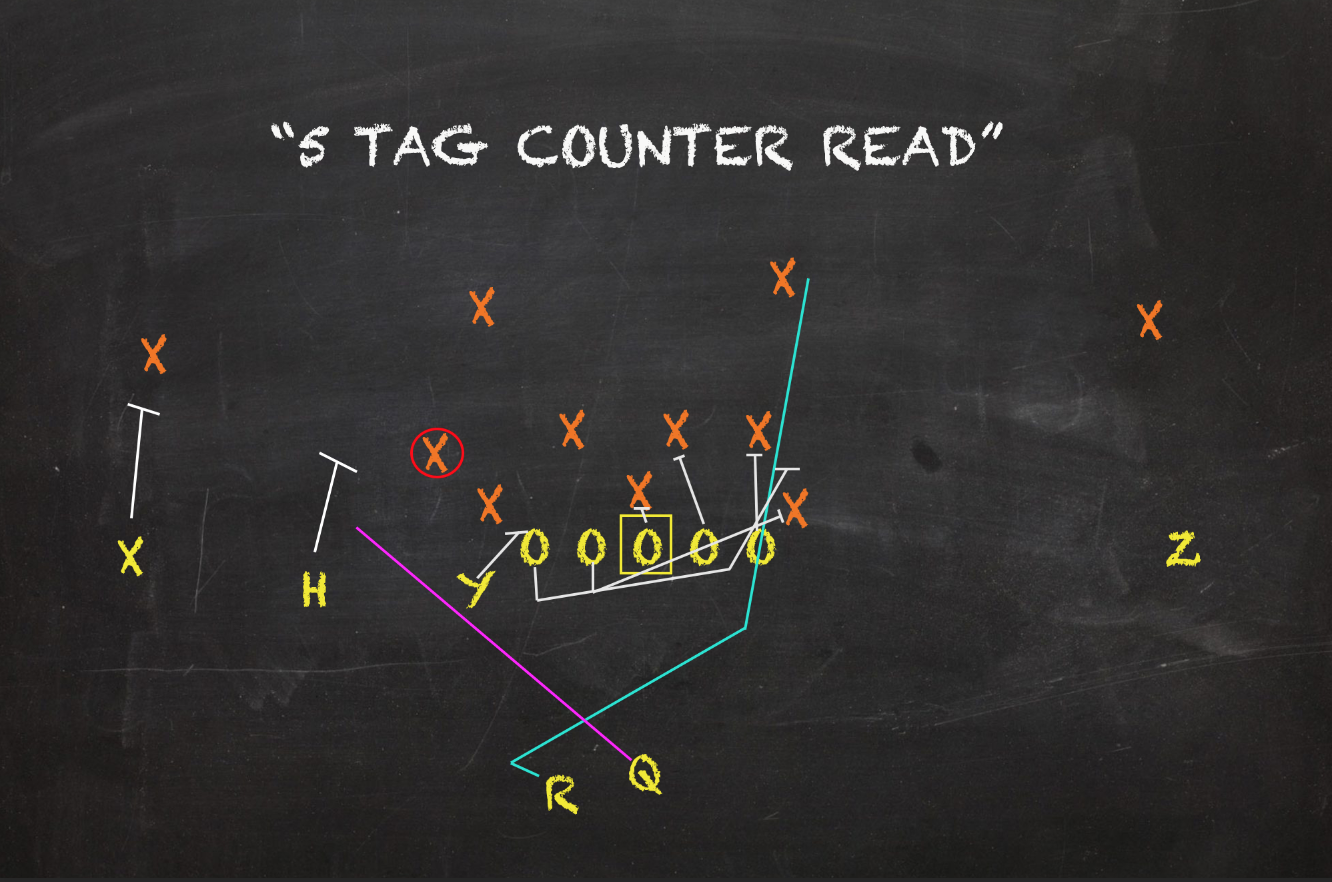
One, two, three. Missouri’s three most called concepts finished as its top3 yardage gaining looks. In terms of potency, the Tackle Counter’s personal 15.2% Explosive Run Rate was just fine. And despite logging a little less carries than the Slam Read, doubled its number of runs that went for 20 or more yards. So what if the volume figures were one and two! As aforementioned, most of the this look’s explosive runs occurred on first downs, which allowed Tackle Counter to sport a Y/A a half a yard better than its overall clip. Oddly enough, the majority of this concept’s reps were directed towards the right. Since it’s meant to play as a misdirection to the Off-Tackle and three-fourths of that look’s tries went the same way, it’s fair to question what Drinkwitz was going for exactly. But then again, having Larry Borom at RT probably persuaded him to aim to hit that edge as much as possible. At the end of the day, about 55% of Tackle Counter Reads went rightward.
4. Wheelie Switch 177 yards, 15.5 Y/A, 54.7% Success Rate
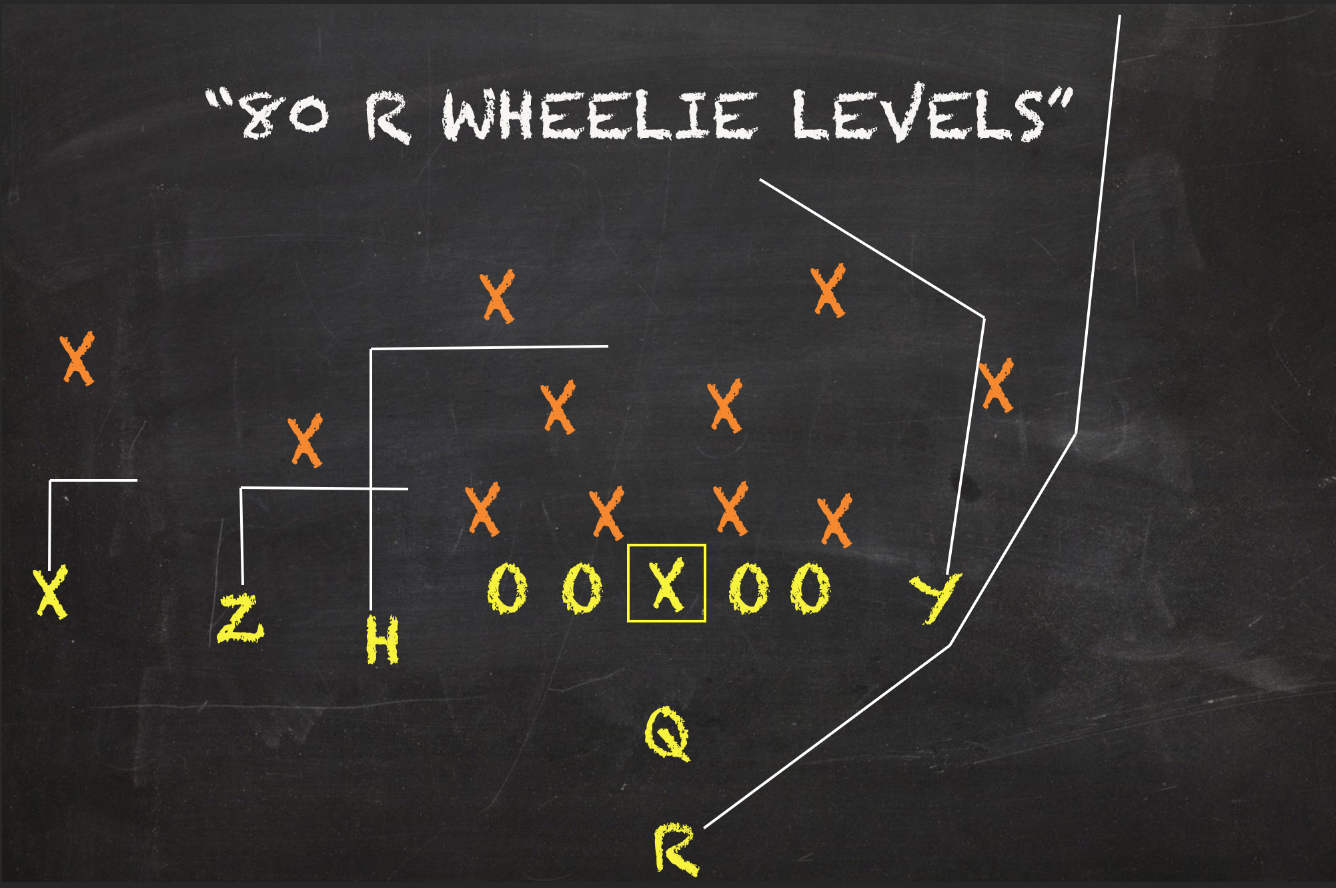
The Wheelie Switch was quite good a manufacturing an open target downfield for the Tigers. All but one of its six completions in our parameter went for a gain of 20 or more yards. With that kind of potency, this look didn’t need that many tries to finish among this offense’s top yardage gainers and the top producing pass concept. As aforementioned the majority of this look’s explosive gains were the result of hitting a running back wheel deep downfield. Those three completions accounted for half of this concept’s yards. Tyler Badie was the recipient of each one. The two targets he didn’t haul in weren’t catchable. No other Tiger eclipsed 50 yards in this context. Micah Wilson accounted for Wheelie Switch’s lone score: a 41-yard, wide-open catch against LSU.
5. Spacing/Curl Flat: 163 yards, 7.41 Y/A, 68.2% Success Rate
Even though this concept is designed to nickel and dime, this play was able to earn the Tigers over a dollar in worth. Poor analogies aside, the short completions added up over the course of Missouri’s meaningful minutes. Though no Curl+Flat pattern generated an explosive catch, this look overly created excellent pitch and catch opportunities. The lion’s share of the Tigers’ targets were directed toward outside receivers. When lined up at X or Z, Tauskie Dove and Keke Chism commanded 60% of its targets and 62% of its yards. Despite that element, the perimeter options usually worked their curls toward the inside. All in all, Missouri’s passers only targeted one route outside the numbers on this look, which happened to be a three-yard flat route completion to Tyler Badie. From left to right, they spray was pretty balanced with 11, 8, and 9 targets, respectively.
6. True Screens: 112 yards, 7.47 Y/A, 40.0% Success Rate
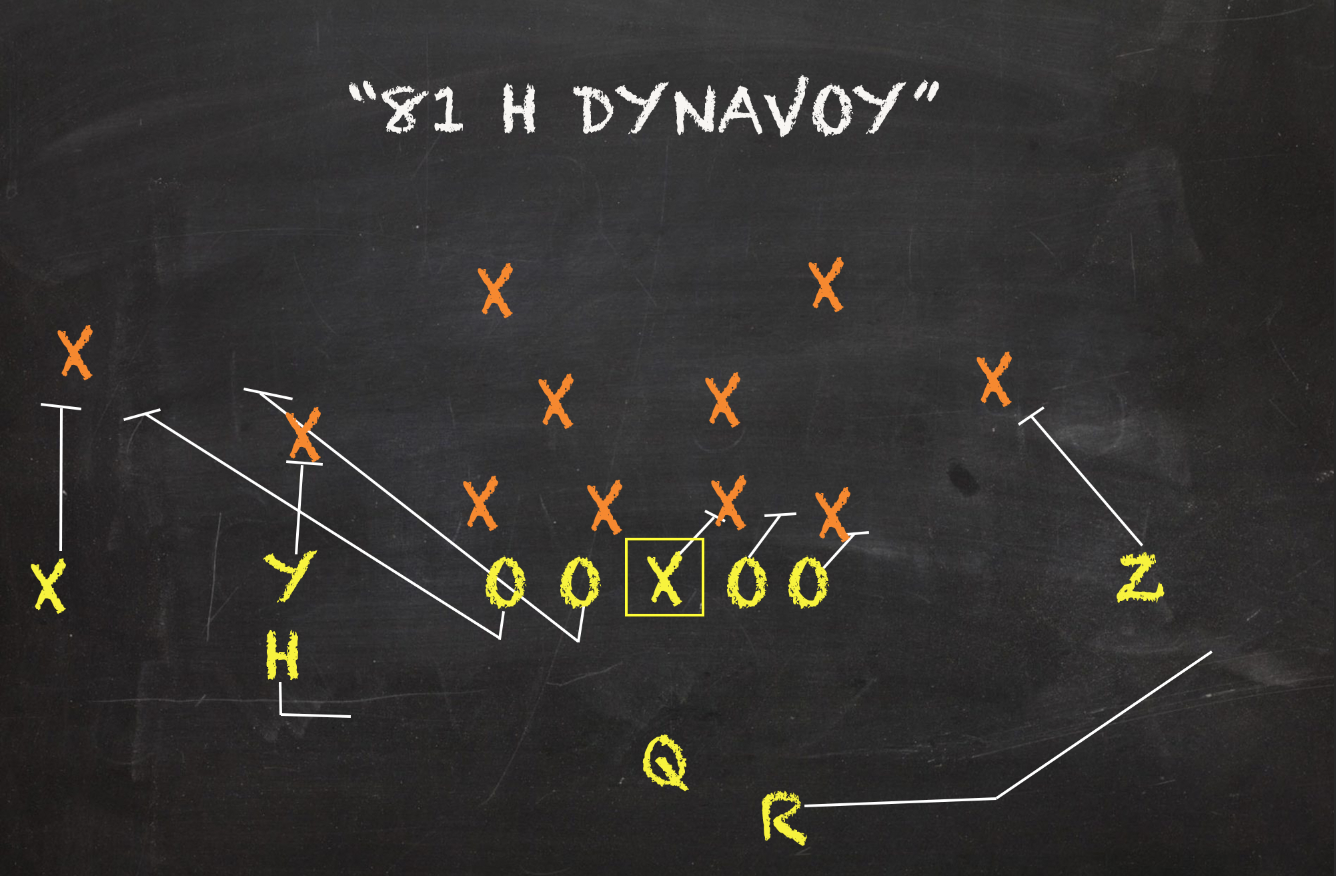
Regardless of the score, Missouri called the SEC’s 3rd-fewest Screens in conference play this year. Despite Drinkwitz dismissive attitude towards them, only two SEC offense’s sported a preferable Y/A on Screens compared to the Tigers’ 6.82 clip. In meaningful minutes, their output was even better. And for what it’s worth, the conference-wide average Success Rate on the concept group was 34.4%. Mizzou easily topped that. The vast majority of their Screen production came via their running backs. Larry Rountree and Tyler Badie accounted for 97 of the group’s 112 yards and two-thirds of its targets. Each logged one explosive catch; no other Tiger accomplished that feat. While the backs carried the mantle, Convoy Screens finished with the half of the group’s attempts with six. The remaining options were mostly combination of Swing and Slip. Quite often, Missouri featured two-headed screens on opposite sides of the center to provide an extra out and further stress their opponents.
MOST SUCCESSFUL CONCEPTS
Omaha: 1.54% Play Share, 10.1 Y/A, 87.5% Success Rate
Now, I don’t think there’s a widely accepted term for isolated out-routes to perimeter receivers. But in our vernacular, I label said looks as Omaha. This concept wasn’t really a major part of Missouri’s 2020 offense. Sure, it was seen on some tags and complimented some middle of the field concepts. But it was ignored for the most part. That is, until the month of the season. Omaha was featured on 15 snaps in that same time frame including all eight of the ones targeted in our parameter. In this context, the popular patterns including pairing the quick-out opposite a running back Swing Screen and opposite a slot Drive concept from trips. Though no explosive gains came of it, it was an easy design that certainly was worthwhile for this unit.
2. Spacing/Curl Flat: 4.22% Play Share, 7.41 Y/A, 68.2% Success Rate
With this horizontal stretch concept birthing plenty of easy completions, this offense found no trouble helping Curl+Flat combos finish among the Tigers’ best plays even though Missouri featured this concept more than any other SEC team. Speaking of the easy completions, only five attempts failed to be caught. Missouri’s passers combined to post an 84% Completion on targeting this look regardless of the score. Just about half of them resulted in a fresh set of downs. The only black mark of sorts on this concept’s profile is that no reps resulted in a score or gain of more than 20 yards. Can’t win them all. Despite the volume at which this offense featured this look, only Florida bested Missouri’s sturdy 68.2% Success Rate on Curl+Flat combos within conference play this year.
3. Slant Variations: 3.65% Play Share, 5.32 Y/A, 63.2% Success Rate
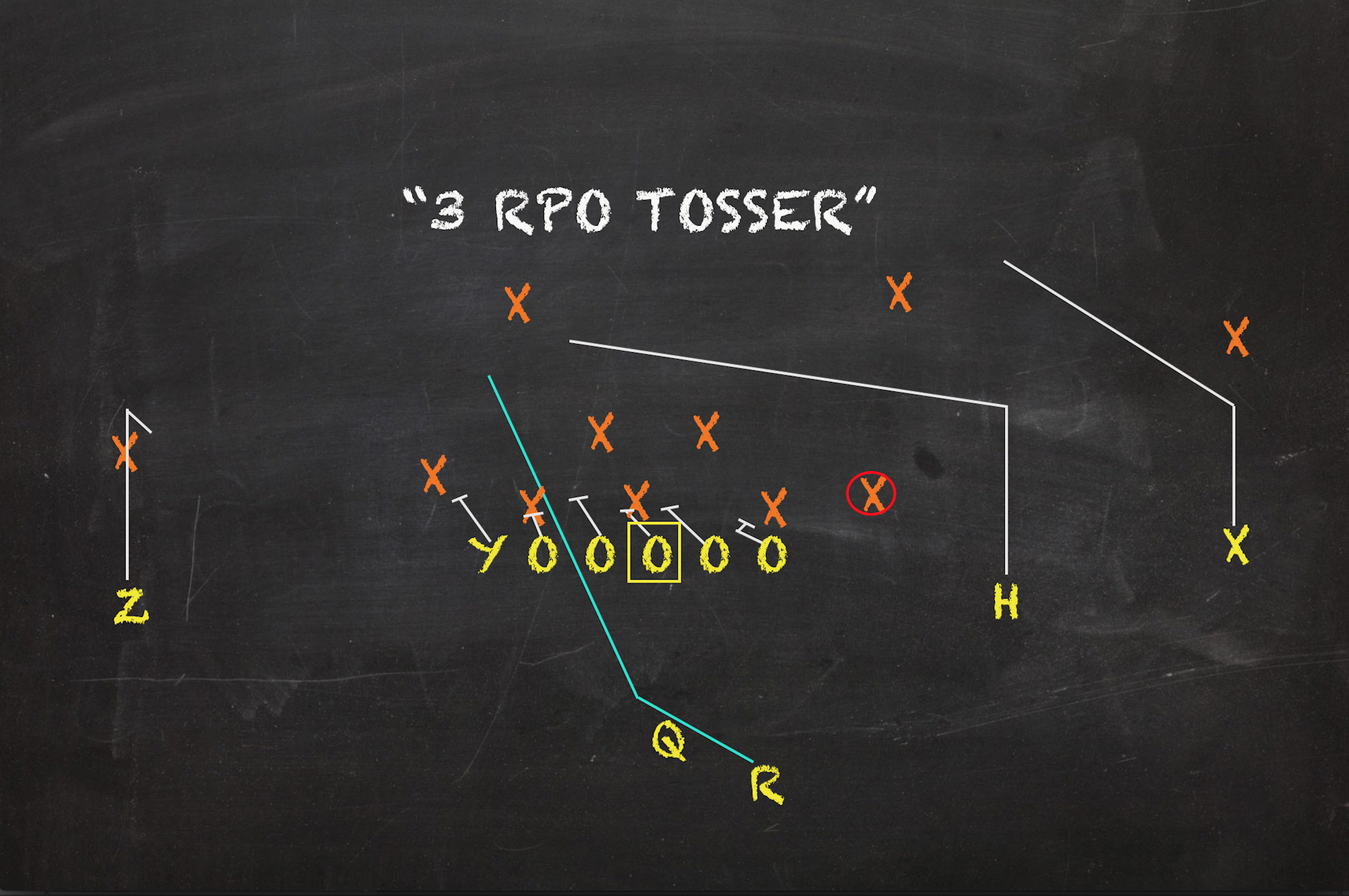
Though other offenses have weapons that can take a slant route to the house, Missouri’s offense didn’t operate that way. Sure — about half of its targets resulted in a conversion; but the longest gain this concept birthed was a 17-yarder. Its output very much resembled their trusty Curl+Flat combos in terms of output. But, Slants produced a pair of scores. The only Tigers to see multiple failed targets were Keke Chism and Barrett Banister. Each logged a drop. On the other side of the coin, Dameon Hazelton proved to be this offense’s best to target on these plays. All four of his slants were caught in our sample. They totaled 43 yards with three of his chances resulting in a first down. He was the only receiver to rack up more than ten yards after the catch on this concept.
4. Wheelie Switch: 2.11% Play Share, 15.5 Y/A, 54.7% Success Rate
In our parameter, the Wheelie Switch mostly was seen on early downs. Only one was repped on the money down. The look was particularly good on second downs where the concept logged most of its tries. Across its six chances, four balls found success with an 18.0 Y/A. Again while one out of five called Wheelies on average went for a gain of 20+, this Vertical Switch was much more in juicy when targeted outright. If you recall, five of those 11 plays resulted as an explosive catch.
5. Tackle Counter Triple Option: 2.11% Play Share, 6.27 Y/A, 54.7% Success Rate
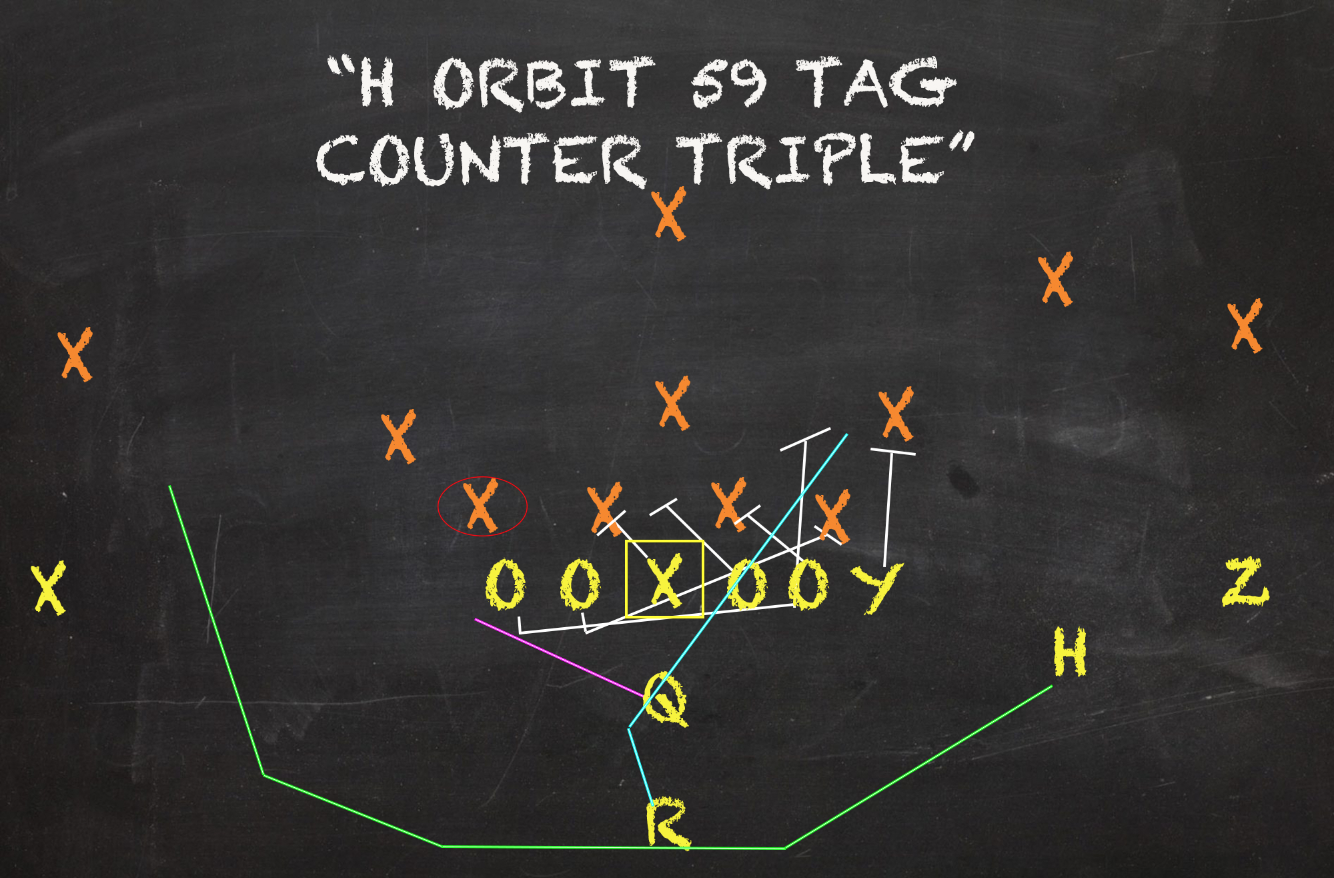
Of course, no other SEC offense came close to challenging this offense’s knack for this three-headed monster. It’s only fitting one of these looks finished among this unit’s best. Along with the root concept being a counter itself, Missouri wasn’t shy to get cute with its complimentary motion to further accentuate the Tackle Counter Triple’s effectiveness at creating confusion for defenses. With all the moving parts commonly being deployed deep into enemy territory, this design naturally aims to stress defenders into guessing wrong. Missouri logged at least one succesful try for all three potential ball carriers on this design.