2020 Offensive Play Calling: LSU
2020 Offensive Play Calling: LSU
I always like to say happiness is the positive differential between expectations and reality. If you set your hopes too high and the actual results fail to meet that threshold, you’re more likely to become bummed or dissatisfied. After a record-setting and historic offensive showing in 2019, I don’t blame some LSU fans for riding the wave of euphoria and being optimistic for what this season held. That said, matching the previous fall’s output was a long shot to say the least. Along with replacing most of its offensive starters, losing its best player to opt-out, changing passing game coordinators, and dealing with the new normal that COVID bestowed college football, hardly anyone should have anticipated LSU to pick up from where it left off. Still, fans are fans, and some folks just couldn’t help themselves. Bo Pelini’s defense aside, plenty of value can be had looking at the Tigers 2020 performance for those of us who set reasonable expectations.
With a slight change of course in offensive play calling and the aforementioned roster woes, LSU was a very average relative to the rest of the SEC. Sure, the Tigers continued to pass at a high clip, but this offense was comfortably mediocre basically across the board. On the bright side, that meant few elements were major liabilities. Still, there was little to get excited about looking at the numbers. Though its Success Rate finished middle-of-the-road along with its passing clip, LSU’s run game only bested Vanderbilt’s by year end in terms of rush yards before contact and Explosive Run Rate. Without the ground able to provide value as a secondary element, LSU’s offense was easier to pinpoint, slow down, and get off the field. The Tigers joined Tennessee as the only other conference offense with a 3-and-Out Rate over 30%.
I don’t want to make this bad boy a comparison piece between LSU’s 2019 and 2020 offenses, but I’m bound to make some references every now and then. So apologies on the frontend for that. To get a better idea of how this offense aimed to operate, I looked at snaps when the Tigers were either up or down 18 points. That way, less garbage time snaps skewed the output and gave us a better depiction of their true play calling in the heat of battle. With that parameter applied, I examined this offense’s favorite run and pass plays, the looks that gained the most yards, and the LSU's most successful concepts from 2020.
MOST FEATURED PASS CONCEPTS
1. All Verts: 7.00% Play Share, 10.1 Y/A, 30.9% Success Rate
All Verts — or “Double Go” in the lingo of 2019 — was overwhelmingly this offense’s favorite aerial concept. Including Divide/989 targets, it logged 17 more attempts than the next pass look in line. Only the Air Raid in Starkville featured this field stretcher more than the Bayou Bombers. However, Scott Linehan preferred to not deploy his tight end as an underneath outlet. Not that he didn’t on occasion; but that was often a staple of Joe Brady’s vertical attack. With the iffy protection, he opted to maximize a clean pocket over using outlets as pressure points in the short areas of the field. On the whole, the Tigers’ Success Rate on All Verts was relatively average within the SEC. That said, they were the only team in the conference to sport a double-digit Y/A.
LSU’s play callers liked to get All Verts going either on first downs or on third downs. As this offense’s favorite pass play, it logged the most attempts in both of those spots. Most of its tries occurred to start a set of downs, which is where this concept donned its best figures. Across its 22 such targets in our sample, it delivered a 40.9% Success Rate and 16.6 Y/A. Not a bad rate of return if you ask me. But, its Success Rate dwindled on each subsequent down. A good deal of LSU’s lackluster showings on the money down stem from its poor execution on All Verts (and being behind the chains enough where you have to resort to this deep pattern as a desperation play). As the go-to man in this offense, Terrace Marshall Jr was undoubtedly the most productive Tiger when targeted on All Verts. TMJ caught seven of his ten such chances — five of which resulted in points — for 264 yards. No other pass catcher cracked the triple-digits in this respect.
2. Flood Variations: 5.17% Play Share, 6.68 Y/A, 48.3% Success Rate
Along with increased reps to All Verts to test defenses on the backend, Linehan cranked up LSU’s usage of Flood patterns to create identifiable horizontal high-lows for his passers. The concept group’s play share more than doubled year-over-year. No one subconcept dominated Floods’ reps as Play Action Bootlegs, Sail, and Cross all received between eight and 12 targets in our parameter. Truth be told, these looks really picked up once the freshman started seeing snaps. Only eight Floods regardless of subconcept were seen the first four games, but at least five were logged in five of the six games after Brennan’s injury.
LSU’s favorite Play Action Bootleg, which led the group in reps and Success Rate, was Waggle — a weakside pattern that utilizes a slide as a hot route and is commonly used to complete a three-man playside combo coupled with a trailing crosser. All of the PA Boots in our sample were categorized as such. Across its 16 snaps, LSU showed off five different Sail patterns. Like how All Verts overly ridded itself of Y-Shallows short, this strongside Flood missed out on a tertiary flat out to provide presser on flank defenders. But, don’t worry. A backside dig was always there for comfort. Cross was this offense’s least repped Flood; probably because it sported the groups worst returns. Even though Cross can help mimic the vertical bends of “Double Go” looks, LSU just could’t take care of business and posted a poor 37.5% Success Rate when targeting that concept.
Each variant was used a little differently in our sample. Since they wanted to strike after presenting a threat of running the ball, PA Boots were predominately an early down play. Not that LSU was one to favor the ground in those spots, but sometimes linebackers just can’t help themselves from trying to log a tackle. Cross was also largely used on first downs. Of its eight targets, seven occurred there. Sail was balanced across all downs with no down seeing fewer than three tries in our parameter. Either way, it was its best self on first or second down. Despite going o’fer on the money down, Sail rocked a 71.6% Success Rate and 11.6 Y/A on early down targets.
3. Tosser: 4.17% Play Share, 5.16 Y/A, 48.0% Success Rate
When all of its subconcepts pooled together, Slant Variations accounted for roughly 8% of LSU’s offensive plays in 2020. In our sample, the dual slant pattern Tosser received the majority of its concept group’s targets. Last year, this look led the way on the Tigers’ passing script and donned a sterling 71.1% Success Rate in SEC play. Including all snaps even when the concept wasn’t targeted, Tosser was featured on 8.6% of LSU’s total snaps. Despite a higher play share, this offense failed to match its figures from the previous fall. LSU used this pattern mirrored in the dropback game, placed it on the backside of Stick, Spot, and and Vertical Shots, and healthily utilized Tosser on RPO designs. But despite plenty of chances, this Slant Variation only logged a pair of RPO attempts in our sample. This route mostly did its damage in the dropback game.
Functionally, Tosser helped this offense seize yardage in the underbelly of defensive drops. I mean, this concept isn’t exactly playing chess when others are playing checkers. Since coverages tend to sag a little bit when they have some cushion, Tosser was turned to on second downs when LSU was a little bit behind the chains. Exactly 60% of the concept’s true targets occurred in those spots where it owned a 53.3% Success Rate. But, every other down saw over half of its Tosser attempts fail situationally. Though Tosser appeared in every game this season, nearly 38% of its total snaps occurred in Weeks 1 and 2, which logged 10 and 15 reps, respectively. After that, no game saw the pattern featured over eight times.
4. Stick: 3.83% Play Share, 3.74 Y/A, 30.4% Success Rate
Despite being designed to present quick wins in the short game, Stick failed to provide LSU’s offense much value. A low-floor play that strives to get five yards and help manage down and distance, Stick’s numbers fell below expectations even by its conservative standards. The Tigers averaged less than four yards per pop with less than a third of the concept’s attempts finding success. This offense displayed three main renditions: Y-Stick, Raider Stick, and Shock. Y-Stick is the basic design with the back or slot threatening the flat and the tight end/inner-most receiver having a quick hitch. Raider Stick is a variant from trips with the No. 2 receiver running a quick out next to a hitch/out read from our inner-most man. Shock is an inverted Stick pattern where No. 2 runs a fade/vertical and the outside receiver executes a hitch to supplant the threat to the flat. For the sake of conciseness, I won’t list LSU's numerous backside concepts featured on these looks.
Regardless of the variant whether in the dropback or RPO game, this concept was undeniably underwhelming. So, I’m sure Tiger fans will be pleased to know that LSU targeted Stick more than any other SEC offense when taking into account all snaps. In terms of featured reps, Stick received the most tries in Week 1’s loss to Mississippi State. One out of every seven snaps on average saw this concept, but only three of its 12 plays logged an outright attempt. The Florida game experienced the most targets with six, and wouldn’t you know that none of them worked situationally…Interestingly enough, all three passers logged between six and eight attempts on Stick this season for a total between 24 and 29 yards. Collectively, a 57.1% Completion% on this gimme concept simply won’t cut it. No Stick resulted in an explosive gain or scored a touchdown. The look only produced four conversions across 21 pass attempts. Steady-Freddy plays only work if they’re overly consistent. Stick certainly wasn't in 2020 for the Tigers.
5. Smash Variations: 2.83% Play Share, 6.35 Y/A, 47.1% Success Rate
Smashes were more complimentary patterns than core concepts for this offense. Variants were paired opposite Stick, Trail, Levels, and Dagger. That said, these plays provided value albeit across sporadic usage. Brennan and Johnson each logged eight Smash attempts in our sample with Finley failing to target the look even once. Two games accounted for about 70% of the concept group’s attempts: the Missouri and Ole Miss matchups. Both games featured rollout Bench designs as well as pairing the Corners pattern opposite Levels — one of the staple combos from 2019.
Despite not being particularly accurate targeting this concept group, LSU’s passers delivered a collectively nice 69% Completion% with a 50% Success Rate. For whatever reason, the duo both was more keen on leftward attempt. Brennan and Johnson were 7/7 for 49 yards and a 71% Success Rate on such throws (compared to being 4/10 for 47 yards and 30% Success Rate targeting Smashes to the right). For what it’s worth, all of the leftward attempts traveled less than ten yards. Kayshon Boutte logged the most targets with five; he along with five others ended the year with two catches off Smashes. Departed tight end Arik Gilbert was responsible for the only reception in our sample to gain over 20 yards.
Every single successful Smash target occurred on early downs. If we were the exclude the groups’s collective 0/5 clip on third down, its Success Rate would be 75%. The Corners wrinkle was the standard bearer for the second straight year in terms of inflating the group’s bottom line. Its individual early down metrics were a 8.5 Y/A and 83.3% Success Rate.
6. Honorable Mentions
Though they won’t get much analysis, I wanted to shed light on a handful of pass patterns that logged between 11 and 13 targets. Starting with most to the fewest in that range, these seldom-called concepts included: Spacing/Curl+Flat, Solo Slant, Convoy Screen, Comebacks, and Dagger. If LSU’s top5 favorite passes totaled a 39% of this offense’s aerial attempts, these added an additional 17%. Though this offense had its favorites, the braintrust still set aside a considerable number of snaps for looks off the beaten path. Dozens other concepts saw ten targets or less in our sample and combined to account for 44% of LSU’s pass attempts.
MOST FEATURED RUN CONCEPTS
1. Inside Zone Slam Read: 14.5% Play Share, 3.47 Y/A, 43.7% Success Rate
Last year, the Tigers noticeably streamlined their run game after it took a back seat to LSU’s efforts through the air. Despite having ten different run concepts sport a play share of at least 2% (six eclipsed 3%) in 2018, only two looks cracked that plateau after the Bayou Bengals flipped the script: the Inside Zone Slam Read and Duo Dive. Basically 70% of LSU’s run plays during its championship season were those two looks. When the Tigers featured double-digit ground looks as part of its normal offense, no singular concept stood out as a method of providing value or consistency. But once this offense “specialized” on only a couple of plays, the Tigers went from the SEC’s 2nd-worst to its 2nd-best unit in terms of Rushing Success Rate on early downs. Captain Obvious wanted me to remind you, however, that Joe Burrow and ‘dem boys certainly helped lower box counts and present advantageous opportunities to attack opponents on the ground. Still, the Tigers had to execute.
Like last year, the Tigers overly strove to keep it simple with its rushing offense. Once again, the Inside Zone Slam Read logged the most tries of any concept by a far margin. In our parameter, it received 87 tries, which more than doubled the next look in line. But with roster turnover and an objectively less-threatening pass attack, the Tigers struggled finding much room to run with its core Inside Zone Read. Regardless of the scoreboard margin, the concept only produced eight ten-plus yard carries all season for a dismissible 8.24% Explosive Run Rate. Producing breakaways remained to be a challenge no matter the run concept as LSU finished along side Vanderbilt to be the only SEC offenses with a clip in the single-digits. Since it was this offense’s lead look on the ground, it's responsible for much of the Tigers’ shortcomings in the run game. The Slam Read’s results were plodding and inefficient at its worst and middling and forgettable at its best. Half of its reps were on RPO designs, but the Slam Read’s bottomline sported the same muted returns in each facet.
Though it remained a good look to seize conversions or scores on short porch tries, much of this concept’s sour numbers are thanks to its underwhelming snaps on early downs. Nearly half of the look’s tries were on first down where it delivered a 4.12 Y/A and 36.6% Success Rate. Again with these being responsible for the largest portion of the Slam Read’s output, these snaps played a big role in preventing this run play from sporting much value. At least, the Slam Read’s Success Rate increased on each subsequent down. Still, it overly put the Tigers behind the chains. Only one in five on average resulted in a fresh set of downs across the entire season.
2. Duo Dive: 5.67% Play Share, 3.62 Y/A, 50.0% Success Rate
The Slam Read and Duo Dive compliment each other quite well. Despite both being inside runs primary directed towards the B-Gap, the differing blocking philosophies aim to make defenses wrong based on how they initially line up. If the front itched on stopping a zone away, LSU wouldn’t hesitate to smack opponents with a playside double and visa versa. By default, this gap scheme is a low-floor play. The double teams for which this concept gets its name are overly concerned with first-level defenders and can often leave backers untouched, which isn’t always the best blueprint for sustained success on the ground. When a defense is on its heels, however, this north-south power play can further help offenses play bully ball and toy with smaller fronts. Still unless a team is bestowed with elite tackle breakers or backs keen on bouncing to the outside against a downhill threats, the Duo Dive is meant to forge four yards through a cloud of dust. That’s predominately how it preformed for LSU in 2020.
On a per carry basis, LSU’s secondary run concept was just as unassuming as its lead look. But despite sporting a Y/A under four yards, the Duo Dive saw half of its tries work in our sample. The Duo Dive logged half of its reps on first downs where it sported the exact same Y/A as the Slam Read. Second downs were the only spots that saw over half of this play’s tries fail. As a hard-nosed gap design, the Duo Dive was its most successful on the money down; four of its six such tries got the job done in our sample.
Despite maintaining its role as LSU’s run game's beta look, the Duo Dive saw its usage almost cut in half year-over-year. The look’s Y/A and Success Rate dropped 1.7 yards and seven percentage points, respectively, against SEC opponents year-over-year. With those iffy returns, reps became sporadic. In our sample, almost 80% of Duo Dive’s attempts occurred against Arkansas and Florida. (Including all snaps, these reps composed over 56% of its tries all season). Sticking with the low-floor nature of this play, only one Duo Dive resulted in an explosive carry all year, a 13-yard TDP scamper in garbage time against South Carolina. Speaking of Davis-Price, he was LSU’s lone source of efficiency on all Inside Powers. Doubling the next closest ball carrier in attempts, his 72% Success Rate was the only clip on the team to finish north of 39%.
3. Outside Zone Read: 3.83% Play Share, 3.52 Y/A, 26.1% Success Rate
With the Slam Read and Duo Dive sucking, they both lost play share year-over-year. They still commanded the majority of the Tigers’ rushing reps, but their combined clip dropped from 70% to 50%. LSU’s 3rd-most favorite ground concept proved to be even less dependable than its two core inside runs. Even though the Outside Zone Read wasn’t among this offense’s top5 runs in 2019, the reasoning for incorporating this look was sound. After all, complimenting an inside concept with an outside one is fairly basic. In short: if they peak, they can be reached. That said, barely a quarter of the Outside Zone Read’s reps worked. Sadly, it too rocked a Y/A under four yards, which made LSU the only SEC offense that produced a such clip for its top3 run looks. Circumstance and an inability to control the edge made this concept overly futile. In our meaningful minutes parameter, the look averaged about two tries per game. But looking at the Tigers’ script and seeing when it was called, the over two-thirds of its reps occurred in the three game sample versus Arkansas, Florida, and Ole Miss. The Outside Zone Read only birthed three carries that generated over ten yards; two of them occurred in the season finale with Josh Williams logging the crown jewel 30-yarder. Thanks to that, Williams ended up being the team’s most productive rusher on this look.
LSU’s backs saw less daylight around the edge than a polar night in winter. The Tigers averaged a measly 0.96 rush yards before contact on Outside Zone Read carries. With that bit of knowledge it’s no wonder two-thirds of them gained three yards or less. In our sample, this look was exclusively an early down play. The Outside Zone Read was particularly unspectacular to start a set of downs where it donned a disappointing 2.07 Y/A and 20% Success Rate. Though the Slam Read and Duo Dive commonly featured route tags, less than a third of this concept’s reps were RPOs.
4. Y-Insert: 2.83% Play Share, 7.53 Y/A, 70.6% Success Rate
Like last year, the Y-Insert finished as LSU’s best run concept. Playing off its crazy 11.1 Y/A and 75% Success Rate from last year, the look’s play share almost doubled year-over-year. In fact, the Tigers called this concept more than any other SEC offense in 2020. Arkansas and Ole Miss were the only other SEC offenses to log Y-Insert over five times (both finished with 25 and 20 reps, respectively). This power play averaged more per attempt than every other concept among LSU’s most repped runs and passes besides All Verts.
A perfect wrinkle to compliment both of the Bayou Bengals’ top two looks on the ground, it accentuates hitting a vacated gap up front with diverging double teams and a wrap-around “sniffer” looking to shitkick a defender in his path. Think of this as a modern way to run the old I-formation favorite Iso. Like on Duo Dive, a good number of these were used on RPOs that took advantage of creeping safeties with a potential solo slant/glance post or outlet tunnel.
The bulk of Y-Insert’s reps occurred against soft run defenses, which obviously helped the concept’s bottomline. The look only logged a single negative attempt all season and over a quarter gained ten yards or more. Either way, John Emery was this concept’s most productive rusher logging four of the its seven explosive carries. Along with a quarter of his attempts gaining at least ten yards, Emery rocked a sturdy 75% Success Rate.
5. Inside Zone Bluff Read: 1.67% Play Share, 3.70 Y/A, 30.0% Success Rate
Despite only logging ten attempts in our sample, the Bluff Read rounds out this offense’s top5 most called looks on the ground. As poor as its brother concept was, this provided to be even less reliable. Though the split flow action aims to make defenders’ diagnosis buffer for a beat, opponents hardly had trouble upending this look. Perhaps that helps explains its lack of usage. No attempts birthed a gain over eight yards even though an RPO throw snatched 16 with another shot play securing 22. For good reason, no game saw this play repped more than three times. Coupling the Slam and Bluff Read together, LSU used an average amount of Inside Zone Reads relative to the rest of the conference. But, the Tigers finished in the bottom4 in Success Rate with only Florida averaging less Y/A.
In our sample, all of the Bluff Read’s tries took place on early downs. Not that it matters with metrics that poor, but two of its three first down runs and one of its four second down carries found success. Half were utilized via RPOs, but only one try worked. With a small ass sample size, its hard to make too many sweeping claims about this concept other than LSU just wasn’t good executing it.
TOP YARDAGE GAINERS
1. All Verts: 428 yards, 10.1 Y/A, 30.9% Success Rate
As a heatseeker, All Verts was responsible for six touchdowns against three interceptions. Myles Brennan threw five of them while accounting for three-fourths of the concept’s output. No SEC passer complied more than his 333 such yards or bested his such TD Rate, Depth Adjusted Accuracy, or Success Rate. Naturally once he was lost, All Verts lost its potency. The two freshman passers combined for a mere 26% Completion%. Since Brennan and TJ Finley have prerequisite arm strength to make All Verts work consistently, all but one of their combined nineteen attempts occurred in one-score situations. Meaning, it was part of LSU's normal offense. Only one of Max Johnson’s took place in those spots. As a more West Coast style passer, the coaching staff gave him more underneath and timing concepts in lieu of deep patterns. Over the final month of the season, only one targeted “Double Go” birthed an explosive gain. But thanks to Brennan’s early dingers, All Verts was LSU’s top yardage gainer.
2. Inside Zone Slam Read: 302 yards, 3.47 Y/A, 43.7% Success Rate
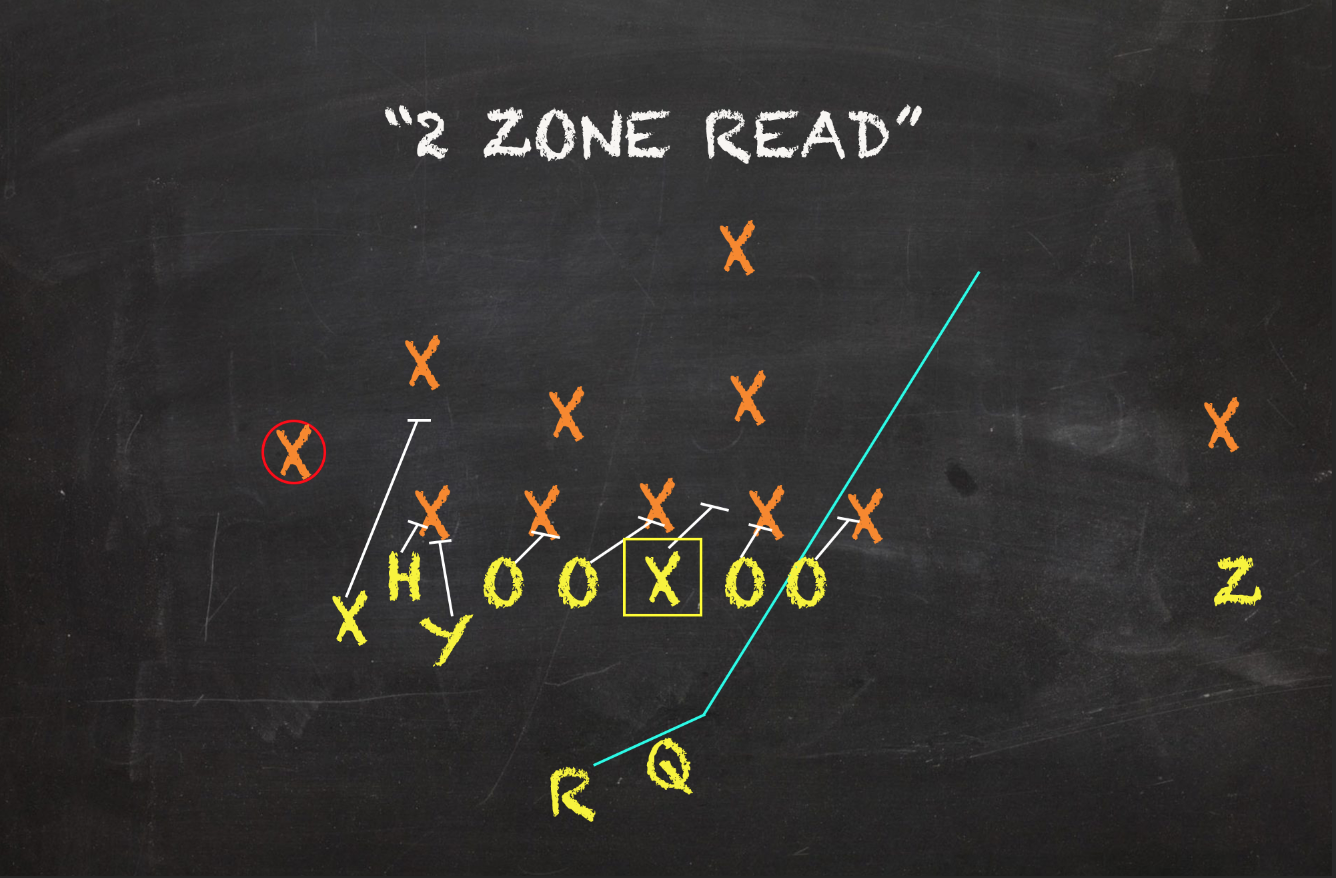
Volume allowed the Slam Read to be the only run play to finish among this offense’s top yardage gainers. With less than 9% of this concept’s carries going for a gain of at least ten yards, most of the Slam Read’s output was composed of inefficient tries. That should be fairly apparent since its Y/A fell under four yards in our parameter. That number was consistently low due to the fact Tiger ball carriers frequently faced early defensive contact. Anytime a run look dons a Negative Run Rate higher than its Explosive Run Rate, the optics are not optimal. But unfortunately for LSU, that was the reality when the Slam Read was repped in 2020. Including its brother concept, the Bluff Read, the Tigers were held below a 1.5 rush yards before contact clip on all Inside Zone Reads. Across all snaps, nearly 60% of these attempts failed to gain more than three yards. Only two rushers with a minimum of eight such tries saw at least half of their runs find success and at least a tenth result in an explosive carry: John Emery and Tre Bradford.
3. Flood Variations: 207 yards, 6.68 Y/A, 48.3% Success Rate
Only Alabama’s affinity for Cross allowed its offense to outrep LSU on this concept group. Despite the volume Floods received, the Tigers finished in the conference’s bottom4 in Y/A. With that information, I’m sure you can surmise Floods didn’t produce many big completions. In our sample, only attempt gained more than 20 yards. Just as many resulted in points. Still, this concept group helped LSU to work short to midrange areas and snatch moderate completions. Even though Flood Variations’ Explosive Pass Rate fell under 4%, two-thirds of the Tigers’ such catches resulted in either a first down or a touchdown. Like the balanced distribution between the three main subconcepts, no one Bayou Bengal stood out on the stat sheet regarding Flood targets. Seven different pass catchers snatched between two and three attempts with five of them compiling at least 25 yards.
4. Yankee Shots: 197 yards, 19.7 Y/A, 80.0% Success Rate
Since All Verts’ production nosedived after Myles Brennan got hurt, the Tigers needed to find another design to provide homeruns in the pass game. This concept certainly helped provide some field flipping completions after that point. Though only ten Yankee Shots were logged in our sample, eight found their mark as the concept averaged an explosive completion per attempt. Despite the awesome bottomline, Yankee Shots’ numbers were ballooned by its performance against Ole Miss’s putrid pass defense. All four of our concept’s tries were caught, including the game-winning score, for 130 yards. Doing quick math, I’m sure you picked up those plays made up two-thirds of Yankee Shots’ yards. Funny enough, all of these connections came on the same design targeting the same route run by the same person. Watch the video above and see Kayshon Boutte snatch a buttload of yards versus the Rebels.
5. Dagger: 196 yards, 17.8 Y/A, 54.6% Success Rate
During Steve Ensminger’s reign calling plays, Dagger has consistently been a big play generator for LSU’s offense. Primarily a two-man route combo with an inside Seam and an outside deep dig, this design is great at attacking two deep coverages and aims to create conflict for a deep half safety. With the routes threatening downfield, he has to choose either to take away the deep route or sell out to negate a route in the soft spot beyond the underneath defenders. Most of the time, the dig wins. If the safety starts eyeing the dig down, it’s not uncommon to see the seam morph into a post away from the coverage, which can really stick it to the secondary. The past two seasons, its Success Rate finished north of 70%. And while its clip fell well below that threshold this past fall, this concept still finished among this offense’s top yardage gainer despite logging less than a dozen attempts in our sample. TJ Finely was overly Dagger’s most productive passer. On his five such attempts, four wound up as completions while totaling 61% of the concept’s yardage in our sample.
6. Tosser: 129 yards, 5.16 Y/A, 48.0% Success Rate
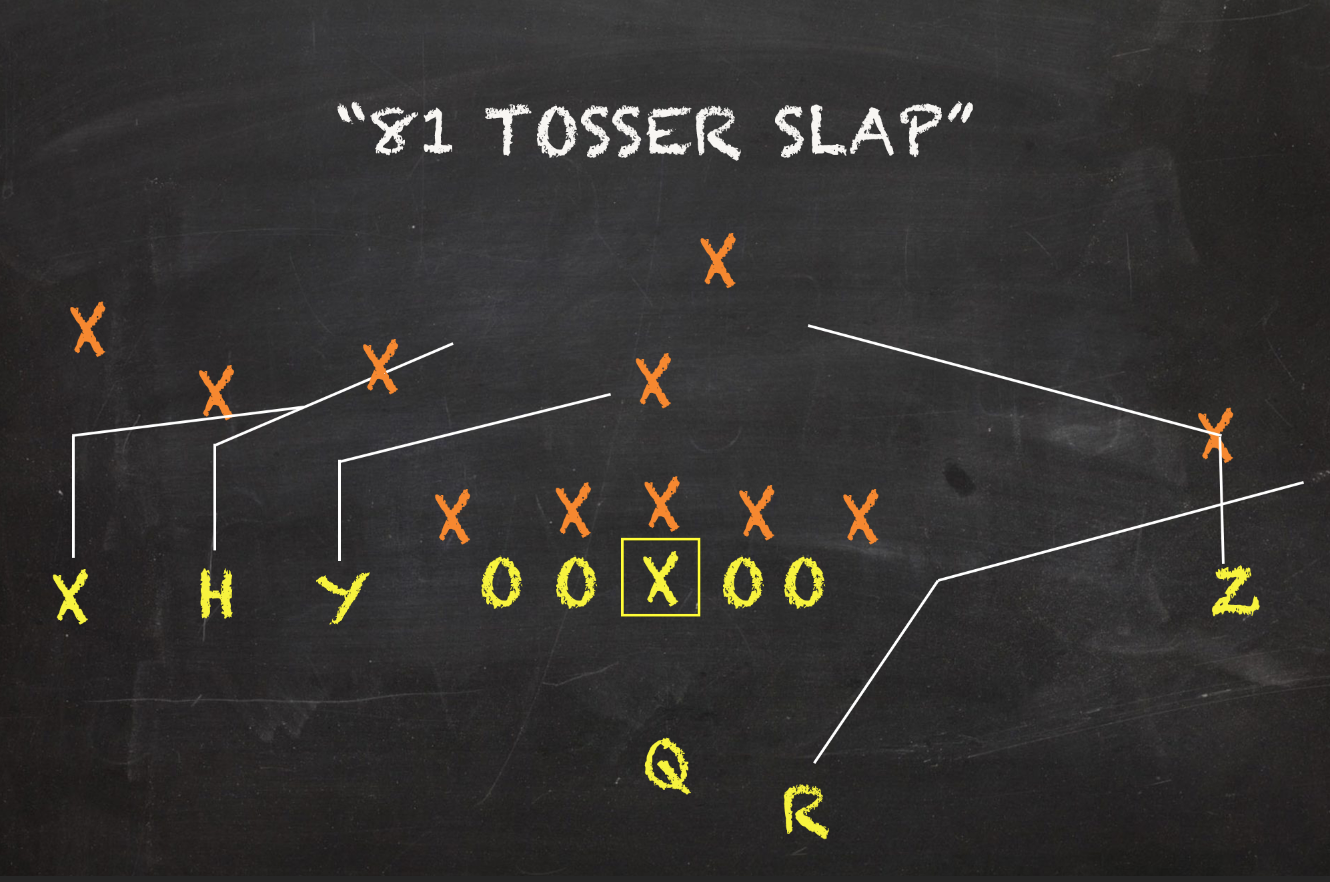
While Slant Variations helped deliver potency for this offense in 2019, this concept group was forced to settle for more modest gains this past fall. Moreover, only a single Tosser target delivered a gain over 20 yards, which happened in way back in Week 1. That 28-yarder made up over a fifth of this concept’s total yards in our sample. Either way, Tosser posted much better numbers earlier in the season when this offense was at relatively full strength. Across its 23 targets in LSU’s first five games, this concept logged 15 first downs (along with a TD). But after that point, Tosser’s production fell off a cliff. It was only target seven times the remainder of the season and only produced a a lone conversion — the look’s only successful rep in that stint.
MOST SUCCESSFUL CONCEPTS
1. Yankee Shots: 1.67% Play Share, 19.7 Y/A, 80.0% Success Rate
Though a good deal of this offense’s most-repped deep pass plays were up-and-down, the Yankee Shot aims to create a midfield high-low that puts a safety into conflict. Typically aided by heavy set play action to draw backend coveragemen out of position, a deep cross or dig travels through his line of sight hoping to bait him up before a post coming from the other side of the formation flows overtop. Again, most of Yankee Shots’ production came versus Ole Miss on the arm of Max Johnson and the hands of Kayshon Boutte. Still, TJ Finely connected on three of his four such chances. Good things are bound to happen anytime a pass play rocks an 80% Completion%. But while short patterns overly nickel and dime, deep concepts obviously can swing ball games in an instant.
2. Rub Variations 1.67% Play Share, 7.50 Y/A, 70.0% Success Rate
With Slants being this offenses de facto manbeater of choice, Rub Variations didn’t get to shine too often for the Tigers. But when these numbers were called in our sample, they largely took care of business. Looking to create cushion against sticky coverage, these were mostly unleashed in the low red zone. All three passers finished with at least three such attempts with none having more than four. Despite the carousel of QBs, all seven of the concept group’s completions resulted in either a first down or a score. Mesh was the variant that was responsible for most of Rubs output. While accounting for eight of its targets, it complied two-thirds of its yards and three of its four TDs. Though dependable, only one Rub gained more than 15 yards all season.
3. Solo Slant: 2.17% Play Share, 6.15 Y/A, 69.2% Success Rate
Along with Tosser, Solo Slants and Glance Posts presented easy completions for LSU’s passers. Despite complimenting power RPO designs quite well, only 29% of this look’s targets all season occurred on such plays. Three of them took place opposite LSU’s beloved Duo Dive from its trips bunch set. But even though the two were coupled on 25 snaps, the Solo Slant was only directed the ball thrice. In the dropback game, this “concept” is very malleable since its basically just one manbeating route. In theory, you can place it anywhere across the formation. As far as the Tigers go, they preferred to pair it on the backside of Stick, All Verts, or a swing screen. No SEC offense targeted Slant Variations as much as LSU, but the Bayou Bengals finished below the conference average in terms of output on these looks. Their figures would undeniably be better if Tiger receivers didn’t drop a fifth of their such chances. In the end, less than 62% of these attempts were caught. As this offense’s best play maker, Terrace Marshall Jr was this concept group’s most productive pass catcher as he sported a team-high ten catches, 74 yards, five first downs, and Slant Variations only score.
4. Y-Insert: 2.83% Play Share, 7.53 Y/A, 70.6% Success Rate
While LSU’s play callers sprinkled the Y-Insert sparingly across meaningful minutes in 2019, its usage was more narrow in 2020. In our sample, Y-Insert was overly seen to start a set of downs and was exclusively an early down concept. Regardless of parameter, nearly 60% of its attempts occurred in the two games against the SEC East’s two worst run defenses in Vanderbilt and South Carolina. The Tigers didn’t try this against the big boys too often, but nothing stopped them from pounding the hapless fronts of the Gamecocks and Commodores. Four of the concepts seven explosive carries occurred in those two games. Though its usage was a bit wonky, I’d personally like to see LSU test defenses more with Y-Insert in 2021 especially if its two lead looks on the ground fail to shake off their shoddy returns.
5. Play Action Bootleg: 2.00% Play Share, 5.67 Y/A, 58.3% Success Rate
LSU’s Waggle patterns really weren’t anything special. But, the quick strike slide off a play fake provided an easy design to take the pressure off of the Tigers’ young passers. Though TJ Finley struggled with his accuracy in his debut season, he completed all six of his PA Boot attempts; five of them resulted in success with a pair of first downs. Max Johnson was okay, but used his legs much more in this respect. Since Johnson was more mobile, he didn’t mind logging some carries on the sport’s original Run-Pass Option. But, he proved to be less consistent riding the concept to effective gains. Only a third of his PA Boot reps in our sample worked either by land or by air.