2020 Offensive Play Calling: Alabama
2020 Offensive Play Calling: Alabama
Racing through the SEC gauntlet unscathed is difficult enough as is. But to do so in the middle of a global pandemic while rewriting record books and blowing most foes completely out of the water, is simply the stuff of legend. As magnificent as LSU’s well-oiled machine was just one short (or not so short) season ago, Alabama one-upped the Tigers put up an offensive performance for the ages. The Crimson Tide led the SEC in all major stats this season and even trumped 2019’s Bayou Bengals in Success Rate, Points/Play, Explosive Play Rate, rush yards after contact, 3-and-Out Rate and Scoring Drive Rate. And when focusing on snaps that fell inside two-score margins, the Sabanites took the edge in TD Rate, Yards/Play, and percentage of plays that gained at least 15 yards.
Despite losing a handful of starters to the first round of the NFL Draft, Alabama maintained a healthy amount of talent among its pass catchers, O-Line, and backfield from the previous season. Though some expected the Tide to perhaps take a dip on that side of the ball, 2020’s results made those folks look pretty stupid. To maximize its team speed, bruising run game, and midrange precision of its new starting passer, Alabama tweaked its offensive approach. Sure, the structure and foundation remained unchanged. But, Offensive Coordinator Steve Sarkisian molded his style of play to fit his personnel to a T. Alabama operated more from the pistol and undercenter, featured more play action, kicked up its motion usage, took more deep shots, and aimed to jump out with an early lead with its passing game paired with razzmatazz before bullying people with its physical run game after halftime. Obviously, the change in tactics worked out for the guys down in Tuscaloosa. We know Alabama’s offense was extraordinary, but not everyone is aware of how it functioned or what it’s X’s and O’s were all about.
Quite frankly, a lot of garbage time minutes skewed this offense’s stats. As impressive as the Tide’s output was as is, they were even more astounding when the offense was out for blood. To get a better idea of how this offense aimed to operate, I isolated Alabama’s plays when they were either down or up 17 points. That way, less meaningless snaps skewed the output and gave us a better depiction of its true play calling in the heat of battle. With that parameter applied, I examined this offense’s favorite run and pass plays, the looks that gained the most yards, and the Tide’s most successful concepts from 2020.
MOST FEATURED RUN CONCEPTS
1. Counter: 6.72% Play Share, 5.71 Y/A, 45.7% Success Rate
Alabama’s offense was incredibly balanced. Not necessarily in the sense of run:pass ratio or spreading the wealth around equally amongst skill guys; but rather Steve Sarkisian refused to limit his play calls to only a few looks and emphasized keeping opponents guessing. Speaking to that belief in deception, a tried and true gap scheme misdirection earned the most attempts in our sample. Counter was the only concept that amassed more than 26 reps in meaningful minutes. Since zones composed over 43% of Alabama’s run game (including three of its five most featured looks), this design was a perfect compliment and a worthy recipient to be the lead look for the Tide’s physical run game. Unlike gap schemes that call for divergence across the line, zone runs are much more coordinated and cookie cutter up front. With that, they are pretty easy for defenses to diagnose and hence stop. When opponents get itchy playside, they reveal vulnerabilities on the backside. The initial down blocks on Counters read like normal zone flows. But once the defense over-pursues, the weakside lineman seal them inside while a pair of pullers sets our new hard-nosed hole. Alabama preferred to use a backside guard as the trapper/edge setter and an off-set TE as the wrapper/lead blocker.
Truth be told, almost half of this concept’s attempts fell outside our applied parameter. Counter was certainly a go-to late in games once opponents were already begging for mercy. But again, we’re here to talk about how Alabama performed offensively in meaningful minutes. Interestingly enough, three-fourths of this look’s sample attempts occurred in the first half where it was exclusively an early down play. A dozen run concepts received at least one 3rd or 4th down attempt, but this misdirection was not one of them. Two-thirds of its tries were logged on first downs, which is where Counter was its best self. In those spots, its Y/A and Success Rate climbed to 6.86 and 57.1%, respectively. With that kind of stat line, it’s easy to see why it was this offense’s favorite first down play.
Along with its moderate overall Success Rate, Counter was a decent source for splash carries. The look delivered ten attempts that gained at least ten yards in 2020, which isn’t really an impressive figure. After all, that’s less than one per game on average. To that point, Counter’s 15.4% Explosive Run Rate finished below the team’s overall clip in our sample. But across the conference, Counter still finished on the right side of the SEC’s mean in that sense. In case you were curious, seven of those explosive carries fell inside our parameter, which would have produced a cool 20% clip. On the other side of the coin, 15 tries failed to gain more than a yard with a couple of others resulting in a loss. Though it occasionally generated significant runs, this play was overly a way to slug forward for a modest chunk of yards. All in all, Counter experienced an average amount of at-the-snap motion relative to Alabama’s run game. About a fifth of its yearly reps utilized that tactic.
2. Duo Dive: 4.80% Play Share, 5.52 Y/A, 60.0% Play Share
As another blunt instrument to bash front sevens with, the Duo Dive remained rock steady when called upon. For the second straight year, this pugnacious gap scheme put up a Y/A over 5.2 and a Success Rate in the 60’s. Think of this design as a power play where no one pulls. Double teams and divergence will occur upfront as the line aims to create a quick seal and get north and south. Blocking assignments at the point of attack typically are shortsighted and overly concerned dealing with the first level of the defense. The Duo Dive banks on the O-Line to blow their men into the laps of linebackers before the design can be diagnosed. Since they largely go unblocked initially, a lot of teams call for their rusher to read backers' downhill approach. If the defender attacks right away, the ball carrier will look to bounce. If the he stays pat or shades towards the strength outside, the back will continue towards the hole. The Duo Dive is very much the epitome of the old school philosophy of four yard through a cloud of dust.
With that approach, this play isn’t really meant to generate a bunch of big gainers. By volume, this offense only totaled five attempts that topped ten yards all season for a ho-hum 12.5% Explosive Run Rate. To reiterate, the Duo Dive’s role was to help Alabama impose its will on fronts, fall forward, and win situationally. The look was very dependable as every down saw the Duo Dive rock at least a 55% Success Rate. While being one of this offense’s four favorite later down plays, four of its six such attempts in our sample got the job done. Though undoubtedly a low-floor design built to win in short yardage situations, almost half of this concepts reps were logged to start a set of downs.
On the year, the Duo Dive’s usage was sporadic despite finishing with one of this offense’s highest play shares. Regardless of the score, three games featured this look less than twice. The same number called it over four times with no game logging more than six tries. Two of those three instances came back-to-back weeks against Arkansas and Florida where two-thirds of Duo Dive’s reps found success despite zero explosive carries. In fact, this offense didn’t generate a single carry over nine yards from Week 4 until the National Semifinal versus Notre Dame in our sample. Despite that, almost a quarter of the concept’s yearly production came facing the Razorbacks and the Gators.
3. Outside Zone Off-Tackle: 4.80% Play Share, 6.68, 72.3% Success Rate
Though a good portion of Alabama’s ground game was all about grinding out gains with gap schemes, Sarkisian has consistently displayed an affinity for Outside Zones. Whether an Off-Tackle or wide Split Zone, a read option or straight handoff, that concept category was seen on about one out of every 11 plays on average since he returned to Tuscaloosa. Last year, no look topped the Off-Tackle in play share in SEC play. And if we were to include garbage time snaps, it would have repeated as top dog on Sark’s call sheet. But in meaningful minutes this season, it moved down Alabama’s script. Despite that decision, this Outside Zone put its 2019 output to shame. Its Y/A and Success Rate improved roughly two yards and 30 percentage points year-over-year. Charting this season, I combined straight Off-Tackles with their split zone brethren. But just in case you were curious, the latter accounted for just over a quarter of this concept’s reps and splash runs. If you are unaware of the difference between these two wrinkles, split zones ask a playside tight end to fire against the grain of the main flow and set a hard edge rather than working with the rest of the line playside to secure the perimeter. This action causes the second level to potentially pause a beat while they diagnose the play, prevents a backside end from chasing down the ball carrier if the point-of-attack is stuffed, and creates a preemptive cutback lane if the defense oversells outside. No matter the rendition, the Tide were more likely to tilt the strength of their formation rather than feature eye candy on this concept. A little less than a seventh Off-Tackles utilized at-the-snap motion all year.
You could say there’s a “chicken or the egg” kind of argument when trying to determine which concept sets up which in regards to Counters and Outside Zones. When defenses prepare to thwart the dual puller design inside-out with brawn and spills, they are easy fodder to be reached around the edge with quick seals. And when opponents widen and want to protect the edge, they become susceptible to being pushed back and gashed. Of course, which look an offense fancies more can either be determined by doctrine or defensive alignment. But, convention wisdom would say the Outside Zone would be the establishing concept since its more cookie cutter in terms of blocking scheme and hence an easier look for defenses to key on. Meaning, it’s a good design to draw itchy defenders out of position due to its easily recognizable flow. And after all when a play’s name is “Counter”, it doesn’t exactly scream “Plan A”. But since Alabama featured non-read Counter more than its Outside Zone counterpart in our sample, that helped flip the numbers. The gap scheme misdirection appeared first in eight games in 2020 showing you always don’t need to establish hitting the edge in order to find wins between the bookends with a little shimmy and some steel-faced pullers.
In our sample, the Off-Tackle functioned primarily as a starter to a set of downs. Of the 25 repped, 17 were on first down. With that, these snaps carried a lot of weight in terms to how they affected the look’s bottom line. And wouldn’t you know it, Alabama totally kicked ass in those spots with this concept. Over three-fourths found success, and this Outside Zone averaged exactly seven yards per pop. Regardless of our parameter, a fifth of these topped 11 yards and 40% resulted in either a first down or a touchdown. With 17 explosive carries fueling the fire, Off-Tackle’s 36.2% Explosive Run Rate was truly incendiary.
4. Outside Zone Read: 4.03% Play Share, 6.67 Y/A, 38.1% Success Rate
Despite being far less consistent than its straight-give counterpart, the Outside Zone Read was adequate at producing significant gains. I mean, it’s pretty crazy the two variants rocked virtually identical Y/A clips despite the non-read version basically doubling the other in Success Rate. On the year, half of these runs went for three yards or less. But over a quarter were charted as explosive and resulted in a fresh set of downs. Since this wrinkle operates from the gun and maximizes the QB’s vision of the field, it allows indirect avenues and supportive outlets just in case the initial design gets obstructed. Reading backside defenders either as a run key or RPO trigger isn’t always the smoothest process from the pistol or under center. Either way, Alabama’s passers didn’t log a single keep attempt on this concept. Just over half of this look’s reps incorporated RPOs. But, those were the tries that predominately soured the Outside Zone Read’s metrics. The Tide’s such Y/A and Success Rate dropped to 5.71 and 27.3%, respectively.
On the year, Alabama favored running this play to the left to the tune of a 60/40 split. If I had a left tackle like Alex Leatherwood, I’d probably maximize running behind him too. Of the 11 explosive carries the Outside Zone Read birthed, nine were logged on the far left quadrant. In addition to exhibiting potency outside their top tackle, this concept sported a 58.3% Success Rate and nearly averaged 4.8 rush yards before contact when ball carriers hit the left of center. In our sample, all but one of the Outside Zone Read’s reps were logged on early downs. Unsurprisingly, two-thirds of its attempts occurred on first downs where it predominately displayed its iffy returns. But, the look was pretty sturdy on seconds where half of its chances worked situationally while matching its overall Y/A from our applied parameter.
5. Inside Zone Bluff Read: 2.88% Play Share, 6.24 Y/A, 76.5% Success Rate
To reiterate, Sark aimed to keep foes off-keel and trigger them with aggressive keys by refusing to overly favor a shortlist of concepts. In our sample, Alabama gave one run look over 30 tries, three over 20 tries, and four over ten tries. But since the Inside Zone Bluff Read logged the most reps among this offense’s tertiary run concepts, it will close out this list. But in case you were curious, the other three looks with double-digit chances were its brother concept the Slam Read, straight give Inside Zones, and Y-Insert. Despite averaging about an attempt per game in meaningful minutes, the Bluff Read was arguably this offense’s best run play. Plus, no other SEC offense topped the Tide’s such Success Rate. Even action off of this design provided plenty of value. Of the 23 combined RPO throws and play fakes off Bluffs, 11 resulted in a fresh set of downs. Speaking of RPOs, over two-thirds of the concept’s reps in our sample were categorized as such. Moreover, these attempts helped balloon the Bluff Read’s bottom line ala a 6.6 Y/A and sizzling 90.9% Success Rate. On the year, over a sixth of its tries gained north of ten yards.
As a third-rate run, this look’s usage was matchup-reliant. Five games repped the Bluff Read only once no matter what the margin on the scoreboard was. The Florida game was its most productive outing. About 29% of the look’s tries and a third of its yards in our sample occurred against the Gators in the SEC title tilt. Across the year in meaningful minutes, it was solely seen on early downs with an equal distribution between firsts and seconds. Despite two-thirds of this concept tries working to start a set of downs, the Bluff Read was its best self on seconds. Only one of its eight such attempts failed while these snaps buoyed the concept’s overall Y/A per a 7.25 clip.
MOST FEATURED PASS CONCEPTS
1. Yankee Shots: 3.65% Play Share, 14.9 Y/A, 68.4% Success Rate
Though there was a noticeable hierarchy amongst the Alabama’s favorite runs in meaningful minutes, six different pass concepts received between 14 and 19 targets when the Tide was either down or up 17 points. And, that’s excluding pooled groups like checkdowns and screens. Over 44% of the Tide’s passing offense was composed looks that received nine targets or less. To reiterate, Sark wanted to strike fear into opponents with the possibility any play could come their way. Sure, he still had his embedded belief to always take easily-obtainable yards on the ground if a defense sat in 2-high coverages; but that didn’t mean he didn’t actively aim to tilt backends into pushing a safety down into the box to open up his vertical attack. Most of Alabama’s pass game is built to deal with single-high looks. But sometimes, opponents needed to be coaxed into those alignments. Like the run game, Alabama used pre-snap motion on over a third of its pass plays. But despite using slightly less Jet motion, the Tide’s Orbit motion% was twice as big in comparison. Their 13.2% clip more than doubled the next closest SEC offense in line. For good measure, no one matched their 5.34% Shift Rate on passes either. With all this movement to shift number strengths and threaten the underbelly of 2-deep shells with spry play makers, opponents usually had no choice but to allow Sark to manipulate them into a middle-of-field-closed coverage.
With defenses sporting less backend support, the Tide aggressively looked to uncork homeruns. Though the bulk of this pass game’s foundation was composed of horizontal and underneath stuff, deep pass concepts accounted just under 18% of Alabama’s attempts when excluding checkdown attempts off these patterns. To compliment its Flood usage, Yankee Shot Variations ended up as this offense’s most targeted look through the air. Ever the one to set up opponents for an eventual counterpunch, the core idea of these plays is anchored on a deep cross or dig off play action. Typically — but not always — these patterns are paired with a vertical route on the other side of the formation, which include overtop posts, deep corners, verticals, and even sometimes another deep cross.There were even versions that coupled double crossers with a deep route as well. Obviously, this isn’t the case for each variant; but generally speaking, the middle-of-field high-low puts a third-level defender into conflict whether to sit back and prevent the deep ball or surrender the crosser gaining depth. The hard play fake usually helps entice linebackers out of position for the cross to do its thing.
Since the run game still was technically this offense’s main identity, Alabama loved to play off of that notion in order to orchestrate a first down shot with their favorite go-to concept groups. Including Floods, over three-fourths of these targets were logged on firsts. For our concept in question, all but three reps were seen in those spots. The rest saw their chances on seconds. Though a small sample, all three of these Yankee Shots were completed and averaged 33.7 Y/A, which unequivocally helped inflate the concept’s bottom line. Still, it’s not like Alabama’s first down 11.4 Y/A or 62.5% Success Rate on this look was anything about which to be ashamed. With such elite efficiency and Sark’s aforementioned affinity for complimentary football, the Tide more than doubled the next closest SEC offense’s Yankee Shots when including all targets across the season.
2. RPO Bubble Screens: 3.26% Play Share, 12.5 Y/A, 82.4% Success Rate
Though Alabama increased its verticality in 2020, the Tide still leaned a lot on the short stuff. All in all, nearly 30% of McCorkle Jones’ throws were directed behind the line of scrummage. No SECer had a higher clip. Though I didn’t feel like repurposing the spotlight to talk about True Screens, I wanted to at least address this offense still used a healthy amount of RPOs. In our sample, the good, old-fashioned Bubble Screen was their favorite such outlet and almost finished as the Tide’s most targeted pass look outright. Including all snaps, Alabama doubled up every conference offense’s such targets except for Vanderbilt and Auburn. Either to strike vacated voids on the perimeter or to test the tackling prowess of flank defenders in space, these unassuming little dump offs begat pretty bodacious returns. Their metrics above topped the SEC’s cumulative average by over five yards and 25 percentage points. Though these outlets are meant to be advantageous based on the offense’s numbers advantage, the fact that Alabama averaged turning a pass behind the line of scrimmage into a new set of downs is pretty damn special.
On its targets, Bubble Screens tended to work away from outside runs like Off-Tackle Zones, Pin/Pull Bases, and Buck Sweeps. But it wasn’t out of the question to see them paired with Bluff Reads, Inserts, or Counters towards the inside either. The were seen anywhere from twice to a baker’s dozen times depending on the matchup. For what it’s worth, all four of the games that featured double-digit bubbles screens all occurred after Week 6. Regardless of parameter, just under 11% of Alabama’s snaps included a bubble to space. I should emphasize, these outlets were not designed to be force-fed. They were not fool-proof safety valves designed to get the ball each time out but rather extensions of the run game that provided pressure points on the perimeter as a supplement. Less than a third of their featured snaps logged a target in 2020. Though Alabama’s talent totally helped tipped the scales in its favor, this outlet overly won thanks to the Tide outnumbering or outflanking opponents rather than their playmakers’ Superman abilities.
3. Mesh: 3.26% Play Share, 9.76 Y/A, 82.4% Success Rate
Though this offense targeted a couple of other Rub Variations in meaningful minutes, Mesh was overwhelmingly Alabama’s favorite rendition. As is, the Tide’s pass catchers were nearly impossible to bottle up. And when friction and their bursts came together in close quarters, things frequently ended favorably for Sark’s squad. Mesh is a go-to manbeater for plenty of offenses, but it can still whip plenty of zones. Like Cross, it has evolved over the years. While the base form of Mesh calls for two intersecting drags by the inside receivers and a corner and post from the outside ones, modern offenses display much more variety and creativity. You can see Mesh paired with Dagger, Drive, or Mills with play callers swapping responsibilities on which two receivers will run the titular concept. No particular rendition has seen its popularity rise the last half decade than Chip Kelly’s version. Though he was no longer the head coach in Philadelphia when the Eagles captured their first Super Bowl, that pattern was instrumental in upsetting Bill Belichick and his New England Patriots. With that, the rest of the coaching world took notice and aggressively started adopting the design. With the inside mesh, you will also see a playside wheel by the running back and an overtop sit hook by an outside receiver. These are almost always to the same side of the formation. The other route can vary from a dig, corner, fade, or post. In our sample, 14 of the 17 targeted Meshes were the Kelly variety.
Most offenses wait until later downs to unleash this look, and Alabama is no exception to that. The congestion this design creates can be really difficult to curb in short yardage situations. Plus, hitting a drag, swing, or stationary sit hook are relatively easy targets for passers operating with empty protection. No concept out-repped Mesh on the money down in our sample. Only one of its tries failed to get the job done. No concept bested its 88.9% Success Rate with at least four reps outside of QB Sneaks. For what it’s worth, this down experienced all three of the non-Kelly Meshes, which all ended in success. The bulk of its remaining tries were logged on firsts where five of its six targets gained at least five yards. This play’s 11.2 Y/A on those downs certainly helped buoy Mesh’s cumulative figure.
4. Cross: 2.88% Play Share, 19.3 Y/A, 86.7% Success Rate
Cross at its heart is a weakside Flood pattern and is named for its primary route usually undertaken by an inside receiver. As a member of that family, it tries to overload a section of the defense coverage by sending multiple routes through those areas. Like other Air Raid staples, this look has been tweaked and manipulated to fit into most collegiate schemes. The Tide certainly had a few separate renditions themselves. While the under/over cross pattern was designed to obliterate 2-deep shells, it’s still no easy task for underneath defenders to bottle up the main route from the far numbers to the near sideline as it gains depth when playing Cover 1 or Cover 3. In addition to the ample eye candy, Alabama frequently paired play action to further dupe the underneath defenders out of position. The titular route tends to flow through those players’ spot assignments, which often can put the single middle-of-the-field safety into a jam when trying to cap the two remaining routes on either side of the formation. Over half of this concept’s designs came off play action with two-thirds of those snaps utilizing the power variety. As viable as straight-up play fakes are, the mirage is maximized further when a backside guard puller or H-back lead blocker help sell the faux run. With the talent and tactical advantage, Cross finished as this offense’s most successful concept.
Cross was utilized much more than its play share above indicates. It showed up 51 times (or on about 6% of Alabama’s snaps) across the season. However, roughly 40% of those tries sent the ball towards the concept in the play design. While I can’t vouch for the results on those attempts, over half our weakside Flood’s targets generated a first down with 20% of them going for at least 20 yards. Plus, it tacked on a couple of tuddys for good measure. Since Alabama was nearly unstoppable on this look, Sark loved to use this play in his master chess game. I already mentioned Cross was used to set up a few Yankee Shot designs. But it didn’t stop there. Excluding some Meshes where a cross went over the intersecting drags, the concept was coupled with Leak plays, Dagger, and Deep Double Move designs. A notable example of the latter that comes to mind instantly is the Heisman’s 66-yard tuddy in the Iron Bowl off a Cross-and-go. Alabama also joined the “Skipper Sail” craze that is gaining steam across the sport. After initially window-dressing himself as the crosser, a player will bend his route back towards the outside into a pseudo-corner creating the two-man strongside combo. Not that any of these reps were included in our concept in question’s total, but I just wanted to stress how connected and crafty Alabama’s 2020 aerial assault was.
5. Deep Hooks/Comebacks: 2.88% Play Share, 13.1 Y/A, 80.0% Success Rate
Mixing between these basic up-and-down patterns and Yankee Shots certainly prevented third-levels from getting overly comfortable on what kind of concept would come its way off play action. As much as I enjoy the theory behind scheming someone open, sometimes you just have to rely on your best receiver to win one-on-one. Either on an island against man or versus a soft cushion, Alabama’s incendiary pass catchers executed deep comeback patterns off heavy set play action superbly. There’s literally nothing special about this design but stopping it has been a chore for defenses. Plenty of offenses run outside curls to feast on sagging single-high looks. This is the same idea but compliments Alabama’s expanded vertical pass toolbox. With backends frequently on their heels or concerned about giving up the homerun, these well-timed comebacks are suited for seizing gains 13-20 yards downfield so long the max protection does its job.
While Cross and other things were largely every down plays, that wasn’t the case with these Deep Hook designs. Like much of Alabama’s passing game, Sark exhibited prudence on when to unleash this look based on his opponents. Including all snaps, this group logged less than two targets in five games. Situationally, the bulk of its reps occurred on first downs. Chipping in the handful logged on seconds, only three made it to third down. Deep Hook designs delivered at least an 80% Success Rate on both early downs. Along with being one of ten of the looks to received at least three reps on the money down, two of its such chances helped keep drives alive.
6. Slant Variations: 2.69% Play Share, 13.6 Y/A, 71.4% Success Rate
When Tua Tagovailoa was in T-Town, the slant was Alabama’s favorite route to target. In both 2018 and 2019, it led the way with 48 and 37 attempts, respectively. Each season, the slant accumulated over 520 yards. While still a popular avenue for Mac Jones, it certainly was featured less than in years past. In our sample, four separate Slant Variations fielded multiple targets: Tosser (dual slants), Solo Slant (a.k.a. “glance post), Slap (slant+flat), and Slur (curl+slant). Every one managed to see at least half of its tries end successfully. As basic manbeaters, these patterns were used in the RPO game and on the backside of zone topperss. But in our sample, Slant Variations were predominately utilized via RPOs. All but three of its targets were off those designs. With backers drawn out of position with the threat of a Power, Counter, or Zone run, this quick hitter presented easy wins through the air. Like much of Alabama’s passing game as the season progressed, Slant Variations were fantastic methods to maximize DeVonta Smith’s talents. No matter the pattern or facet, he commanded nine of the 13 pass attempts and totaled 71% of the concept group’s yards. Only one of his catches failed to result in either a first down or a TD. For good measure, Smith turned a third of these chances into explosive gains.
At least one variant was targeted in every game. Though a handful of games logged three slant targets, only the Tennessee game attempted four when including all snaps. Nearly 60% of the group’s output in our sample came on four completions across the SEC Championship and National Semifinal with two being scores. Since Slant Variations were largely roped in with Alabama’s RPO game, most of its reps occurred in those spots. Of the 14 targets in our sample, 12 took place on early downs. There, these patterns were particularly sensational with a 16.4 Y/A and 83.3% Success Rate. But thanks to the two failed third down tries, the Tide had to settle for that bottom line above, which was only good best within the SEC.
Though not included in this group, turning to “Stalk” Slants — dummy Bubble Screens that use a faux blocker running a delayed slant — was a fun wrinkle this offense showed off from time to time. With its prevalent usage and potency on Bubbles and Alabama’s lethal execution of slants, it was another satisfying counterpunch off of this offense’s staples. Stalks were outright targeted three times this season. All three occurred against single-high looks and successfully duped flank defenders. While the last one only resulted in a conversion, the first two that were targeted on the year found the Promised Land.
Honorable Mention: Leak/Flow: 1.15% Play Share, 14.7 Y/A, 100% Success Rate
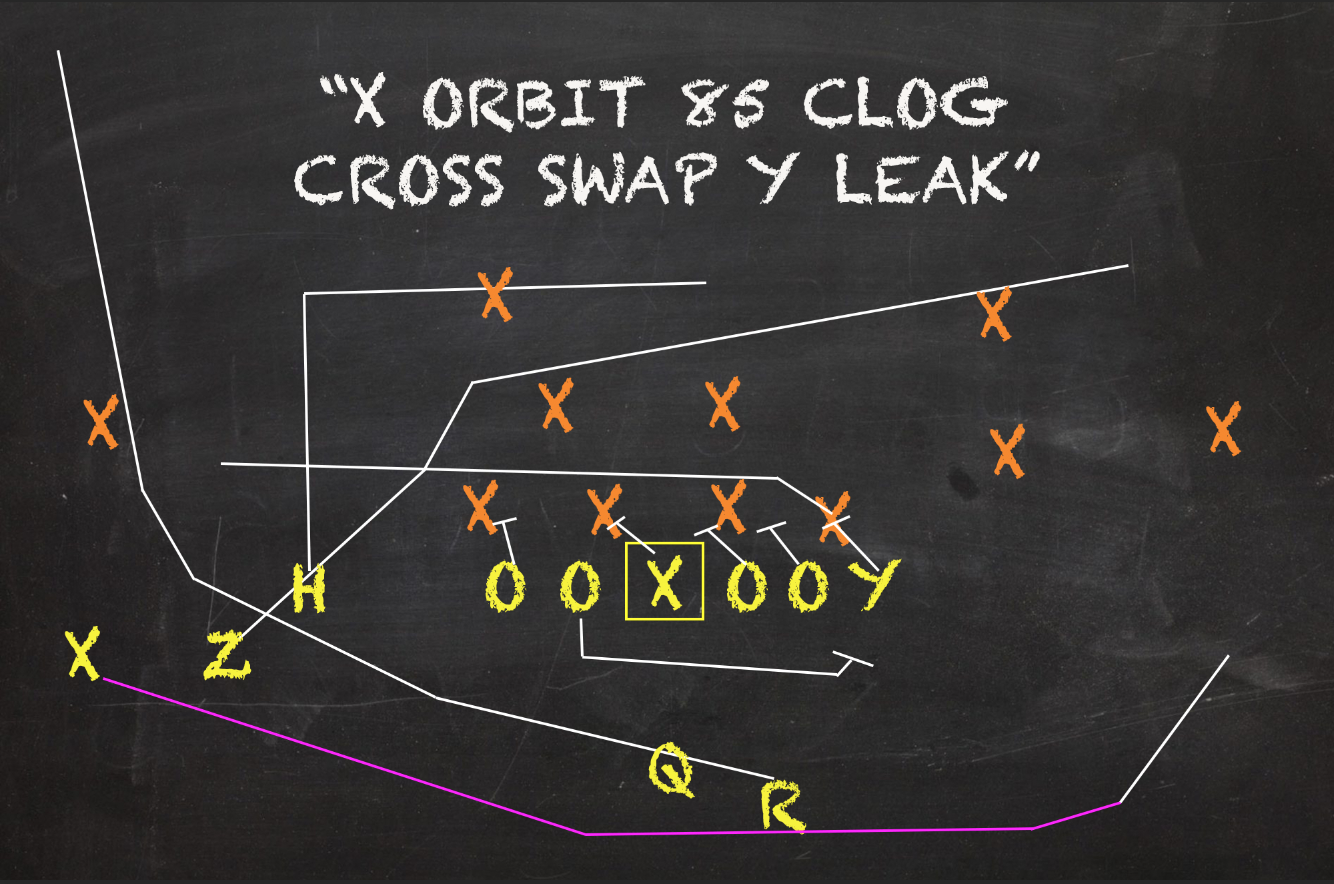
Perhaps no trademark of this offense is as cheeky as its TE Leak and RB Flow patterns. In our sample, these looks only garnered a half dozen targets. But since all six found success, I felt it deserves some recognition. Though Alabama commonly uses power play action where both the back and lead blocker head the same way, Leak/Flow use a specific action that sends the guard aligned towards the back’s path to pull around to the other side of center functioning as a personal protector for the passer. The rest of the line works slightly away while the QB performs a half rollout. Across charting every SEC offense, sometimes I have to use some back alley nomenclature to help different looks from one another. In StatCat’s lingo, we call these mini-bootlegs with that blocking pattern “Clog”. Alabama calls numerous looks using this action including Deep Hooks, Sail, Scissor, Yankee Shots, and slip screens. This season, all of those snaps utilized a form of at-the-snap motion. But again, Leak/Flow designs were their favorite.
For the laymen, “leaks” are delayed routes typically undertaken by tight ends or fullbacks. After staying in to block for a few beats, second-level coveragemen tend to lose track of them as the play progresses. And when their guards are let down, these receivers slip downfield into an unoccupied void usually complimented by the stream of the play fake. “Flows” are extended paths a running back takes after performing a play fake, which almost always morph into a wheel route. Though sometimes the back stays in to block, this Leak/Flow tends to create a cool high-lo if the play is given enough time to develop. To clear out space and to influence the coverage away from this combo, Alabama usually paired this concept with various weakside Floods and loved calling it when the Tide was in striking distance. Though other clog passes were seen in other areas of the field, all but one Flow/Leak was logged inside the Tide’s opponents’ 30-yard line. The only Flow that was targeted in our sample was the notable 26-yard Najee Harris TD in the National Championship. The remaining successful chances were all directed towards Miller Forristall who racked up 62 yards and five first downs.
TOP YARDAGE GAINERS
1. Switch Variations: 304 yards, 33.8 Y/A, 66.7% Success Rate
Despite functioning among its many “toolbox” concepts and only logging nine targets, no other look amassed over 300 yards for this offense in meaningful minutes. I mean, we could cheat and couple Cross with Sail or Counter with Duo Dive in order to beat this group, but forget that. Most of Alabama’s passing game was designed to best single-high looks, but Switches are fantastic patterns to confuse two-deep shells or match pattern assignments. Simply speaking, they are vertical combos where the inside man heads outward and visa versa. There are a few different main variations, but the Tide largely honed in on Wheelie (wheel+post/dig), Vertigo (intersecting/stacked verts), and Scissor (corner+post) in our sample. The latter was the lone drag amongst the group. The other two patterns combined for a 83.3% Success Rate and 91.1% of Switch Variations' production in our sample. Playing into the greater theme of razzmatazz, these vertical combos utilized at-the-snap motion on over half of its tries. John Metchie was the only Tider to accrue three such targets, but he only managed to haul in one of this tries. At least, it resulted in a touchdown. Thanks to being on the receiving end of a 90-yard scoring bomb against UGA, Jaylen Waddle ended with the most yards. But we can’t forget about the Heisman. Both of his Switch targets found the end zone.
2. Cross: 290, 19.3 Y/A, 86.7% Success Rate
Floods as a concept group gained more yards than any other family in meaningful minutes. And when broken out, its most popular and efficient variant ended as this offense’s silver medal yardage gainer. Though some games featured this concept more than others, none in our sample really stand out. Cross was overly consistent and dependable. Only Auburn, Georgia, and Notre Dame prevented Alabama from logging a completion on this weakside Flood. As the the Tide’s lightning rod out wide, DeVonta Smith was the main driver for Cross accounting for 127 of its yards in our sample. The Slim Reaper hauled in five of his seven such chances with two being explosive catches and a couple others reaching the end zone. But, Smith wasn’t the team’s only source of efficiency. No matter who was the receiver, Cross sported a laudable 60% First Down+Touchdown Rate.
3. Yankee Shots: 283 yards, 14.9 Y/A, 68.4% Success Rate
Nothing new, but this was yet another downfield-oriented pattern Alabama found a lot of success targeted. With a considerable amount of chunk and explosive gains on its resume, it didn’t take long for the yardage to pile up. I mean, half of its pass attempts resulted in an explosive completion. This concept was its best self when Alabama was itching to score in meaningful minutes. Despite logging five more outright attempts outside our parameter, all but 17 of Yankee Shots’ yards occurred when the Tide was either down or up by 17 points. Moreover, this offense ended the year completing its last seven such attempts for 139 yards and two scores (along with a successful scramble for a first down). The video above (which was recorded prior to the National Championship) shows off a specific pattern the Tide deployed within the red zone occasionally. Operating as a crosser, factor-H back Jahleel Billingsley finished as this concept’s most productive receiver catching all six of his targets for 104 yards and three of the look’s TDs. Deep threat John Metchie led the team with a 32.3 Yards/Catch and was the only other Tider to log over three such targets and catches. When excluding sacks, scrambles and throwaways in our sample, Alabama completed 75% of these passes with a third of them resulting in points.
4. RPO Bubble Screens: 212 yards, 12.5 Y/A, 82.4% Success Rate
Once Jaylen Waddle was lost for the season, DeVonta Smith became this offense’s undisputed focal point. Captain Obvious wanted me to send that nugget your way in case his Heisman campaign escaped your memory. Though a somewhat subtle move, Sark overly placed Smith opposite RPOs to both maximize his playmakers opportunities and divert attention away from the box. On average, Alabama featured 4.4 and targeted 1.6 RPO Bubble Screens a game when Waddle was healthy. After the Tennessee game, those figures increased to 8.3 and 2.9, respectively. Again across the entire season, this outlet was seen on almost 11% of Alabama’s offensive snaps. With that amount of usage, Bubbles were due to accumulate a decent amount of yards even if they only were targeted outright on 32% of their snaps. But thanks to Smith’s splash plays, Bubbles were one of the best looks for one of the best offenses ever. In our sample, he commanded 12 targets for 157 yards and 83.3% Success Rate. Seven of his catches gained a first down with two others resulting in points. A third of these attempts went for at least 20 yards. John Metchie was the only other Tider to field multiple targets, secure a first down, or log an explosive catch off a RPO Bubble Screen.
5. Counter: 200 yards, 5.71 Y/A, 45.7% Success Rate
Since no other run concept received as many tries as Counter did in our sample, there was a pretty good chance that play would finish as this offense’s top yardage gainer on the ground. In the end, this misdirection accounted for a seventh of this offense’s rushing output. But if not for this concept’s ability to rip off a serviceable amount of splash runs, it would’ve ceded its spot on this list for another incendiary pass play. That said, four of the seven attempts that gained at least ten yards in meaningful minutes occurred against Ole Miss’s piss poor defense. That quartet of carries accounted for exactly 40% of Counter’s 200 yards. Including the sample’s three remaining explosive runs, those attempts were responsible for two-thirds of this concept’s bottom line. Najee Harris logged both of the Counters that went for over 25 yards. Though it’s nice to think this play provided some potency, it’s a sobering thought realizing realizing the remaining 28 tries only mustered 68 yards between them.
6. Deep Double Moves: 167 yards, 20.5 Y/A, 37.5% Success Rate
These haymakers close out Alabama’s top yardage gainers list. Only the Lane Train targeted Deep Double Moves more than Alabama within the SEC. True to his Pacific passing upbringing, Sarkisian was always out to counter his opponent with a Deep Double Move when they overcrowded the box underneath. Sluggos, Diggos, Out-N-Ups, PoCos, and other types of these routes are really nothing new. But, who are we kidding? These patterns are sexy AF. Play designers are always scheming ways to incorporate these kinds of wrinkles either to get the stadium rockin’ or to bail their asses out against stout coverages. Sark both isolated Deep Double Moves by themselves and had them operate inside other concepts. Despite the ingenuity, Alabama only connected on three of the eight tries in our sample. Yet, those monster completions were good enough to just edge out Alabama’s late down passing staple Mesh.
Though it fell outside our sample, the Tide’s first and longest completion on this group occurred against TAMU via an 87-yard Jaylen Waddle Diggo feigning a Pivot concept. Interestingly enough as I’m sure some of you might remember, Sark dialed up the same two-man combo not long before but it fell incomplete. Waddle logged another explosive TD catch the very next week; this time on an Out-N-Up opposite a Yankee Shot. The safety didn’t have a chance. Sark being Sark, he set up Smith isolated opposite a three man Double Dig combo with a deep comeback early on against Mississippi State. The snap resulted in a rather innocuous completion. Well a few drives later, all he changed was Smith’s route. It only resulted in a 53-yard TD thanks to a crisp Out-N-Up. Smith added another Deep Double Move catch against the Bulldogs for 34 yards, but it fell outside our parameter. And, I already mentioned the Cross-N-Go that was executed to perfection against Auburn, which was this offense’s final such completion on the season.
MOST SUCCESSFUL CONCEPTS
1. Cross: 2.88% Play Share, 19.3 Y/A, 86.7% Success Rate
Since Leak/Flow only logged six attempts, I felt that was too small of a sample size for the concept to represent the top spot on this electric offense’s most successful concept list. But, Alabama’s favorite Flood was an easy choice to kick off this section. Nobody in the country was better than this the Tide targeting Cross in meaningful minutes. Hell including all snaps, three-fourths of this weakside Flood’s found success and averaged 14.6 Y/A. For a modern reference point, those metrics were better than any concept LSU’s juggernaut from last season logged in SEC play. It’s flat-out scary how superb this offense executed this look in our sample. Since it failed to crack 55 yards in that context versus any opponent, let’s shed some light on when it did its damage situationally. Floods as a family combined for top share in the top usage rate for Alabama on first downs. With Cross being the group’s most featured variant, 11 of its 15 targets were logged in those spots. Though its figures took a slight ding, no one should be up in arms over a 16.0 Y/A and 81.8% Success Rate. But just to stiff-arm the dissenters, its four remaining attempts all worked, posted a 28.3 Y/A, and totaled just under 40% of the concept’s output.
2. RPO Bubble Screens: 3.26% Play Share, 12.5 Y/A, 82.4% Success Rate
Since these outlets were tied to read options, Bubble Screens naturally were featured on early downs. In our sample, not a single one was targeted on either third or fourth down. Though both sported a Y/A in the double-digits and a Success Rate in the 70’s, Alabama managed to find most of its success on Bubble Screens on second downs. Again, these overly functioned as extensions to Alabama’s run game. Unless the Tide had a numbers or alignment edge over the defense, these bad boys wouldn’t see the ball. While Bubbles are designed to win when targeted, Alabama’s outlets (mainly DeVonta Smith) crushed the expectation. For whatever reason, second down presented ten premier opportunities to dish the ball towards the flat in this manner. Nine of those attempts worked situationally, and no other concept topped RPO Bubble Screens’ 139 yards in those spots in our sample.
3. Mesh: 3.26% Play Share, 9.76 Y/A, 82.4% Success Rate
Most of Alabama’s offense was built to kick ass on early downs when the defense was reeling and didn’t know what to expect. Plus when the defense is protecting its backend, yardage underneath are a little easier to seize. And considering the volatile, one-off nature later down reps typically bring, the fact that this offense had a dependable design to lean on in crunch spots elevated them past many other historic college offenses. It’s called the money down for a reason, kids. Do well in these spots, and it could make or break your career. Though they should be avoided at all cost offensively, there are simply times where you have to fight these battles. This statistical stalwart didn’t always need to feature Mesh. Three games didn’t log an attempt, and five others only targeted the concept once. But when called upon, it was undeniably clutch. Along with its fantastic Success Rate, 75% of Mesh’s tries resulted in either a first down or a TD regardless of the down and distance.
4. Deep Hooks/Comebacks: 2.88% Play Share, 13.1 Y/A, 80.0% Success Rate
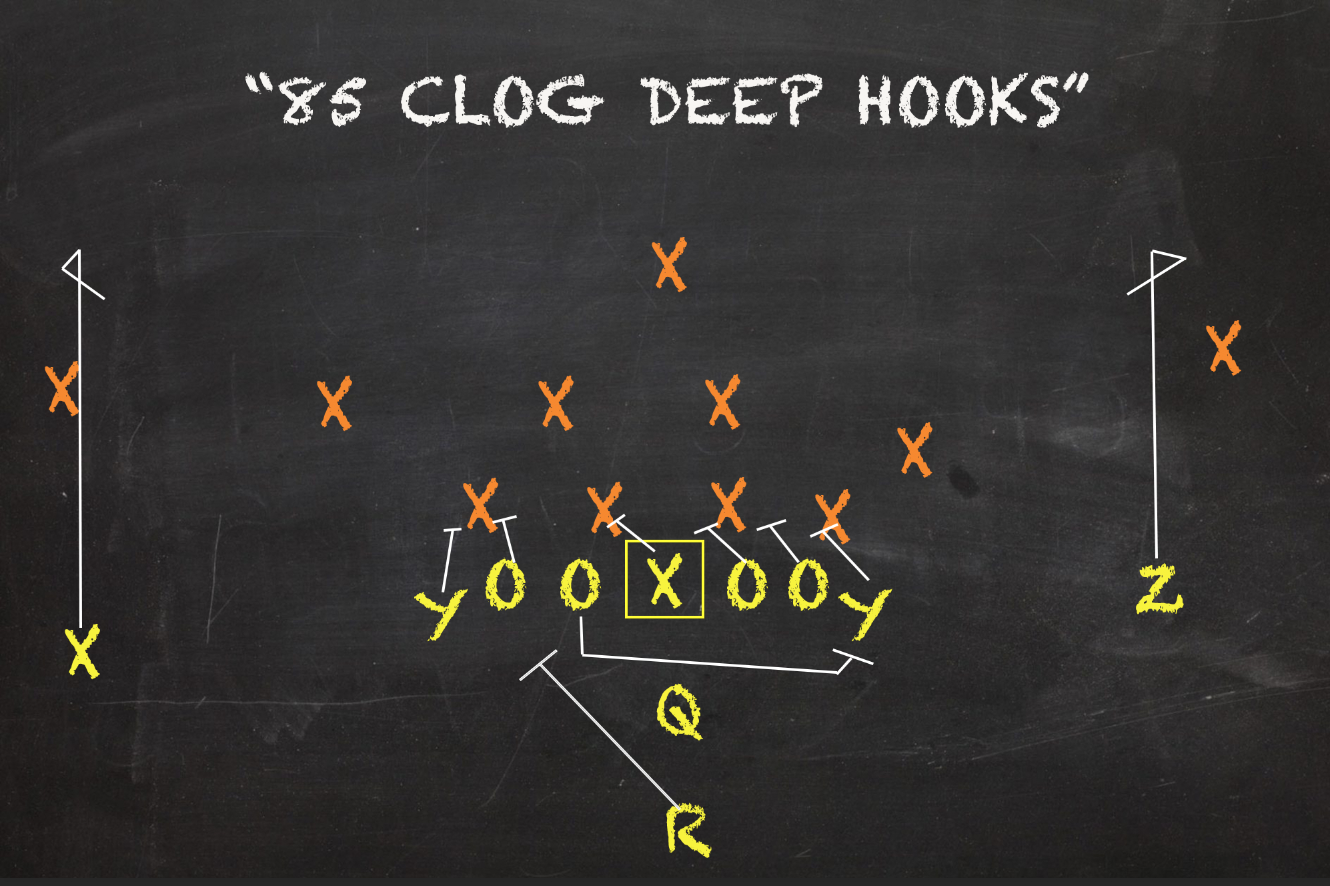
Since Deep Hook and Comebacks designs were nothing more than glorified pitch-and-catch patterns for Mac Jones and DeVonta Smith, there was no reason to think this offense couldn’t execute these bland plays adequately. Jones was the SEC’s most accurate intermediate passer the last two seasons, and he certainly showed off his prowess zipping the ball past underneath defenders on a rope with carnage surrounding him on these plays. The Heisman caught nine of his 11 such chances for 150 yards. All but one of his catches brought forth a conversion, and two of his attempts resulted in gains over 20 yards. John Metchie hardly disappointed either. In his four targets in this concept group, his only failed completion was an uncatchable target. The remaining three chances all logged first downs with one of them being deemed an explosive catch.
5. Dagger: 1.54% Play Share, 19.8 Y/A, 75.0% Success Rate
In our sample, this deep combo only logged eight targets. But since six of them worked situationally, Dagger closes out Alabama’s impressive list of its most successful concepts. Like Switches, Deep Double Moves, Leaks, Fake Screens, quick outs, and Smashes, Dagger was one of this offense’s many “toolbox” patterns that provided value when called upon in its limited chances. Taking it one step further and only focusing on true pass attempts, 85.7% birthed completions with two-thirds of them going for 20 yards or more. Three-fourths of its production was generated prior to Waddle’s season-ending injury. Though its lone target in the National Championship fell incomplete, its attempts in the two previous games both found their intended targets and delivered first downs. DeVonta Smith’s single Dagger catch occurred against Notre Dame and resulted in an explosive gain. Like Cross, this combo commonly featured power play action to help move second-level defenders out of the way. For what it’s worth, these attempts went 3/4 (including a checkdown) for 74 yards.