
The Single Most Important Thing that will Fix Mike Leach’s Air Raid Offense
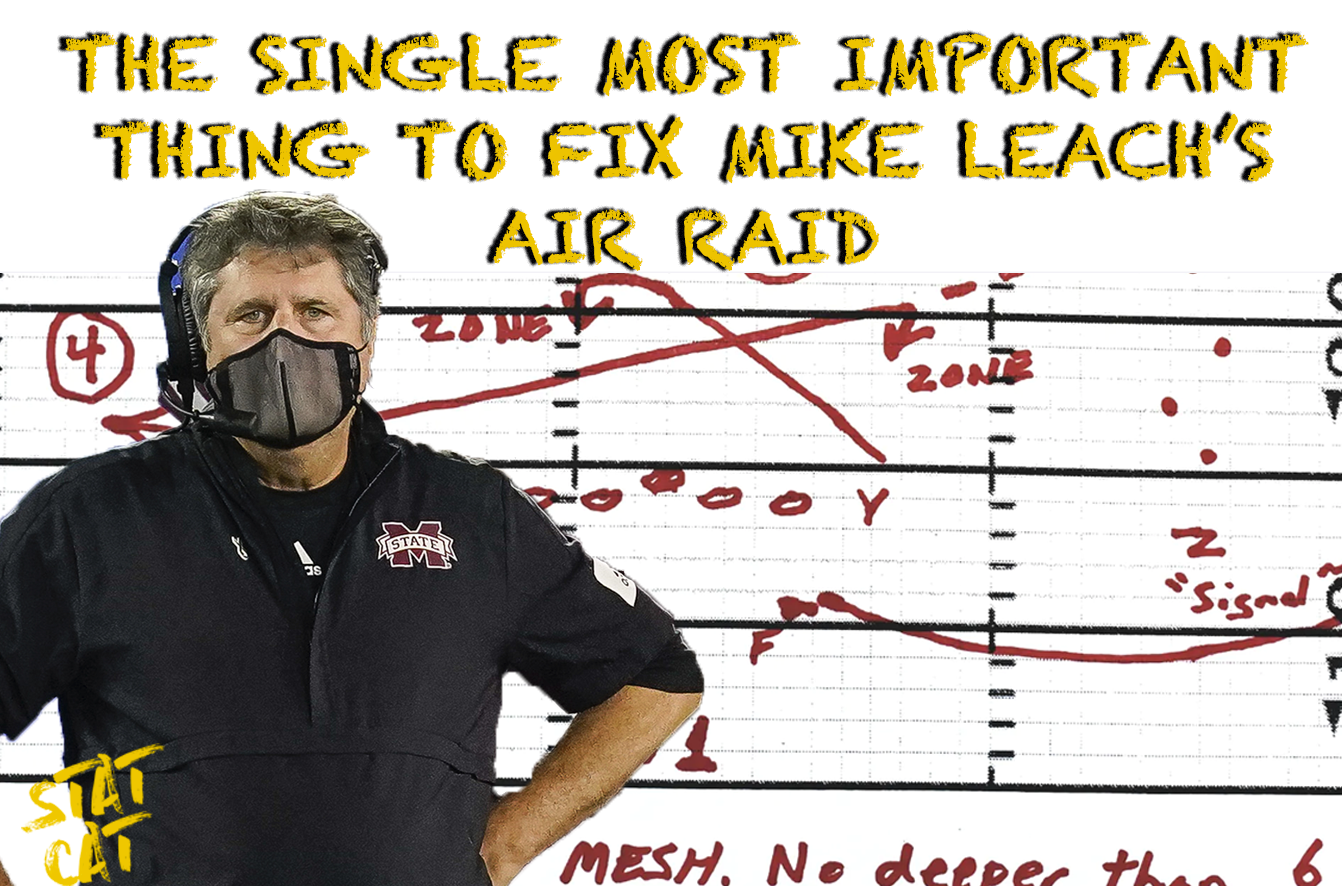
The Single Most Important Thing that will Fix Mike Leach’s Air Raid Offense
Instead of wasting space on flowery prose or metaphors soaked in wit, point blank: the most-recent version of the traditional Air Raid was undeniably crappy. Though this offense has turned plenty of heads whipping the ball all over the yard over the years, its novelty in its most pure form has long worn off. While finishing dead last in the SEC in Explosive Pass Rate (6.10%), the Bulldogs finished with the 5th-worst Passing Success Rate (41%), 3rd-worst Yards/Pass (5.5) and 2nd-worst overall TD Rate (3.6%). Thanks to both of their passers combining for SIXTY turnover-worthy attempts, opponents had plenty of opportunities to get the Bulldogs off the field. Ultimately, Mississippi State pushed out a conference-low 2.7% Turnover Rate. The fact that this offense amassed college football’s 20th-most passing yards last year seems utterly pointless when measuring the trajectory of this scheme compared to other like-minded ideologies. After all, only UK and Vanderbilt averaged less total yards per game within the SEC than the Air Raid in 2020.
Though unequivocally a turbulent season for this aerially-inclined attack, schematic shortcomings have been discussed for some time now regarding Mike Leach’s “doctrine”. He and many of his cohorts revolutionized the game and injected potency into the passing game. But while many of his former disciples continued to spread the good word, evolve the philosophy, and find success on their own merits, a founding father of the throwing theology has remained stuck in the mud schematically. Despite many Air Raid's principles existing in essentially every professional and amateur offense in the modern game, dissenters are growing as are concerns in this approach’s long term viability. In short change is needed. But before offering solutions, we first need to explore the problems at hand a bit further.
Leach has added a few new things to his toolbox, but his style has hardly wavered over the last two decades. No true tight ends, spread formations exclusively consisting of flex and trip sets, a watered down run script, and plenty of Mesh firmly encapsulates his modus operandi entering 2021. Back in the day, the extra speed from those four-WR sets provided a noticeable edge against base defenses. But as time passed, adversaries adjusted by playing more nickel, dime, and quarter packages, which nixed that competitive advantage. In addition to leveling out the amount of burst on the field, opposing teams were incentivized to bolster their backends to outright upend the Pass-Happy Pirate’s desire to dropback. Though not necessarily revolutionary in itself, sending eight men into coverage has been a simple solution for stifling the Air Raid in recent years. Washington dominated the Apple Cup seven-straight years riding that defensive tactic. And while LSU was foolish leaning into aggressive man coverage in Week 1 last year, the rest of the SEC concurred that sitting back in a heavy zone shell while only rushing three was the way to go. Again, the Bulldogs’ 2020 returns were generally dismissible.
Moreover, this approach allowed defensive play callers to have their cake and eat it too. Along with buffering the processing power of opposing passers, mini-Tite fronts -- or “Mint” to some -- have gremlined the Air Raid’s secondary facet. Though many past brain trusts on that side of the ball were wary of leaving the flank unmanned (i.e. meaning the edge defender “capped” the inline grouping by fitting outside of the end man on the offense), rocking more Tite fronts has disallowed Leach’s run game from cleanly executing it’s beloved quick inside zone play. These fronts ask the ends to align in 4-i techniques in the B-gap on the medial shoulder of the offensive tackle with a nose guard across the center. By having a body directly in that run play’s point of attack, ball carriers typically have to redirect inside -- where there are more obstacles -- or bounce outward -- where the quick backend defenders can rally and make a play on the perimeter. The old school Air Raid’s only other core run play is Draw, which suffers from the exact same downsides. Situationally, this run game was okay last year. But, who the hell is pleased with a 4.6 Yards/Carry on designed tries? (The Bulldogs only averaged a 1.92 yards before contact and clearly struggled carving out cushion). When including sacks and scrambles, only UMass averaged less per attempt than MSU's 2.4 clip last year. Over the last six years, none of Leach's run games topped a 4.5 such figure while ranking 85th or worse nationally five times. Before soldiering on, I want to point out the syrupy irony that Zach Arnett’s primary defense at MSU is a 3-3-5, which is specifically built to play in such a fashion though aggressive tactics and quickness.
While a good amount of Leach’s designs are still nice and effective, it’s clear this old school style has fallen behind. No doubt having more talented personnel would help execution improve, but the Sword Swinger must tweak his scheme for fear it has gotten too stale and deliberate. Again, there are plenty of issues that might make Leach’s doctrine dead on arrival in the SEC if some changes don't happen. However, honing in on the most crucial ailment to address in order to boost the Bulldog’s bottomline needed some pondering. So after drinking a little something and smoking a little something, I kicked my feet up and hypothesized what would be the single most important thing for the Air Raid to address if I were in Leach’s shoes.
The first solution that came to mind was rather trite and unoriginal: actually incorporate a tight end in this offense. Pro Football Focus’ Seth Galina has also echoed this sentiment having seen that position group’s effect accentuating the numbers of this scheme's derivatives across all levels of football. Loads of this philosophy's disciples have adopted Y-men into their schemes; not only as downfield threats but also as avenues to maintain a healthy and unpredictable ground game. Oklahoma's Lincoln Riley is the poster child for this renaissance. The extra inline blocker has expanded his Air Raid’s Q-run, counter, and split zone offerings, which shoves a middle finger right in the face of foes wanting to live in Mint packages. Unlike IZ Slam and Draw, those runs are drawn up to thrive versus unmanned fronts. And outside of the gadgetry and versatility that tight ends offer within play designs, that position gives passers an organic target directly in their line of sight at between the hashes. With so many schematic possibilities, the balance that Riley exhibits with his Y-men highlights why his style is so tricky to prepare for. Perhaps you’ve come across some of the sizzling stats the Sooners have put up under his watch.
While a great idea to evolve his offense, increasing tight end usage would consequentially require Leach to be more balanced. No doubt, his squads would be less predictable and be able to expand their offerings on the ground. But, this offense is called the AIR Raid for a reason. Plus, Leach probably would have gone that route by now if he was truly won over by that approach. His lack of action in that respect screams he’s entirely averse to that course of action. Interestingly enough, Kentucky’s version of the scheme itself saw a tight end blossom the very season Leach left Lexington. Under Tony Franklin’s guidance that solely operated from trey right-handed alignments, James Whalen exploded with 90 catches for 1,019 yards and was named an All-American in 1999. Others have obviously had plenty of success throwing to tight ends off the Air Raid’s principle ideas, but the Magnolia State Madman just seems uninterested as it would alter his core perspective on how to direct and build his team. He’ll tease the idea, dabble with some designs, but enough evidence is out there that Leach just isn’t inclined to shoehorn someone in that spot unless they’re truly worthwhile.
So after throwing some cold water on that idea, StatCat was back at the whiteboard brainstorming the most important tactic that potentially could jolt Leach's dropback doctrine the most. Should MSU feature more motion to present a less station presentation of the scheme? What more condensed formations for advantageous angles against shell coverages or extra cushion via rub routes? Should this offense go all-in on symmetry and fade the shotgun for the pistol? Is a mobile, blitz-dodger the only savior on the horizon? Or one of these so-called “toolsy” passers that crave to win by firing strikes outside of structure? What about just expanding the foundational run plays of this offense without getting a tight end involved?
Ultimately after considering Leach’s adaptability, willingness to change, and greatest challenge facing this offense, the single most important thing his version of the Air Raid needs to institute is more multi-breaking routes. StatCat doesn’t presume to be a genius; double-moves are ancient methods to make converagemen look silly and incompetent. This wouldn’t ask the Pass-Happy Pirate to alter his roster construction, get him out of his comfort zone as a play caller, or undermine any of the scheme’s inherent strengths. Plus with the number of three-man rushes this offense has seen as of late, MSU’s passers should have enough time to let the zig-zag razzmatazz develop. Though eight-man coverages are set up to be in good spots, they still are vulnerable to being manipulated out of position by a fun pattern. MSU doesn't need to dedicate a significant play share or dial up double moves excessively, but this offense also can't be afraid to be the aggressor in terms of X's and O's on occasion. Since the Air Raid’s root plays are so popular and understood these days, the time is right for some added ingenuity. After all, there are plenty of modern examples of others using this offense’s core plays to create cool, effective pass counters. Here are four, StatCat believe would do wonders to unlock some needed explosiveness.
1. "Twig Mesh"
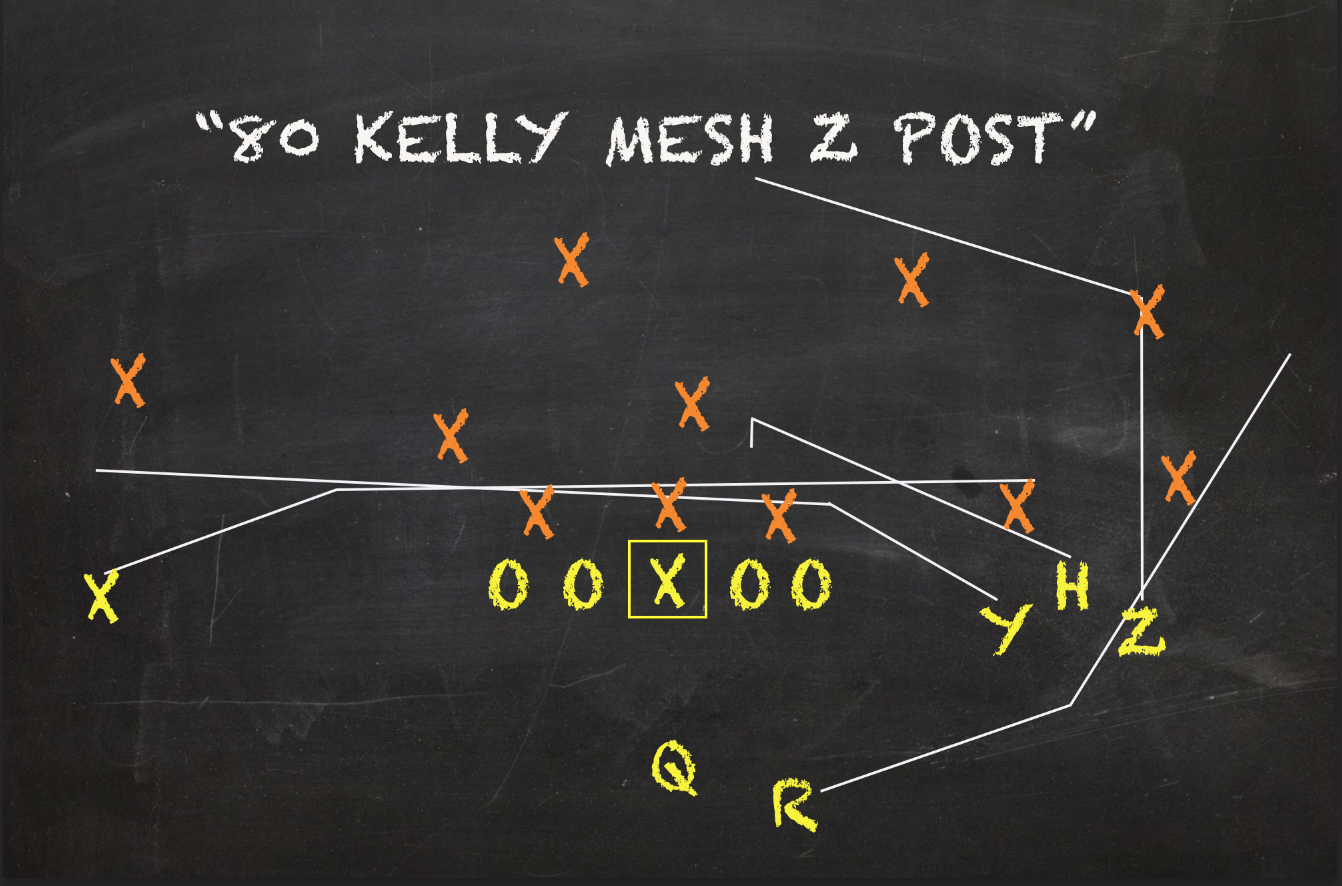
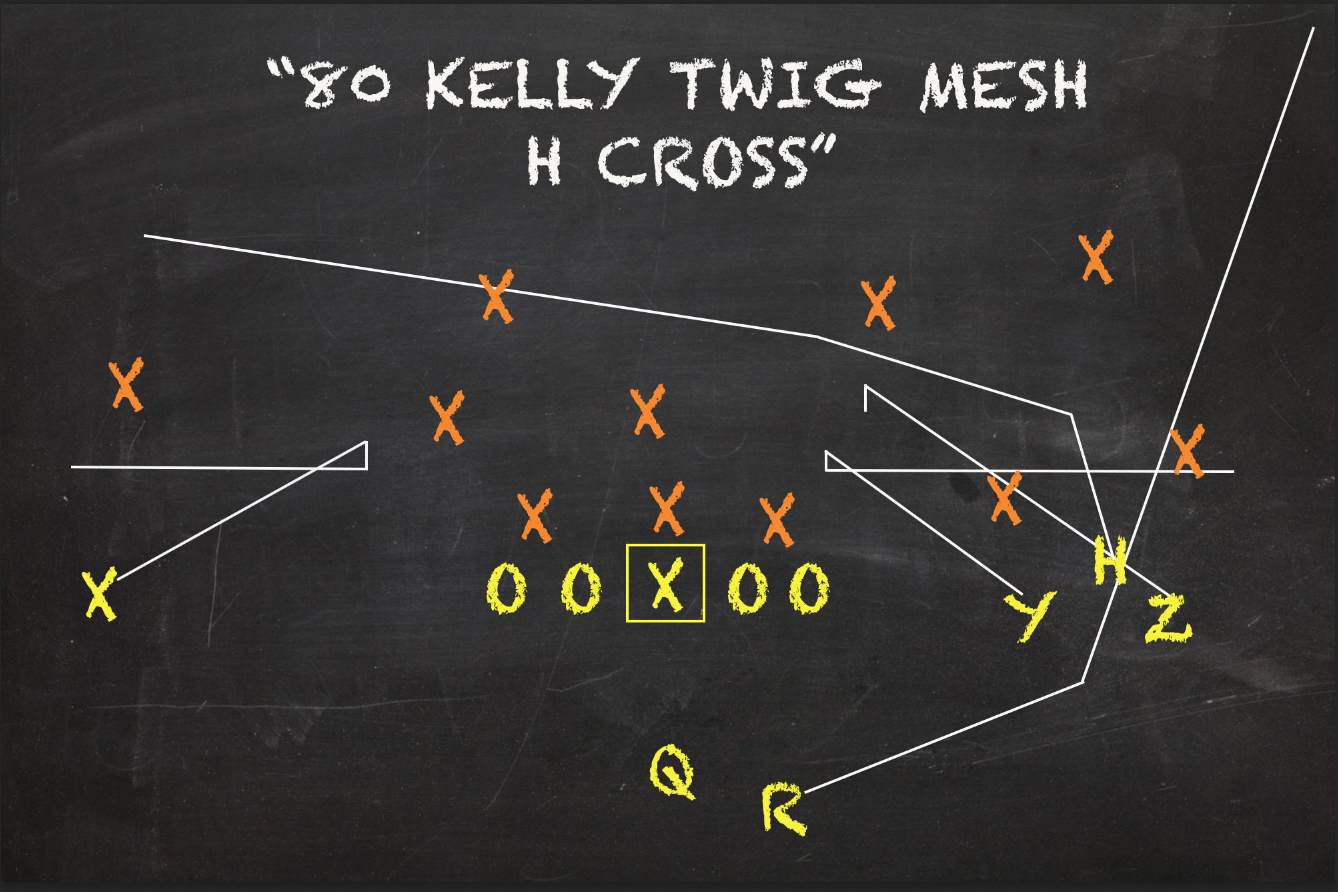
As aforementioned, Mesh is Leach’s bread and butter concept. Everyone knows he’ll swing his sword with this look in a variety of ways at high volume. As his favorite play, it accounted for a tenth of the Bulldogs’ play calls and an eighth of their total yardage. This Rub Variation out-repped the next-closest concept by 26 targets and 160 yards. But no matter what form it took, the returns were overly pedestrian. Collectively, all targets produced a 40% Success Rate and paltry 5.5 Yards/Attempt.
The “Twig Mesh” -- or Return Mesh -- are some of the coined terms for this double-move wrinkle. Though it can be implemented off basic forms of the pattern from 2x2 formations, it best mimics the Kelly Mesh, which has become many teams’ favorite rendition of this route combo. In addition to the core intersecting drags, you will see a playside sit hook towards the middle of the field and a running back wheel. Most alignments allow for one free route to tag; the common ones being post, corner, dig, and cross. Granted, this play presents a pretty low floor. Four-yard pivots aren’t predominantly sexy patterns. That said, this double move design has upside to win against both man and zone coverages. Plus, don’t discount a deep over or downfield running back route from finding some daylight with safeties peeking short. For what it’s worth, StatCat caught Texas A&M call the particular Twig Mesh pictured above this past season.
2. "StickNod"
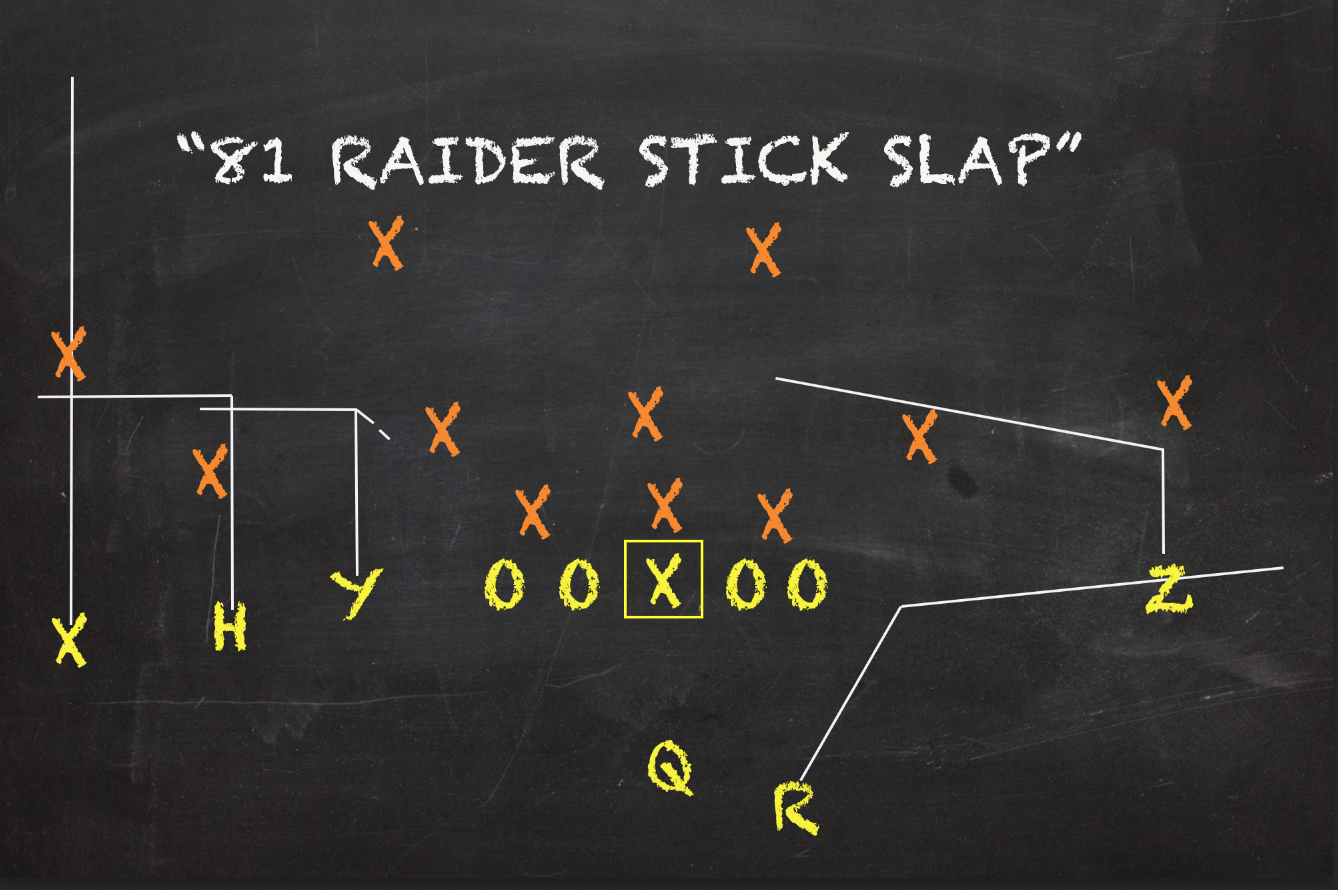
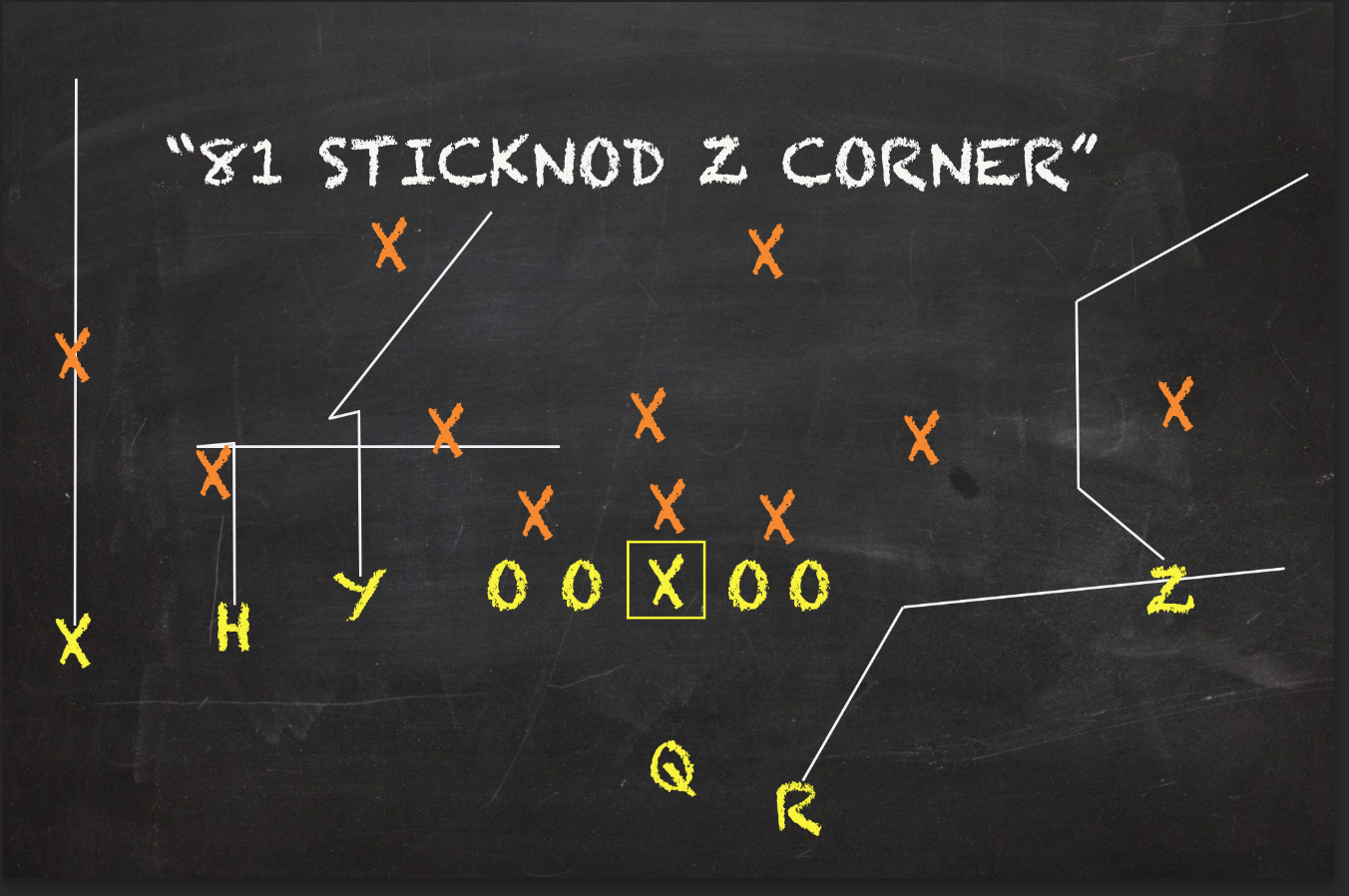
Stick is a fairly basic horizontal spacing look these days, but it’s lost a little bit of luster in Leach’s eye. Despite being MSU’s most successful pass pattern last year, it was shoved down his call sheet. No one will throw a party over a 6.17 Yards/Attempt. But all in all, Stick accounted for roughly 5% of this offense. The version pictured above is labeled “Raider” (after Air Raid) and is a very common form of the concept seen from trips all over the country. Instead of the old school version with a flat from a slot or running back, which MSU still features, the No. 2 receiver runs a speed-out with the innermost option running the stick read based on the coverage. This difference gives this version just a tinge more verticality.
In the Air Raid, Stick is a tried and true drive starter. It’s an easy way to pick on backers with a quick hitch, out, or flat to space for a good five yards to get ahead of the chains. Again, look at how the muted Bulldogs performed executing this low-floor concept. And because it’s such a conservative design, StickNod has been punishing second-level defenders for decades. Both inside receivers towards the trips sides run double moves with the H running a inward pivot and the Y acting out the titular route. After faking lame little out-breaker, the No. 3 receiver bolts upfield to split the safeties. Thanks to the verticals commonly deployed outside, that misdirection can find itself wide open in the middle of the field if the underneath players take the bait and the backenders are occupied by the streaks. Sure, the windows will be smaller with the additional coverageman, but this seasoned design could easily slide into Leach’s every week script to help counterpunch dastardly DBs.
3. "Thumb/Skipper Sail"
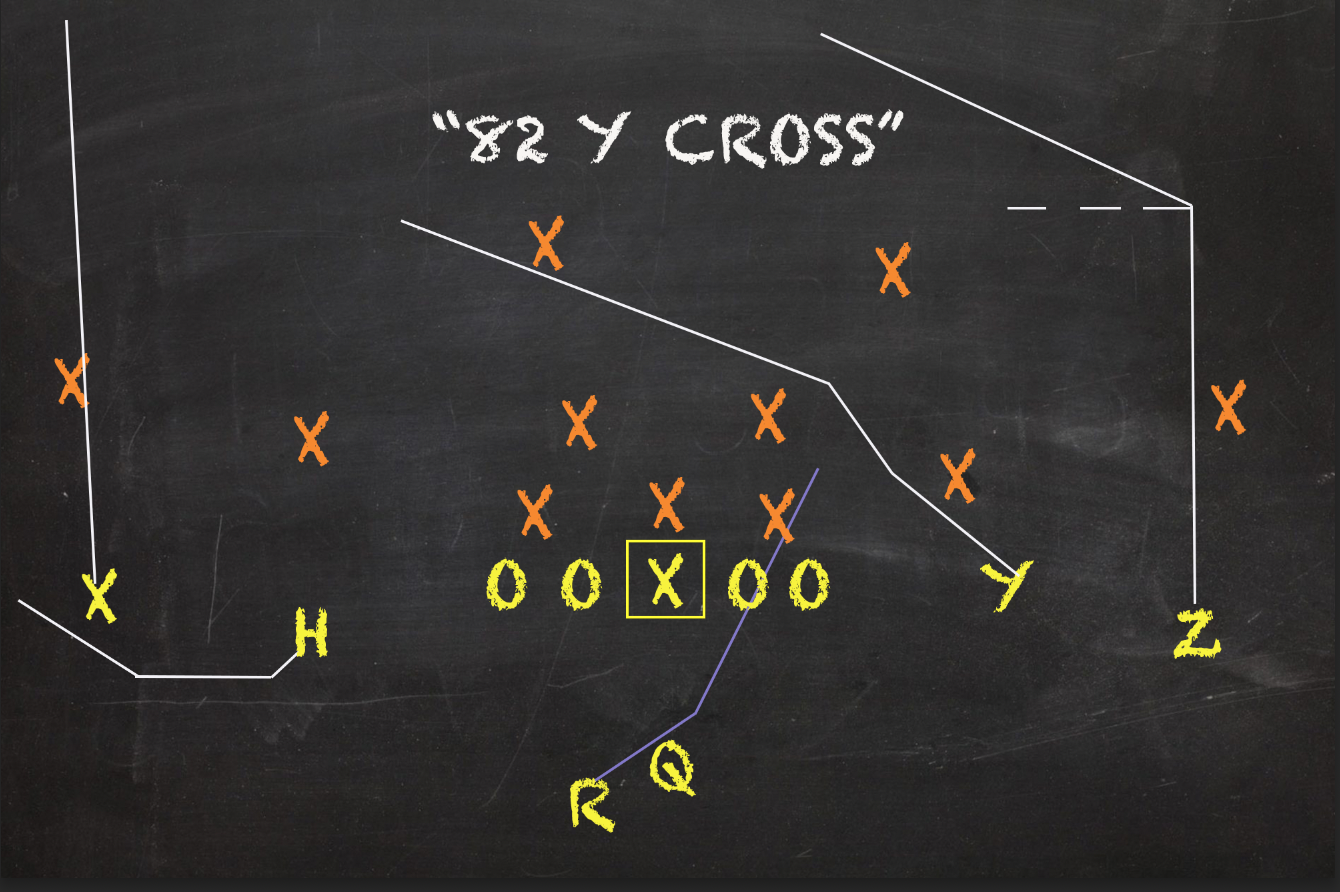
Y-Cross was the original big-play design for Hal Mumme and Leach. To reiterate, a deep over is really difficult for MOFC and single-high coverages to contain without over-rotating and being burnt on the backside. And against MOFO and two-deep shells, it runs right through those coverages’ soft spots. Coming from a balanced formation and depending on the hash location, a good amount of green grass can present itself off this look. Even as middling as Leach’s legions were dropping back in 2020, half of their Cross targets resulted in success. Whether straight up or off play action, this concept has been adapted and adopted more than any other Air Raid principle (That said, traditionalists will argue Cross is nothing more than a PA bootleg without a play fake or rollout). Either way as a weak flood, it hinges on overloading a side of the defensive coverage. If the secondary doesn’t cut off the flow of the routes, leverage is lost, which often results in an easy completion. And if they overcorrect, there’s always the handy-dandy backside dig bringing up the rear.
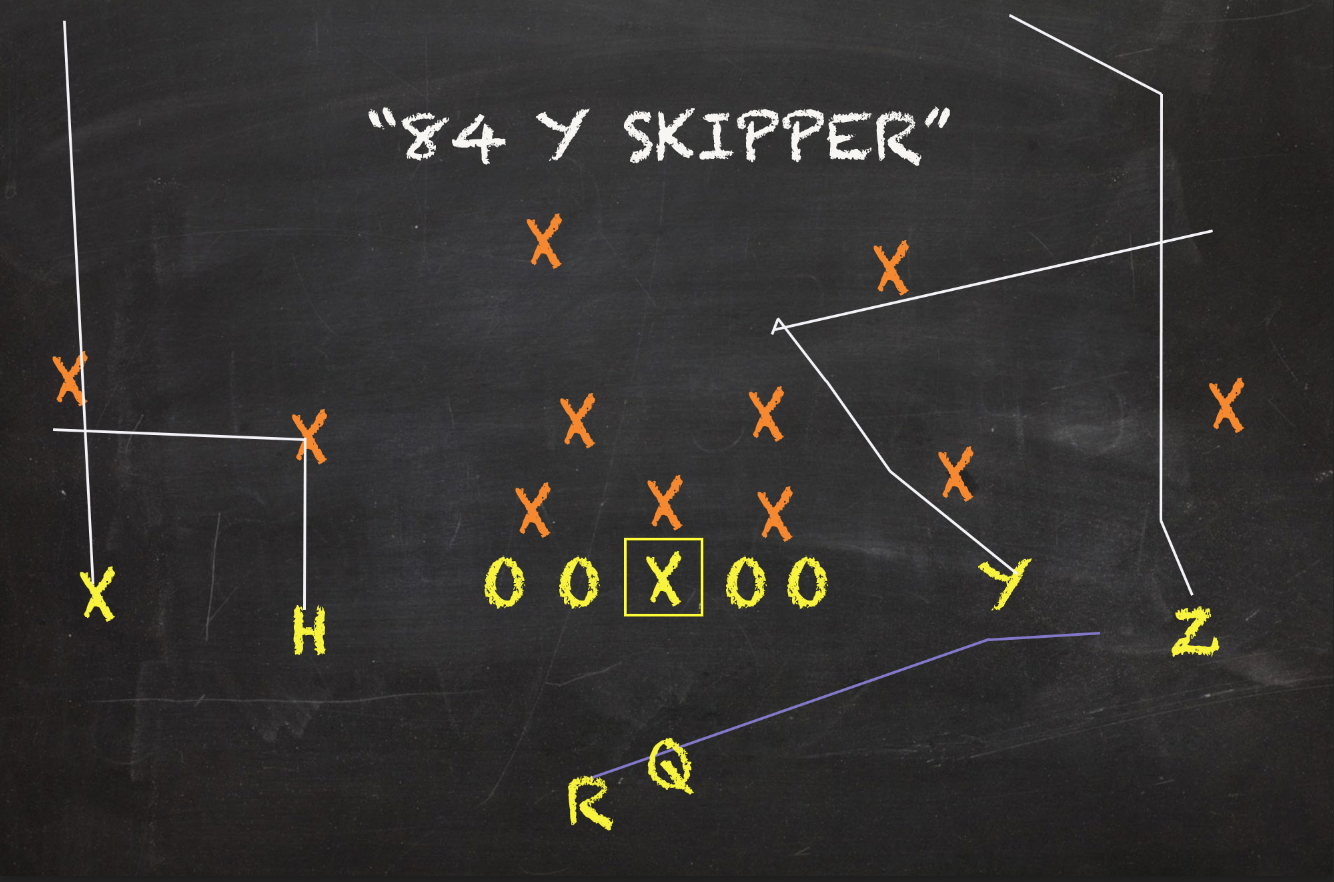
But since Cross is a very popular pattern, backender’s techniques have progressed over the years to where they’ve become keen on capping this concept. As another brilliant ploy to stay ahead of backenders and cross-up match pattern rules -- pun intended -- this particular counter wrinkle especially filled my spirit when coming across it in the wild a few years ago. Typically from two tight end or trey sets featuring play action, the arrangement initially sets up just like the weak flood but quickly morphs into a strongside Sail with a multi-breaking bendback. Additionally, the RB post-play fake runs to the flat with the No. 1 receiver getting vertical with a peak post. That little aspect makes this design both a flood AND a switch variation. Though the extra defenders certainly muck up the reads, opponents still often find themselves running a version of 3-deep or 4-deep. The latter are particularly susceptible to being pantsed by deep concepts like dagger and switches. Damned if they over-commit towards the preliminary flood and truly F****** if they lose inside leverage versus the deep post, the “Skipper Sail” --- or “Thumb” in Texas HC Steve Sarkisian’s vernacular -- is truly a unique design to tinker with pesky safeties looking to jump intermediate routes. Since Leach probably won’t trot out a tight end just in order to set this play up, StatCat theorized a version of the flood that could potentially satisfy his preferences, which is pictured next to his core Y-Cross concept above.
4. "Sting+Spectre"
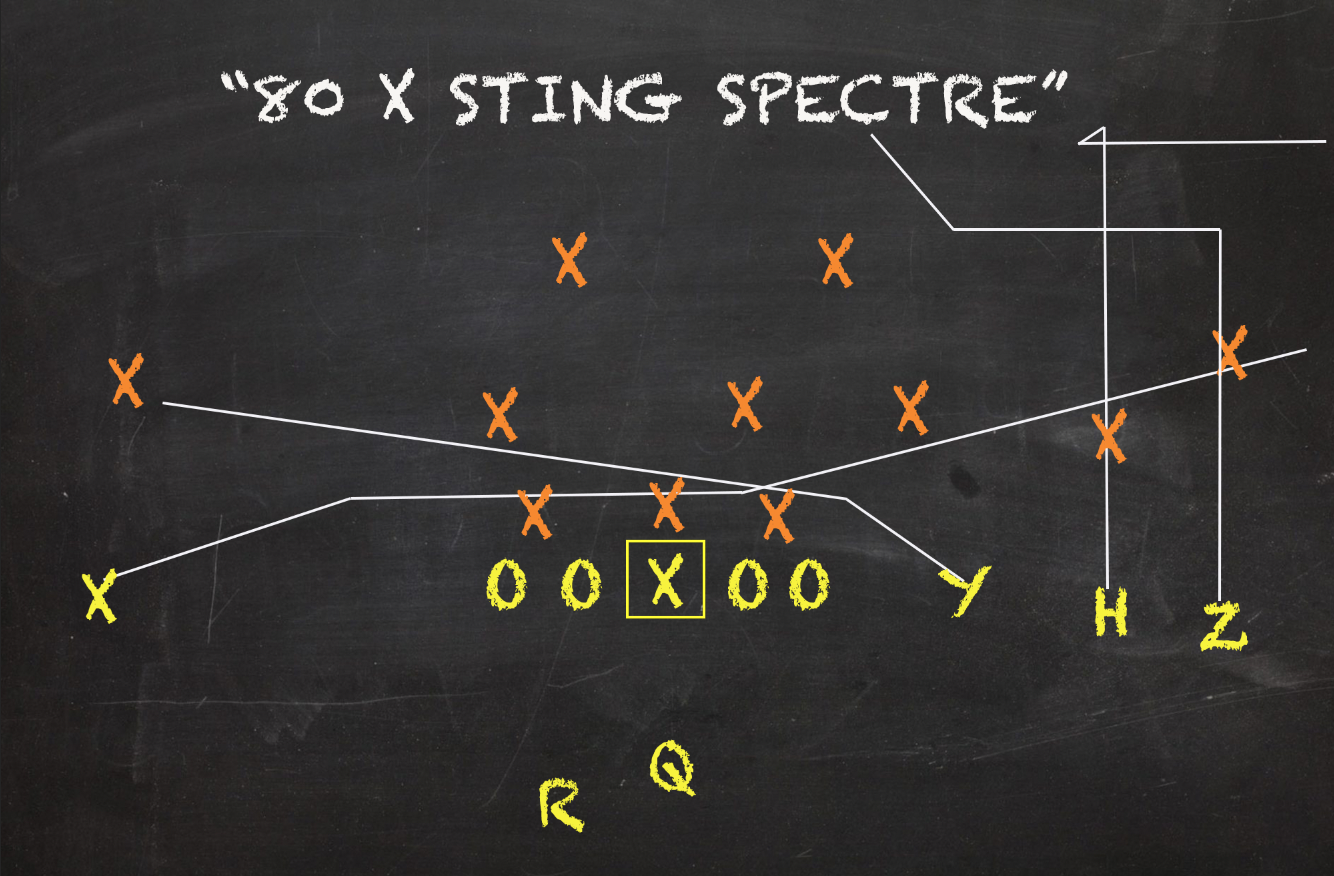
As an offense that aims to throw to open space as much as possible, plenty of drag routes are featured within the Air Raid. Whether to make a birdogging DB work through traffic or sending a pass catching candidate through the underbelly of a zone, it’s one of the easiest throws in football and one of the best routes to generate yards after the catch. Along with Leach’s lovely Mesh, casual observers will notice Under, Shallow, Follow and Trail concepts all highlight that route within this philosophy. Collectively, those looks made up about a quarter of this offense’s reps last fall. MSU’s passers combined to target 78 for 443 yards. But as mellow an avenue to distribute the ball against a shell coverage, the drag is kinda a drag, man.
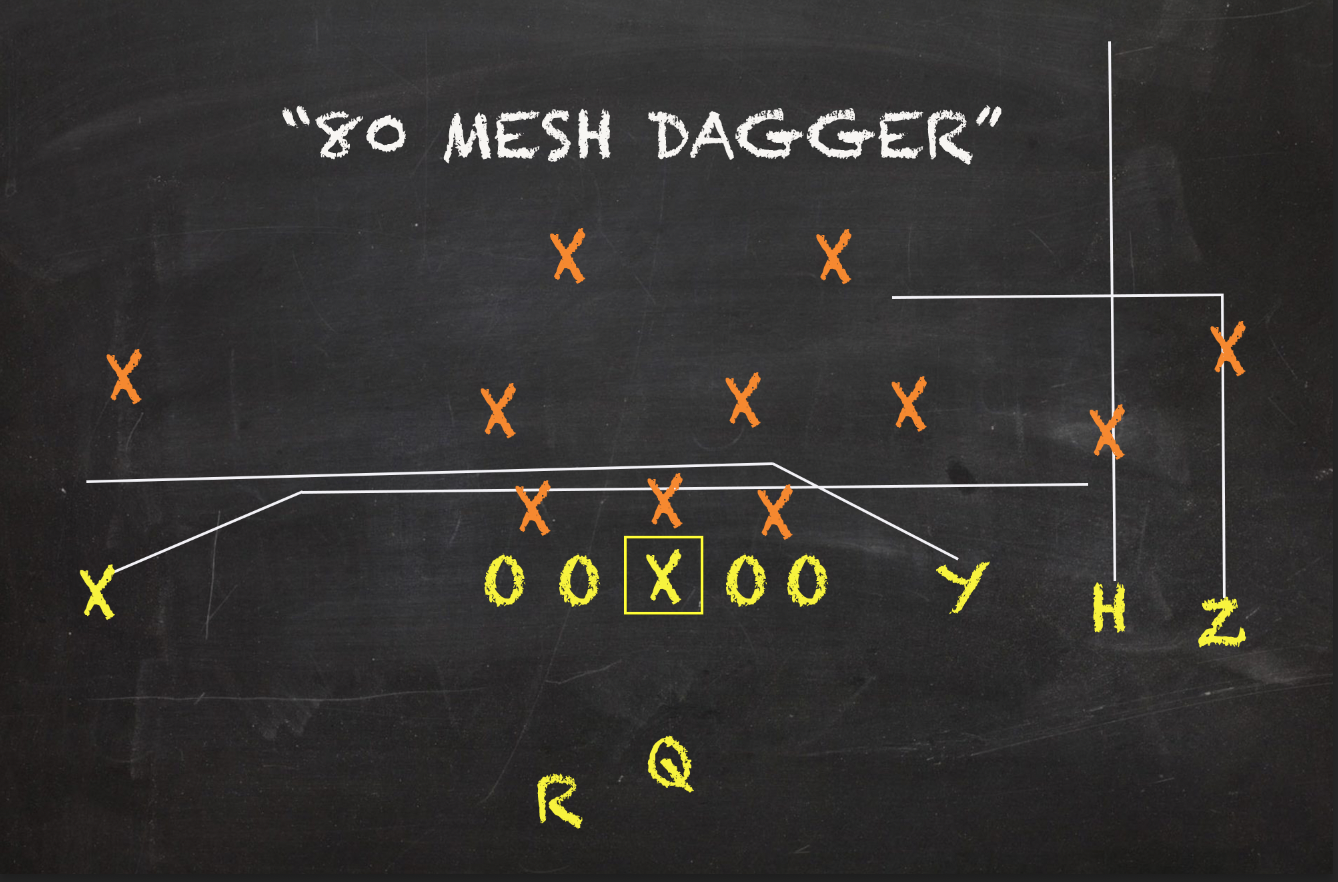
As one who holds a fair amount of affinity for Mesh, Drive, and Shallow himself, Lincoln Riley has familiarized college football with what he calls a “Sting” wrinkle. Typically called upon to compliment the latter, this technique asks the drag to climb vertically after crossing the center. Though a sound method versus a few zones, this tweak is especially disgusting against cover4. The gain of depth usually places the crosser in a honey hole beyond the flank defender and in front of the bailing quarters cornerback. One way to think of it is just a repurposed under-over cross technique commonly seen on the weakside flood staple Cross. A good amount of the coaching points are similar in searching for the void between coveragemen.
As aforementioned, this offense expects to face a heavy amount of backends with four defenders. So while Leach likes to operate using a reduced script, he should explore having as many counters as possible to manipulate backenders off his “normal” looks. Last fall, one of this offense’s favorite combos to pair with Mesh was Dagger -- a two-man seam+dig coupling. Though that look is inherently a fantastic concept to work two-deep, it presents a sturdy foundation for a clever counter. While Sting is a good multi-break concept on its own, it stands to be even more dangerous when blended with a blaze out and a dig-n-go. The deep double moves proactively strive to keep secondaries’ collective heads spinning with a crazy-ass switch combo (dubbed “Spectre” in StatCat lingo), and the climbing drag generates a truly unique high-lo read with the deep-ass pivot outside the numbers. Despite this design’s big play potential, it’s definitely not one to rock every weekend. Though most multi-break route combos need to be used prudently, this pairing decidedly needs to be unleashed sparingly (assuming anyone ever convinces the Sword Swinger to give this design a whirl in live action).
Conclusion
The Air Raid is momentarily broken, but it is still not beyond repair. Getting better route runners, shifty space eaters, or someone with an elite arm surely would produce more wins in the margins for this offense. But Leach must evolve or he might end up like his old running mate and quickly fade into irrelevance behind dwindling returns. Banking on methodical drives and rock fights just isn’t sustainable in modern football. Reading between the lines of his comments this summer in Hoover, Leach agrees last year’s output wasn’t acceptable. This ideology inherently preaches to play smart, maximize resources, and view things through the eyes of an underdog. Last time I checked, underdogs need to take calculated risks in order to compete with the big boys from time to time. Thirsty for potent plays and big gainers, multi-break concepts should help accomplish the goal at hand without demanding too much from his QBs. Hopefully, Leach isn’t too old of a dog to learn any new tricks. As a child of this ideology whose first football memories are directly tied to Mumme and Leach, StatCat certainly hopes that isn’t the case. Whip out that cutlass of yours and start hacking away, Mike. Don’t settle for five yard passes and 15-play drives. Take some swings. Be the aggressor. Look to score. Call some GD double move patterns and take it to those pesky eight-man shells.