SEC Motion Study: A closer look at an increasing trend
SEC Motion Study: A closer look at an increasing trend
Motion, motion, motion! Not to go all Jan Brady, but there’s little doubt these morph tactics are increasing across all levels of football and are as visible as ever within the SEC. Along with play actions, they are considered “easy button” machinations for play callers to help optimize their offense’s executions.
Motions – used to either realign one man on the formation or send him on an accelerated path across center to create a new stress point, angle, or body in space – are nothing new. They can dictate how defenses respond to said reallocation of resources both pre and post-snap, potentially revealing their own tendencies in the process. Like a batter sitting on a tipped pitch, homers can come easier when you know what’s coming your way. Theoretically, displacing defenders should create more advantageous matchups that lead to explosives. But on the other side of the coin, motions can allow opponents to discover keys of their own and have predetermined responses to thwart these plays; thus, placing the cleat on the other foot. Motion eliminates possible concepts and offensive designs because only so many can happen in these conditions.
Some coaches – Steve Sarkisian, Eli Drinkwitz, Lane Kiffin – are true believers in using motions as aggressive instruments within their schemes to unlock mismatches in both facets. Others like papa bear Bill Belichick are less certain about their net advantages. Only one man can move at once, so how that one man is utilized is key. Offensively, you don’t want to be too deliberate or unnecessarily paint yourself into the corner if what you’re working on isn’t a beaut.
Whether you’re a truther or a cynic, the reality is that the typical SEC offense averages 50 less yards/game on “no motion” plays than a half-decade ago. And again, pre-snap, jet, orbit, return, and shoot motion are all on the rise. The word trendy comes to mind. As a schematic scholar, asking if motion usage increase is justified naturally piqued my curiosity. Do they actually help bottomlines? What type, if any, is the most effective? Is it isolated to particular concepts? After all, if the GOAT Coach has reservations on motions, why not explore it further within the context of Where It Just Means More? For a focused experiment, running back “flair” motions and shifts were omitted. Though related, those are different monsters to slay on another day.
Before we begin, let’s get our definitions straight.
Pre-Snap Motion: the man repositions along the formation AND either resets or reaches his landmark before the ball is snapped. ex) RB motioning out-wide to create an empty formation, Off-ball TE motioning out-wide to create trips formation, WR scooching inward towards the endman on the line.
At-Snap Motion: the man is moving when the ball is being snapped. Jet motions are flat paths parallel to the line of scrimmage. Ex) Shoot/escort motion where an off-ball TE fires across the formation on a split zone and/or play action waggle, Return/boomerang motion where a flanker runs towards one side of center before sprinting back to where he came from for eye candy or run designs, Fly motion aka your typical jet eye candy or setting up a receiver run. Orbit motions are long, looping paths that circumvent the backfield. Ex) RPO orbit swing screen, fake screen design, rounding out a flood pattern.
Now, let’s drop back and examine what the field presents us.
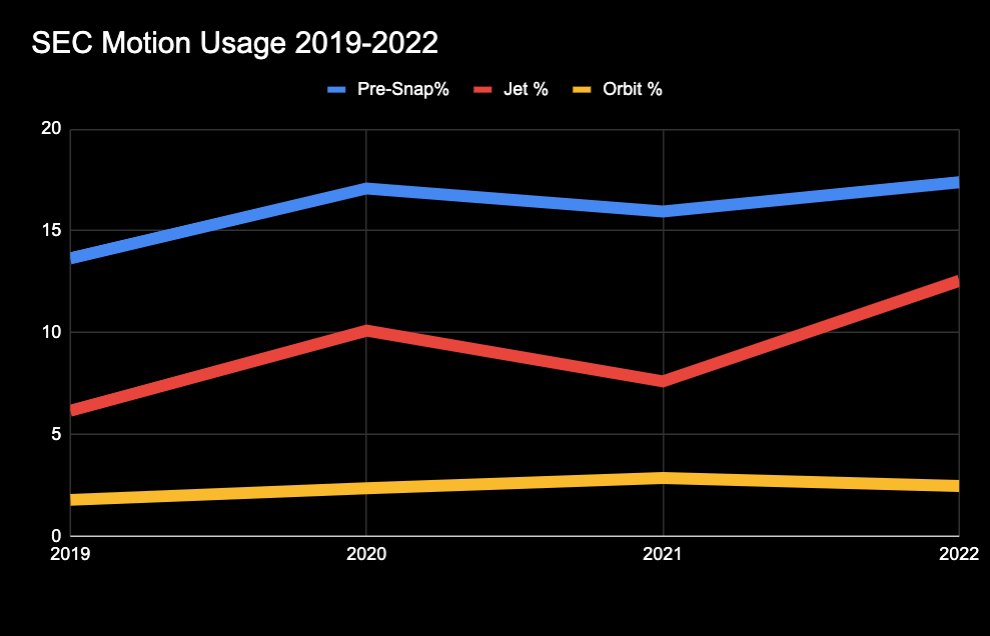
Right away, we are hit with the harsh reality that motion does not seem to matter. Even though the wins are razor slim, plays without motion have a slightly higher Success Rate and Explosive Play (both run and pass) and lower Negative Play Rate and HAVOC Rate allowed than our league-wide figures. Yards/Play, Yards/Run, Yards/Pass, rush yards before and after contact, and percentage of plays that gain at least 15 yards were all dead even over our 4-year sample. Shucks, a total wash.

Some worthwhile nuggets present themselves when breaking out motion types and further help illuminate our returns. Still, this exercise will overly mirror Jim Halpert’s response reading guidance from maternity books on labor. Or in other words, the differences won’t seem too substantive.

At-snap motions have more sex appeal. But, the less-declarative pre-snap variety has actually buoyed the conference’s Yards/Play each of the last 3 seasons. Transferring over the theorem the average pass gains more than the average run, SEC offenses have been pass-happy using this tactic, flinging it on nearly 60% of tries. Thus, more chunk gains have been seized – ala they’ve captured the highest 15+% since 2020 in our study – even if true explosiveness didn’t budge.
Counterintuitively, however, the major edges came on the ground. Since pre-snap motion hones in on creating leverage and angles, seeing how it aided the run shouldn't shock. That said, adding an extra body along the formation, especially inline, tends to invite an equal defensive response, which in turn can result in less room to operate in the box. The stats echo that. The respective YBC average only beat no motion plays once since 2018. Yet despite the early engagement, pre-snap motion has been the preeminent tactic to unlock splash runs. Over the last 4 years, its 17.8% composite clip bested null snaps’ 17.1% and was a whole point better than the league overall average.
But reduced rushing room wasn’t the only element of havoc these snaps suffered from. Often responding to an on-coming blitz, scooching into max pro (or what have you), this tactic averaged a pressure on every third attempt. It ballooned the league average each year in our sample. Captain Obvious wanted me to remind you that is alarming and a clear drawback. Even with the relatively high Pass Rate, that’s too high for any offense to be asked to overcome regardless of the context. Offenses usually operate optimally without adversity, for what it’s worth.
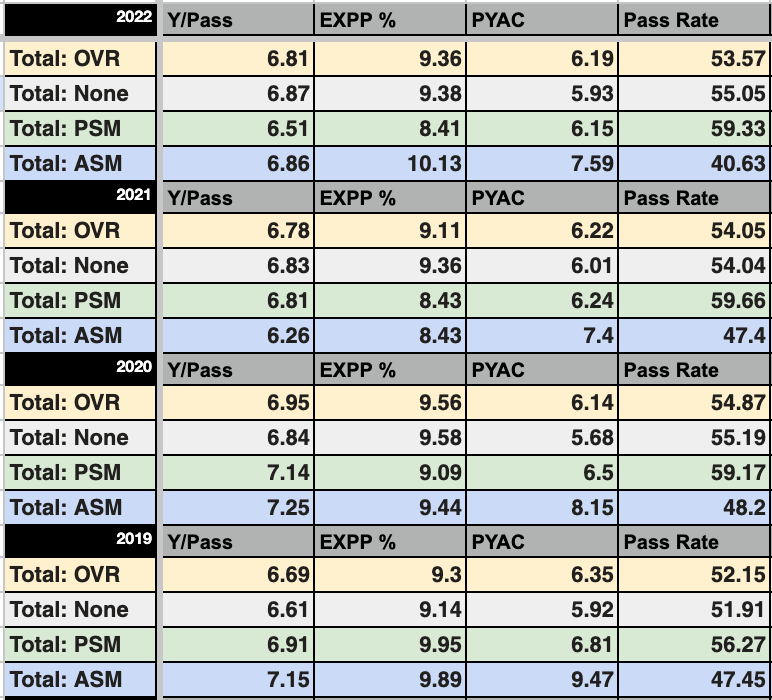
Almost the exact opposite was the case with at-snap plays. Offenses leaned on the ground game; logging a rate over 50% in our sample and even reaching 60% last fall. The trigger response from the defense – often tilting an extra safety into the box or towards the flank of the formation – resulted in a double-digit TFL rate and naturally low YBC figures. These featuring plenty of horizontal WR touches behind the line didn’t help either. Jet motion varieties were particularly sour per a 2.0 figure. No bueno! For context, only 3 SEC offenses turned in an average under that including all runs this past season.
However, for those pining to use these lateral ploys as distractions or decoys, that’s somewhat encouraging news. If backenders are concerned with what’s happening behind the line of scrimmage and are racing to fill the run, they’ll be all the more compromised downfield. 2021 was the only year in our sample, at-snap motions didn’t birth the best Yards/Pass. Twice the tactic fueled the best way to get explosives through the air - last year and 2019. Plus, our composite average was tops in our study. Using momentum to potentially get the ball to a playmaker in space with haste, these snaps also propelled the SEC’s yards after the catch efforts. Think Utah passes, RPO slides and flats, and receiver play actions. On the flip side, receptions on passes without motions finished below the overall conference mean each of the last 4 years regarding YAC. Even with backfield BS and taps, these plays saw the average SEC passer increase his Adjusted Net Passing Yards/Attempt (ANY/A) from 7.5 to 7.7 and his Explosive% tick up 0.5% compared to his overall stats in 2022 alone.
Though opponents occasionally found themselves out of position against dingers, defenses fought fire with fire, matching one aggressive maneuver with their own. Along with the tackles for loss and curbing rush explosives, SEC offenses were more prone to failure on any given play. That said, that’s solely thanks to orbit motion plays muddying up the down-to-down metrics. Isolating just jet motions, the overall average Success Rate was trumped 3/4 years by those varieties. Coincidentally, jets produced just as many instances of a Yards/Pass over 6.9 – elevating the league’s average in the process. Though a source for backsteps, these designs ironically suffered from the lowest Sack Rate further boosting its advanced stat profile.
So to recap: Down-to-Down, using motion doesn’t offer a clear edge compared to not using it. Pre-snap motion appears to be a pass-centric tactic but helps grease things on the ground despite inviting bodies to the point of attack. Satisfying the goal of creating advantageous angles, these snaps have led to a nice return of quality plays even if none motion reps rock the (albeit slightly) preferable Success Rate. At-Snap motion has a tangible effect at manipulating defenders. As a result, these plays are prone to both losses and downfield completions. Naturally volatile, at-snap designs haven’t been the most consistent. But these tactics have noticeably bolstered some of the conference’s most potent passing schemes. Though the old idiom stresses the size of the boat doesn't matter as long there's plenty of motion in the ocean, our findings scream the boat still possesses relevance and motion isn't a grand "fix all" tactic.
THE CONCEPTS HELPED THE MOST
To step in front of the curtain for a moment, even with my resources, organizing the conceptual data took much longer than anticipated and slowed the turnaround time of this piece. So our scope will focus on the last two seasons instead of going all the way back to 2019. Our discussion will mostly center around concepts that placed inside the conference’s top35 in terms of reps in that time.
The Top5 Pass Concepts that were helped with overall motion use:
Portland/Yankee Shot Variations
| Situation | Attempts | Success Rate | Yards | Yards/Attempts | SR +/- vs OVR | Y/A +/- vs OVR |
| OVR | 286 | 37.8% | 3,053 | 10.7 | - | - |
| No Motion | 135 | 33.3% | 1,338 | 9.9 | -4.4% | -0.8 |
| Pre-Snap | 55 | 36.4% | 579 | 10.5 | -1.4% | -0.2 |
| Jet | 58 | 51.7% | 777 | 13.4 | +14.1% | +2.7 |
| Orbit | 37 | 37.8% | 372 | 10.1 | +0.0% | -0.6 |
These designs are all about attacking safeties and making them wrong via a deep crosser. To advance the operation and get those dudes to peak, the large majority operate with deception tactics, play actions and motions. The results using those ideas speak for themselves. No other concept experienced a gain over 3-points. Yet, these shot plays had an increase over 4. Only one top35 concept boasted a higher per opportunity average. As aggressive patterns that hunt for homeruns, Yankee variations usually don’t sing praiseworthy Success Rates. And that should make sense due to the increased degree of difficulty that comes passing deep. In most sample situations, that fact hung tough. But it’s hard to ignore the amplified figures jet motions birthed where the Yards/Target burst beyond 13 and over half resulted in success. Again, those motions often were the most turbulent but were quite good at delivering aerial explosives thanks to these vertical patterns.
Dagger
| Situation | Attempts | Success Rate | Yards | Yards/Attempts | SR +/- vs OVR | Y/A +/- vs OVR |
| OVR | 268 | 39.6% | 2,307 | 8.6 | - | - |
| No Motion | 203 | 36.9% | 1,608 | 7.9 | -2.6% | -0.8 |
| Pre-Snap | 53 | 47.2% | 601 | 11.3 | +7.6% | +2.7 |
| Jet | 9 | 55.6% | 88 | 9.8 | +16.0% | +1.2 |
| Orbit | 0 | - | 0 | - | - | - |
This entry was pretty surprising. Known as a passing down staple keen on thwarting 2-deep coverages, the Dagger concept isn’t typically associated with pre-snap movement. In fact, nearly 75% of its targets came on no motion snaps. But when coordinators felt like window dressing, this classic gained a bit more statistical sheen. Pre-snap motion reps produced a double-digit Yards/Target and a Success Rate near the golden benchmark. Plus, 5/9 at-snap Daggers moved the chains – much better than its forgettable overall clip would suggest. Not too shabby for a look often dunked by shouldering daunting down and distances.
Trail/Follow
| Situation | Attempts | Success Rate | Yards | Yards/Attempts | SR +/- vs OVR | Y/A +/- vs OVR |
| OVR | 207 | 46.9% | 1,453 | 7.0 | - | - |
| No Motion | 132 | 44.7% | 867 | 6.6 | -2.2% | -0.4 |
| Pre-Snap | 65 | 53.8% | 544 | 8.4 | +7.1 | +1.4 |
| Jet | 4 | 25.0% | 23 | 5.8 | -20.9% | -1.3 |
| Orbit | 3 | 33.3% | 372 | 3.0 | -13.6% | -4.0 |
These plays are proof motion doesn’t always have to lean into aggressiveness. Like Dagger, Trail varieties have found a tad more success when turning to pre-snap motions despite mostly being a static concept. While the handful of at-snap targets have floundered, formation alterations saw these looks snatch a top5 Success Rate on such snaps. Having a Heisman feast on these looks definitely elevated their efficiencies. They bested their overall figures by 7-points and buoyed the per opportunity number by about a yard and a half.
Shot Variations
| Situation | Attempts | Success Rate | Yards | Yards/Attempts | SR +/- vs OVR | Y/A +/- vs OVR |
| OVR | 630 | 32.1% | 5,744 | 9.1 | - | - |
| No Motion | 514 | 30.2% | 4,551 | 8.9 | -1.9% | -0.2 |
| Pre-Snap | 84 | 44.0% | 933 | 11.1 | +11.9% | +2.0 |
| Jet | 17 | 41.2% | 218 | 12.8 | +9.1% | +3.7 |
| Orbit | 2 | 0% | 0 | 0 | -32.1% | -9.1 |
Yankees and Portlands weren’t the only deep pass patterns to see a boost from motions. Vertical Shots – fades, solos, or the classic “989/Divide” – were executed at a Success Rate over 40% both on pre-snap and jet motion plays the last two years, which is noteworthy considering the challenging nature of these throws. Piling on the praise, both instances recorded a Yards/Target of at least 11, which is sound evidence on incorporating them further.
“Hoss” and Comebacks
| Situation | Attempts | Success Rate | Yards | Yards/Attempts | SR +/- vs OVR | Y/A +/- vs OVR |
| OVR | 522 | 52.7% | 4,406 | 8.4 | - | - |
| No Motion | 400 | 51.2% | 3,244 | 8.1 | -1.4% | -0.3 |
| Pre-Snap | 76 | 55.3% | 708 | 9.3 | +2.6% | +0.9 |
| Jet | 25 | 76.0% | 350 | 14.0 | +23.3% | +5.6 |
| Orbit | 15 | 40.0% | 58 | 3.8 | -12.7% | -4.6 |
Curl+Seam combos and deep hooks were demonstrably better patterns once passers were tipped. Hoss Juke from empty can be keyed easily from a number of pre-snap movements and is a trusty winner against single-high defenses. Moreover, to compliment the deep over-post pairing seen on Yankees, offenses have started to run comebacks lubed up with eye candy if secondaries feel like sitting back all day. Pre-snap reps, fueled by Hoss, rocked a sturdy 55% Success Rate and 9.3 Yards/Target. But, orchestrated buttonhooks have been a glorified version of pitch-and-catch in the backyard. At-snap plays, with stock behind Comebacks, have only failed on a fourth of its tries while flaunting the best per opportunity clip of any top35 concept. Over the last couple of years, few things have been more money than at-snap deep hook designs.
The Top3 Rush Concepts that were helped with overall motion use:
Outside Zone Read
| Situation | Attempts | Success Rate | Yards | Yards/Attempts | SR +/- vs OVR | Y/A +/- vs OVR |
| OVR | 985 | 41.0% | 5,186 | 5.3 | - | - |
| No Motion | 691 | 39.8% | 3,334 | 4.8 | -1.2% | -0.5 |
| Pre-Snap | 162 | 43.8% | 1,119 | 6.9 | +2.8% | +1.6 |
| Jet | 78 | 35.9% | 412 | 5.3 | -4.1% | +0.0 |
| Orbit | 54 | 50.0% | 313 | 5.8 | +9.0% | +0.5 |
Rearranging pre-snap angles was a theme in helping ground games in our study. Outside-oriented Wide Zone Reads were at the forefront of that movement. Whether true hard zone flows, lock action, or midline reads, this perimeter design squarely benefited from offenses getting jazzy. Each motion type topped at least 5 Yards/Carry; the best being pre-snap motion where these plays almost posted 7. Despite the substance, Outside Zone Reads were halfcocked and somewhat inconsistent; even with optimal leverage chances. That said, as one of the most tried concepts via orbit motion, this design naturally helped offenses test both sides of formations to fine results. The stretch effect birthed a 50% and a Yards/Attempt a half-yard better than its clip overall.
Y-Insert
| Situation | Attempts | Success Rate | Yards | Yards/Attempts | SR +/- vs OVR | Y/A +/- vs OVR |
| OVR | 250 | 49.2% | 1,351 | 5.4 | - | - |
| No Motion | 204 | 48.0% | 1,082 | 5.3 | -1.2% | -0.1 |
| Pre-Snap | 22 | 54.5% | 124 | 5.6 | +5.3% | +0.2 |
| Jet | 20 | 55.0% | 121 | 6.1 | +5.8% | +0.7 |
| Orbit | 4 | 75.0% | 372 | 8.0 | +25.8% | +2.6 |
This design is quickly becoming a go-to for spread offenses exploring change-up run concepts to compliment split zones, duos, and counters. Though really nothing more than the hard-nosed I-formation play Iso, Y-Insert has been effective at pushing around undermanned boxes; considerably so if movement is involved. Regardless of if a TE is pulled back into the box, a flanker flashes across the formation, or someone loops around in the backfield, well over half of the motion reps worked and each type logged a Yard/Carry of at least 5.5.
Inside Power
| Situation | Attempts | Success Rate | Yards | Yards/Attempts | SR +/- vs OVR | Y/A +/- vs OVR |
| OVR | 1,626 | 48.4% | 7,721 | 4.7 | - | - |
| No Motion | 1,111 | 47.3% | 5,012 | 4.5 | -1.1% | -0.2 |
| Pre-Snap | 273 | 50.9% | 1,351 | 4.9 | +2.5% | +0.2 |
| Jet | 186 | 47.3% | 965 | 5.2 | -1.1% | +0.5 |
| Orbit | 17 | 47.1% | 104 | 1.1 | -1.3% | +1.5 |
This is a pretty large catch-all category consisting of a number of gap schemes. Counter, Power, Jab, and Iso are clear contributors. But when motions enter the discussion, Duo Dive has been the main driver. With the increase of tight+bunch formations, offenses have developed an obvious affinity for attacking a 6-man surface with the north-south man blocking play. Placing a bunch of bodies into a phone booth might not help cushion optimally, but it unequivocally adds force to one’s run game. Few sets have experienced more pre-snap alterations than tight trips in recent years. And based on the returns, this stratagem doesn’t appear to be faded soon. Over half of Inside Powers found success with pre-snap motion. Additionally, at-snap reps inflated the Yards/Attempt thanks to perimeter gravity elements opening up some extra rushing room.
The Concepts Motion did not help
Short Passing Concepts
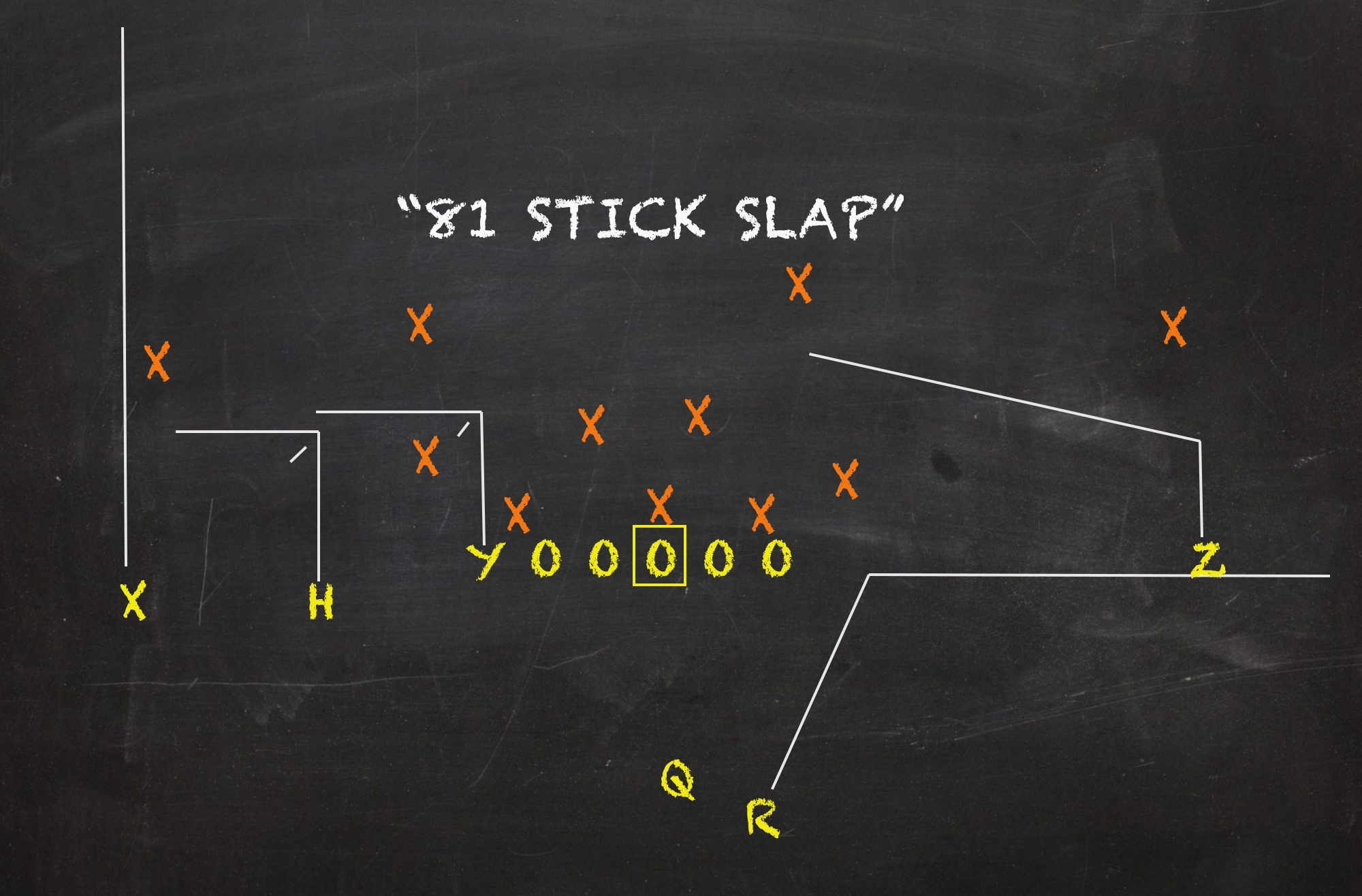
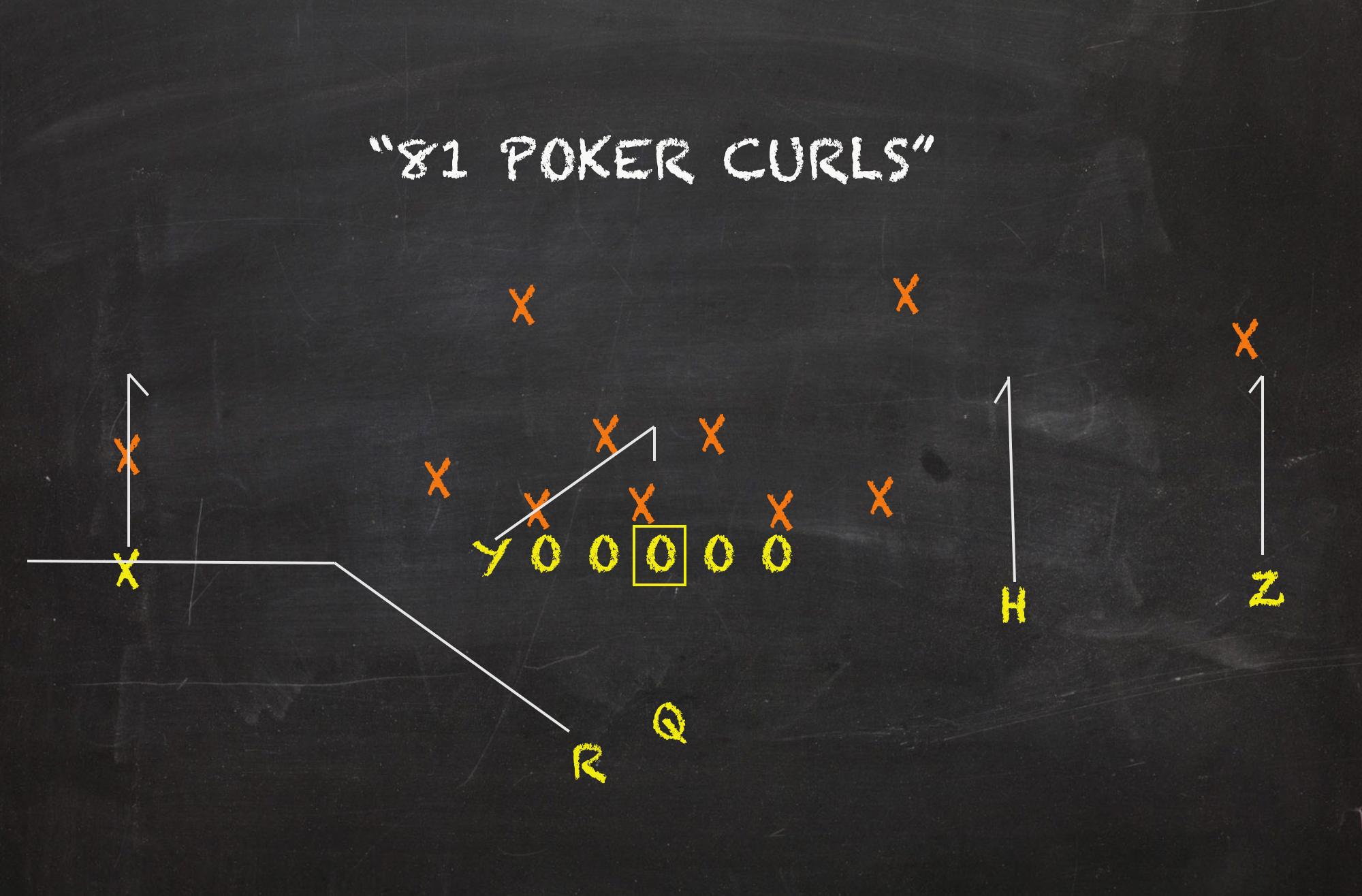
For the Football Freddies out there, some patterns are best operated when defenses are completely in the dark and any concept is on the table. Conservative pass combos like Curl+Flats, Stick variations, and All Curls are no exception to that notion. Most effective when the defense is distracted or sitting back, these normally toothless concepts deflate all the more when motions make their simple reads more congested. You’d think perhaps and extra flash towards the outside could help initiate a key response for the side-to-side reads baked into these patterns. But the numbers staunchly prefer pre-snap stasis. These three concepts were the only looks to improve by 2-points in Success Rate without motions compared to their overall output. Though Sticks weren’t as stout, the other two shorties topped a 6.0 Yards/Target with over half finding success.
Outside Power Reads
Though perimeter zone reads saw improvement with motions, Outside Power Reads failed to muster much might with added activity. Even repositioning braun didn’t result in bottomline bumps. Buck Sweeps and Pin/pull designs chiefly became all the more susceptible to adversity. And behind more derailments, this family of runs averaged 2 yards less per carry on pre-snap motion reps. Ole Miss and other Super Spread schemes have started to feature more WR Veers to round out their run games, but the venture has yet to be worthwhile. And as fair as flair, Jet, Return, and Shoot motions have not added much juice to the equation. Excluding Orbits, at-snap reps turned in a Success Rate over 5-points worse than overall; even though these, like Outside Zone Reads, aimed to stress both sides of the set with those tactics.
RPO Slides and Flats
These findings were revelatory. Common sense hints using motion to diagnose coverages or create space for an outlet to quickly do damage should bring about good gains. Contrarily, however, the opposite came true in our study. Though slides and flats don’t totally suck on motions – pre-snap plays were fairly decent – they appear to align with other underneath pass patterns that need the appearance of ambiguity in order to be maximized. Shoot and other at-snap designs have delivered the worst bang-for-buck on these RPOs. Those snaps averaged multiple yards less per attempt than other contextual returns even despite the added momentum the motions provided.